Wasps: Getting to know them and getting rid of wasp nests
Published on July 31, 2026
6 mins reading time
A wasp nest near your home can quickly become a source of worry, especially in summer. Learn to recognize the different types of wasps and their nests. Discover how to keep them away, deal with them safely, and know when to call in an exterminator.
What’s the difference between a wasp and a bee?
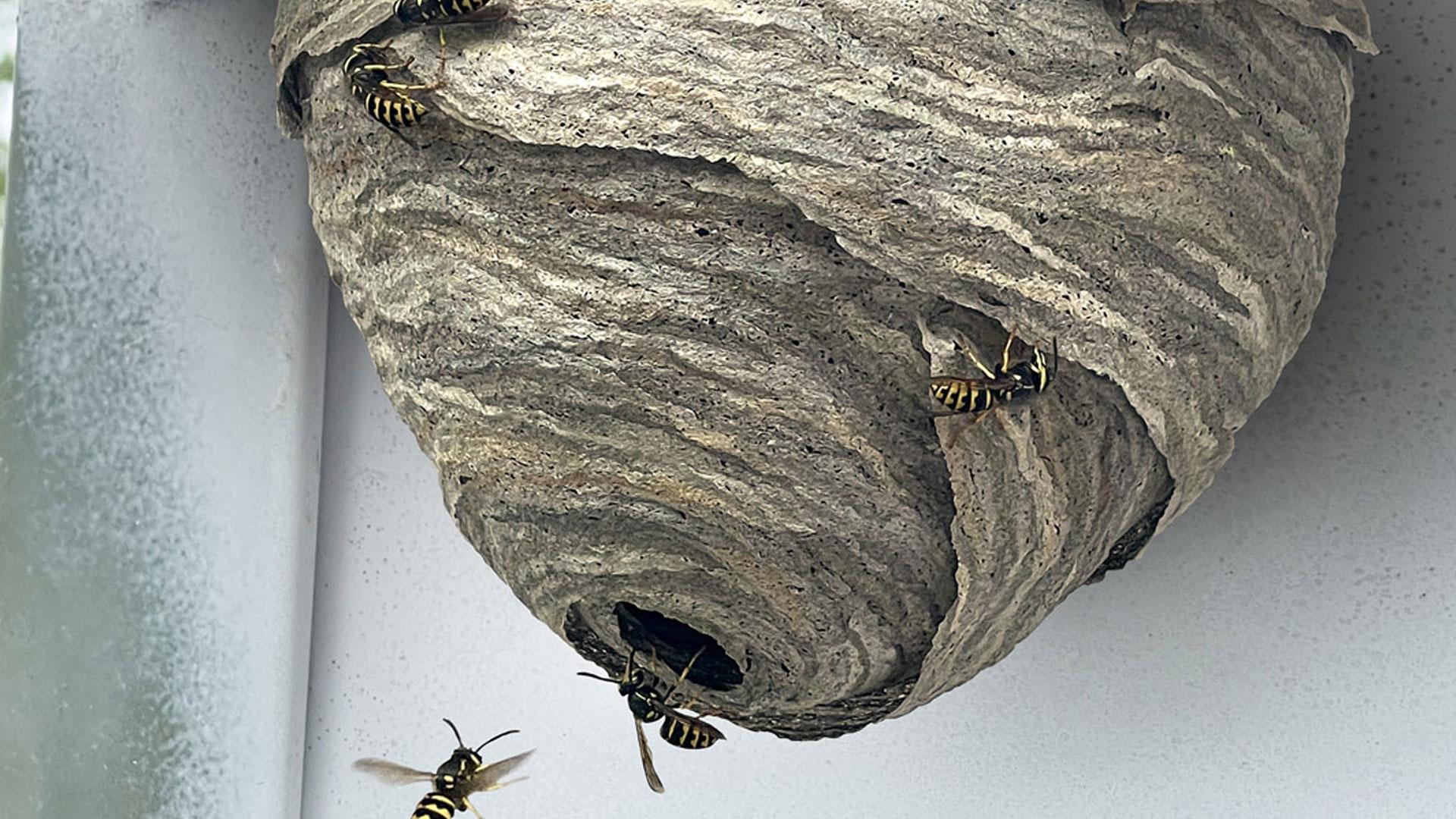
Less hairy and more slender than a bee, a wasp can be recognized by its distinct yellow and black stripes. It can sting multiple times when it feels threatened, unlike a bee, which stings only once before dying.
Why do wasps come close to homes?
The search for food is the main reason for their presence near homes. They feed on sugary foods, such as nectar and honeydew, a substance produced by aphids and other insects. They’re also drawn to ripe fruit, meat, and food scraps found in compost bins and garbage cans.
What are the different types of wasp nests?
In Quebec, the type of nest varies depending on the wasp species that builds it. Their shape, size, and location can help identify the main varieties found near homes:
- Small open umbrella-shaped nest: About the size of a hand, it often houses 15 to 200 paper wasps, a species that’s generally not very aggressive.
- Hidden nest: Built underground, in a dark spot, or in a cavity, it can house Vespula wasps, which can become more aggressive when they feel threatened.
- Large enclosed nest: Able to house up to 5,000 wasps, this type of nest is often found in eaves, porches, or trees. It can be home to Vespula or Dolichovespula wasps, which tend to be less aggressive.
Are wasps helpful or harmful?
Helpful
- Wasps help pollinate certain plants and flowers.
- They eat many insects and larvae, including some species that are harmful to gardens.
- They also serve as a food source for many birds and other animals.
Harmful
- A wasp sting is usually painful and can cause an allergic reaction or anaphylactic shock in people with allergies. Multiple stings can also cause more serious effects, even without a known allergy.
How can you limit wasps around your home?
To limit the presence of wasps near your home, start by reducing what attracts them. A few simple habits can help keep your outdoor living areas more pleasant.
- When eating outdoors, keep food in closed containers. Dispose of food scraps quickly in a sealable garbage can.
- Place natural repellents near your table: citrus fruit studded with cloves, mint plants or bouquets, citronella (as a plant or essential oil), or a small dish of lightly smouldering ground coffee to give off smoke that can keep them away.
- Avoid funnel-shaped traps. Even set away from your table, their bait attracts insects.
- Regularly wash your recycling bin and rinse out wine, juice, or soft drink bottles that could attract wasps. Keep them well away from activity areas, especially those used by children.
Are fake wasp nests effective?
Results are mixed. Some sources suggest they can have a deterrent effect in early spring, when queens are looking for a place to build their nest. Fake nests can therefore be used as a complementary measure, but they don’t replace good practices for keeping wasps away.
How to safely remove a wasp nest
How you deal with a wasp nest mainly depends on its location and size. If the nest is in a low-traffic area and doesn’t pose a danger, leave it in place. The colony will usually be abandoned in the fall, in November or December. You can then remove the nest and throw it out with the garbage or compost.
If you choose to deal with it yourself, do so with caution, ideally at dusk, when wasps are less active:
- For a single wasp or a very small, accessible nest, mix 1 part dish soap with 3 parts water and spray it on using a spray bottle.
- For a larger nest that’s still accessible, fully cover it with a plastic bag before detaching it, then seal it immediately. Reinforce it with a second bag and submerge the whole thing in a bucket of water. Then poke small holes in the bag to neutralize any remaining wasps.
Tip: To avoid getting stung, wear a long-sleeved sweater, long pants, and a head net.
Say no to gasoline-based traps
Despite their apparent effectiveness, gasoline-based traps pose serious safety risks. Gasoline is a highly flammable product that gives off dangerous fumes. Using it near a wasp nest also increases the risk of getting stung.
What to do if the wasp nest is in the ground
Ground wasp nests can be harder to spot and carry a higher risk of stings.
- If the nest isn’t causing any problems, leave it in place: It will usually be abandoned in the fall.
- Avoid digging around the nest, pouring gasoline into it, or trying to destroy it yourself.
- Don’t mow the lawn or walk near the nest entrance.
Good to know: No matter where it’s located, a nest discovered in spring is usually smaller and easier to get rid of than one found in late summer.
When should you call an exterminator?
Call an exterminator if the wasp nest is large, hard to reach, located underground, or near a door, a deck, or a play area. CAA-Quebec’s Residential Advisory Services can recommend a reliable contractor.
How much does it cost to have a wasp nest removed by an exterminator?
The cost of having a wasp nest removed varies depending on several factors: location, size and species of wasp, and accessibility. A nest located near a house or in a hard-to-reach spot may require a more complex procedure. For an exact cost, ask an exterminator for a quote.
What can you do to avoid getting stung by a wasp?
Avoid unnecessarily walking near a wasp nest, especially in late summer. If a wasp is circling you or lands on you, avoid any sudden movements. Gently brush it away, since it could sting you if it feels threatened. As well, a crushed wasp releases a chemical alarm signal that “calls” other wasps to come and help.
If you get stung, wash the area with soap and water. Apply a cold compress for 10 to 15 minutes and avoid scratching. If needed, take an antihistamine or a pain reliever to relieve symptoms. If you experience difficulty breathing, see a doctor.
What to do if your dog gets stung by a wasp
Monitor your dog’s reaction and contact a veterinarian if worrisome signs appear, such as significant swelling, breathing problems, or a sting inside the mouth.
Good to know: CAA-Quebec Home Insurance policyholders can speak with a technician or veterinarian at no cost through The Assistant for pet health.
Answers to your questions
First, assess its location and level of risk. A nest that’s away from high-traffic areas can often be left in place until fall. If it poses a danger to occupants, it’s best to call an exterminator.
An active nest usually has wasps regularly coming and going around it. Their activity often increases in summer as the colony grows. Avoid getting close to the nest to try to check what’s inside.
The best time to remove a wasp nest is early evening, when wasps are less active and gathered inside the nest. If it’s located in a low-traffic area, leave it in place: the colony will die off naturally in the fall.
No, an old wasp nest generally isn’t reused the following year. However, if the spot remains suitable, new queens may settle there in spring and build a new nest.
To learn more about wasps
Do you need personalized advice on your home?
Our Residential Advisory Services counsellors are there to answer your questions and support you when you need it. Ask for their advice as often as you like. It’s one of the benefits of membership.