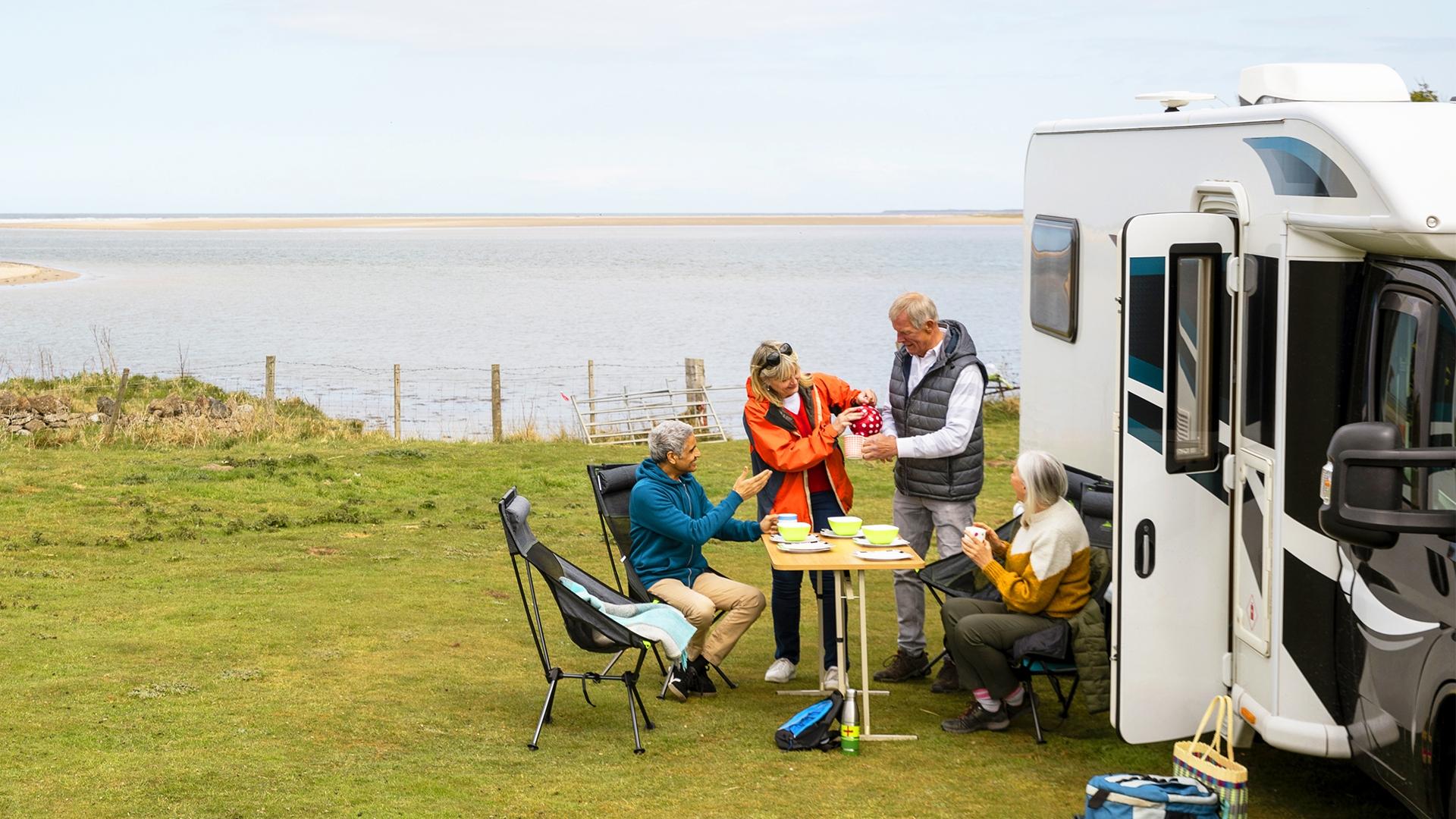
The recreational vehicle (RV) lifestyle is increasingly popular among Quebecers looking for freedom and comfort on the road. This comprehensive RV guide supports you at every step—whether you’re buying, renting, maintaining, or driving your RV safely and legally.
Buying an RV: What you need to know
How to choose an RV: Types of RVs
RVs in Canada fall into three main categories:
1 - Motorhomes
Also called motorized RVs or camper vans, these are divided into three classes:
Class A Motorhomes: Luxury RVs built on a heavy-duty truck or bus chassis
Class B Motorhomes: Camper vans built on a van chassis with a raised roof
Class C Motorhomes: Built on a robust truck chassis with an over-cab sleeping area
2 - Towable RVs
This category includes various types of trailers:
Travel trailers
Fifth-wheel trailers
Toy hauler trailers
Pop-up campers (tent trailers)
Truck campers
Hybrid trailers
RV conversion kits for regular vehicles
Non-permanent camper conversion kits are available for everyday vehicles. Brands like Quebec-based Roadloft offer kits compatible with:
Minivans
SUVs
Pickup trucks
Setting your budget
The cost of buying an RV depends on several factors:
Size
Sleeping space capacity
RV type (motorhome vs travel trailer, or conversion kit)
Features (air conditioning, solar panels, sound system, electric fireplace, etc.)
If you’re on a tight budget, note that towable trailers are generally cheaper to maintain than motorhomes due to the lack of a built-in engine. Conversion kits, such as Roadloft camper kits, are even more affordable, avoiding many of the ongoing costs associated with RV ownership.
Understanding towing capacity
Towing capacity is the maximum weight your vehicle can safely tow. It’s crucial to check this before buying a travel trailer. You’ll find this information in your vehicle’s owner’s manual.
For safety and vehicle longevity, your trailer’s weight should be 10–20% less than the maximum towing capacity. This also accounts for extra gear loaded into your trailer (dishes, bedding, clothes, etc.).
Verifying the required RV driver’s licence
In Quebec, the type of licence required to drive an RV depends mainly on two factors: the type of RV (motorized or towable) and its total weight.
Class 5 driver’s licence (Passenger vehicle)
This is the standard driver’s licence held by most Quebec drivers. It allows you to:
Drive a motorized RV (motorhome) with a gross vehicle weight rating (GVWR) of less than 4500 kg
Tow a towable RV (trailer) with a net weight under 4500 kg
Integrate a conversion kit into your vehicle
Class 3 driver’s licence (Truck)
This licence is required to:
Drive a motorized RV permanently converted into living areas with a net weight over 4500 kg
Tow a towable RV (trailer) with a net weight under 4500 kg
Class 1 driver’s licence (Combination of road vehicles)
This licence is necessary to:
Tow a towable RV (trailer) with a net weight over 2000 kg, using a towing vehicle that weighs more than ,500 kg
Whether you choose a new or used RV depends on your budget, your needs, and your risk tolerance. Each has its own pros and cons.
New RV
Pros
Cons
Manufacturer warranty (often several years)
Higher purchase price
No previous damage
Major depreciation in the first year
Latest technology and features
Setup and prep fees not always included
Customization options
Higher RV insurance rates
Peace of mind in early years
Used RV
Pros
Cons
Lower upfront cost
Limited or no warranty
Reduced depreciation
Risk of mechanical or water damage
Room for negotiation
Uncertain maintenance history
Immediate availability
Possible short-term repair needs
Lower insurance premiums
Always get a used RV inspected by a certified RV mechanic to check for water infiltration, roof seals, awnings, brake systems, and to assess wear and tear.
RV maintenance tips
Regular RV maintenance ensures safety, reliability, and a longer lifespan. When converting your light vehicle, make sure your regular maintenance is properly up to date before you hit the road.
Seasonal maintenance
Spring checklist:
Test appliances: water heater, air conditioner, water pump, fridge, microwave, propane & smoke detectors
Check 12V (motorhome) and house batteries
Inspect brakes, including electric braking systems for trailers
Test lights: headlights, turn signals, brake lights, interior lights
Inspect and inflate tires
Lubricate seals and joints
Fall checklist:
Drain water tanks and heater; add nontoxic antifreeze to pipes
Remove and store batteries in a temperature-controlled space
Use your RV owner’s manual for exact pressure specs. At gas stations, take time to check tire pressure during fuel stops.
Need new RV tires? RV trailer tires differ from motorhome tires. Trailer tires are designed for stability and smooth handling on curves, while motorhome tires focus on ride comfort and grip.
Replace your RV tires every 6 years. Use UV protection if your RV is parked long-term.
Get an annual mechanical inspection to catch potential issues early and avoid costly RV repairs while on vacation.
Fuel consumption and efficiency
Recreational vehicles (RVs) typically use more fuel than regular passenger vehicles. If you are towing a travel trailer, your everyday vehicle will also consume more gas. This can lead to significant fuel costs—especially over long distances. On average, RVs consume between 12 and 30 L/100 km.
While travelling, plan for more frequent fuel stops and keep a close eye on your fuel gauge, especially during your first few trips.
Tips for fuel-efficient RV travel:
Plan your route to avoid unnecessary detours
Lighten and evenly distribute your load
Reduce your speed and keep it steady
Properly inflate your tires
Is your vehicle fitted with a non-permanent conversion kit? This shouldn’t affect your fuel efficiency, especially if you go for an ultra-light kit that weighs about the same as an extra passenger.
RV insurance: Choosing the right coverage
By law, RV owners in Quebec must carry at least $50,000 in liability insurance. Most insurers recommend $2 million in liability coverage.
Renting an RV or travel trailer is a smart way to try out different models before making a commitment. It helps you better understand your preferences and determine whether the rental vehicle meets your needs and expectations. This is especially useful when exploring the best RVs for beginners. Be sure to read your rental agreement carefully and understand all rental fees.
Whether you’re planning a few summer weekends away or a longer road trip, RV and trailer life has a lot to offer. With the right information in hand, you’re ready to hit the road with confidence and make the most of your camping experience. Enjoy your RV adventure!
Need advice regarding your vehicle or want to upgrade your membership?
Benefit from personalized advice
Electric or gas-powered cars, RVs, ATVs or motorcycles