
How to insure an RV and travel with peace of mind

Updated on September 11, 2026
7 mins reading time
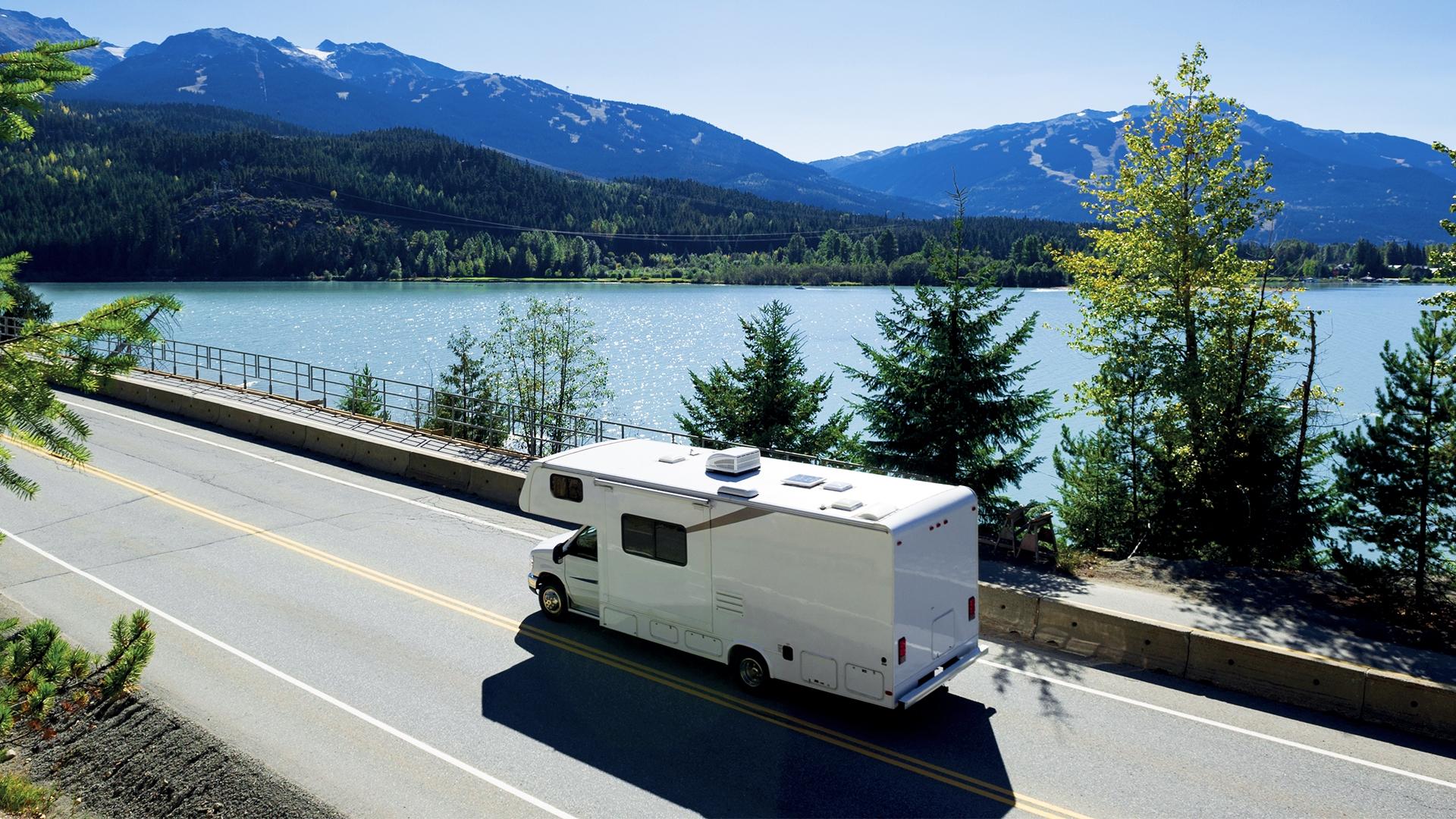
A recreational vehicle, seen from above, drives along a road bordering a lake in British Columbia.

Insuring a recreational vehicle (RV) isn’t the same as insuring a car or a home. Specific insurance coverage is needed to protect your vehicle, your belongings, and your safety. Here’s what you need to know to be properly covered.

What does recreational vehicle insurance include?

In this guide, the term “recreational vehicle” (RV) refers primarily to motorhomes. RV insurance is different from auto or home insurance. It includes:

  • Mandatory liability coverage
  • Additional coverage for your vehicle and belongings
  • Protection for you and your loved ones while travelling

What amount of liability coverage is required for an RV?

In Quebec, the minimum liability coverage required for an RV is $50,000.

This coverage includes:

  • Property damage or bodily injury caused to third parties if you’re found responsible
  • Damage not covered by the Société de l’assurance automobile du Québec (SAAQ)

Good to know: In practice, $50,000 rarely covers the consequences of a serious accident. Coverage limits of $1 million—or even $2 million for trips to the United States—is generally recommended.

Insuring your RV against risks: Essential additional protection

Once your liability coverage is in place, you need to protect your RV against material damage. Insurers typically offer various levels and types of coverage:

  • All-risk insurance (subject to exceptions)
  • Specified perils: Fire, theft, hail, and wind
  • Perils other than collision or upset: Fire, theft, hail, wind, glass breakage, and vandalism
  • Collision and upset

Common additional options:

  • Endorsement 20A – Travel expenses: Covers a rental car or hotel room if your RV is out of service due to a breakdown.
  • Endorsements 43A and D – Replacement cost coverage: Replaces your RV or its parts without depreciation. In the event of a total loss, you can replace your RV with an equivalent new vehicle or receive a cheque for the purchase price.
  • Protection for belongings inside—and sometimes outside—the vehicle, useful for seasonal campers.
  • Trailer repatriation coverage: Covers the cost of transporting your trailer home if the towing vehicle is stolen or declared a total loss in an accident.

How much does RV insurance cost?

The cost of a recreational vehicle insurance policy depends on several factors:

  • Make, model (vehicle type), class, and year of the vehicle
  • Purchase price or market value (If needed, have the vehicle appraised by an expert to get a better idea of the value to insure)
  • How the RV is used: for driving or for seasonal placement at a campground
  • Driving record

Good to know: Minimum deductibles are usually higher than for a regular car (about $500). Also, no storage credit is offered, since seasonal use is already factored in.

Pro tip

“Be sure your RV is protected against theft, fire, vandalism, and even collapse during winter storage. This way, you’ll have peace of mind all year round.”

Suzanne MichaudVice President, Insurance​, CAA-Quebec

Renting an RV: What insurance should you consider?

If you’re renting an RV for a trip, be sure to check your coverage:

  • Your auto insurance or credit card may already provide sufficient coverage for a rental vehicle.
  • Rental companies may require additional insurance—the prepaid option is often more cost-effective.
  • Some coverage can sometimes be removed from the insurance policy to reduce costs or added to provide better protection.

Insuring an RV at a seasonal campground

Planning to set up your RV on an annual site at a campground for seasonal use? You have two options for insuring your RV—trailers or fifth-wheel campers. You can:

  • Insure your RV like a home: Your personal property is protected against floods or other disasters. This is useful for waterfront campsites.
  • Insure your RV like a vehicle: Your RV is covered while you’re on the road.

Tip: Talk to your insurer to choose the option best suited to your situation and travel habits.

Insuring a van converted for van life

If you convert a vehicle into an RV, your home insurance may cover certain personal belongings inside it, up to 10% of your home insurance coverage.

If your belongings exceed this value, consider increasing your coverage or insuring the RV as a separate vehicle.

Insurance for you, your loved ones, and your pets

Insuring your recreational vehicle properly is only part of the equation—you also need to protect yourself and your family. Here are a few types of insurance that could save you a lot of trouble.

Travel insurance

  • Emergency medical coverage in Quebec—for medical expenses not covered by the RAMQ—and abroad
  • Access to a remote doctor for minor health issues
  • Trip cancellation or interruption expenses, or access to a remote doctor for minor health issues
  • Veterinary expenses if your dog or cat is injured while travelling with you (with some insurers only)

Accident insurance

  • Reimburses certain paramedical expenses (chiropractor and physiotherapist), equipment (crutches), or ambulance transportation;
  • Ideal for outdoor activities during your RV trips.

Pet insurance

  • Covers certain veterinary care or cancellation costs if your pet needs emergency care in Canada and the United States only.

Roadside assistance and RV maintenance

485-Comment-assurer-un-VR.jpg
In addition to insurance, roadside assistance tailored to your RV is essential. With the RV option available with CAA Plus® and CAA Premier® cards, you get four service calls exclusively for your recreational vehicle in the event of a breakdown, flat tire, getting stuck, or other unexpected situation.

Proper maintenance is just as important: the CAA-Quebec Approved Auto Repair Service network includes shops that specialize in recreational vehicles.

See how our Auto and Vehicle Insurance can meet all your needs!

To ask your questions:
1-844-446-3636