
Benefit from personalized advice
Do you have questions about gas-powered or electric vehicles, driving, or need recommendations to find an Approved Auto Repair Service?
To contact our Mobility Advisory Services:
1-888-471-2424
Preparing your recreational vehicle (RV) for winter is essential to protect your RV from freezing, humidity, and damage related to indoor or outdoor RV storage. Learn how to winterize your RV so you can find it in perfect condition in the spring—ready for camping season and your next road trips.
Indoor RV storage protects your vehicle from harsh weather, moisture, and freezing temperatures while ensuring better winter humidity control. It lowers the risk of corrosion, leaks, and water damage caused by snow or ice.
You can leave your RV (motorhome, fifth wheel, travel trailer or tent trailer) with a professional RV storage facility. You can also store it in a garage, warehouse or private building. The space can be heated or unheated—just make sure it is dry and and allows proper air circulation.
Outdoor RV storage is more affordable, especially if you have your own land, driveway or accessible lot. However, you must add extra protection such as an RV tarp, RV cover and proper ventilation. These measures help prevent water infiltration, condensation, and damage to the roof or structure.
Options | Pros | Cons |
|---|---|---|
Indoor | Best protection from the elements | Higher cost, limited space |
Outdoor | Less expensive, easier access | Requires proper prep and protection |
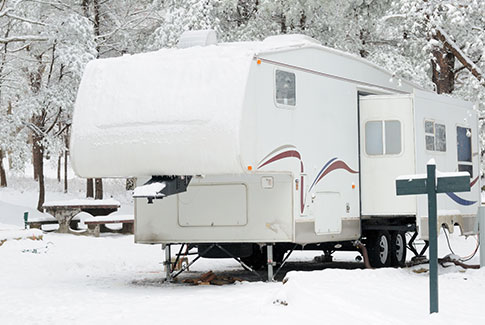
Yes. You should always cover your RV when it is stored outdoors for better cold weather protection.
Important: Remove snow from your RV or its shelter as soon as snow accumulation reaches about 30cm (one foot).
Yes, reserve your storage space as early as possible. Heated or indoor winter RV storage spots fill up quickly, and early reservations often get better pricing.
The cost of RV storage varies depending on:
Some specialized companies offer RV maintenance services in winter, but you can do it yourself. The process is the same for travel trailers or fifth wheels equipped with similar systems.
Before storing your RV for winter, remove the following:
Once your RV is emptied, follow these steps to properly prepare the interior:
Tip: Always check your owner’s manual. Questions? CAA-Quebec’s Mobility Advisory Services can help.
Here are the mechanical tasks required to winterize a motorized RV:
Yes. Remove and store the RV battery in a dry, temperate place before long-term storage. Avoid cold surfaces like concrete, and recharge it every 4 to 6 weeks.
To prevent rodents in your RV during winter, follow these simple tips:
Your RV is protected against non-collision damage, such as:
For extra protection once you're back on the road, make sure you have your CAA-Quebec membership. The RV Option gives you Roadside Assistance tailored to your vehicle, which is perfect for RV owners seeking peace of mind.
Most of the time, no. Many insurers, including CAA-Quebec, do not offer credits for storage because this protection is already included in the annual premium.
If your insurer allows a suspension, make sure:
Storing your RV for the winter months means protecting it in a safe, weather-resistant location to prevent damage from snow, ice, humidity and temperature changes. Whether you choose indoor or outdoor RV storage, make sure the space is dry, secure and properly ventilated. Good storage practises help maintain your RV’s condition, reduce wear on key components and ensure that your vehicle is ready to hit the road again when camping season returns.
Storing your RV can also be done with the Société de l’assurance automobile du Québec (SAAQ). It allows you to temporarily suspend your RV’s registration in order to save money. However, this option is not available for trailers and tent trailers. Their registration is paid only once, as long as you remain the owner.
Do you have questions about gas-powered or electric vehicles, driving, or need recommendations to find an Approved Auto Repair Service?