Striped skunk: tips to keep it away
Published on July 31, 2026
4 mins reading time
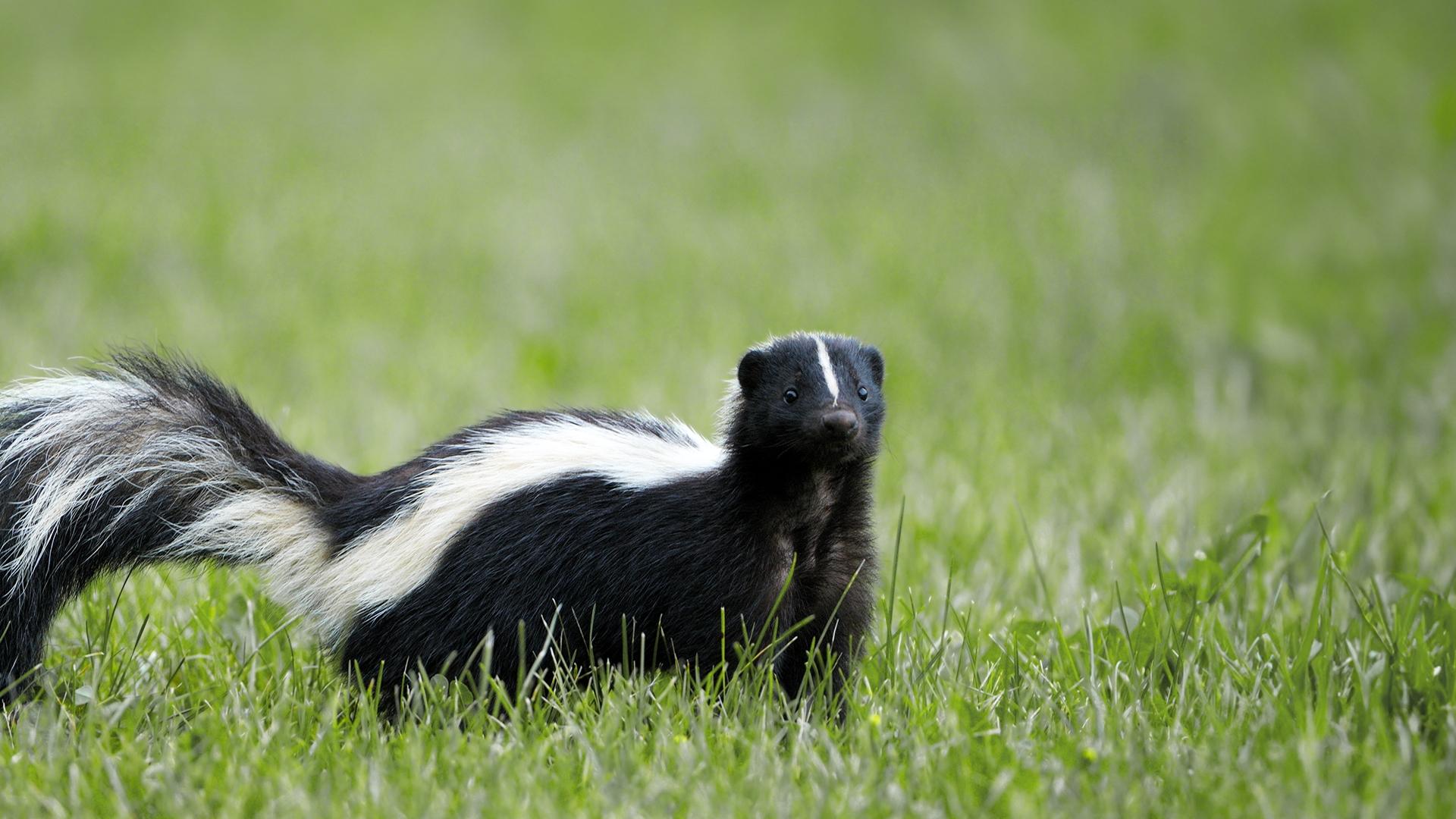
A wild mammal common in Quebec and across North America, the striped skunk is helpful for controlling certain insects and small mammals. But its presence near your home can become a nuisance, especially when it digs holes in the lawn or moves in under a porch or shed. Find out how to keep a skunk away, prevent its presence, and get rid of its odour if it has sprayed you or your pet.
Striped skunk behaviour
Recognizable by its black fur and white stripe, the skunk—often nicknamed the polecat—is mostly active from dusk to dawn. It usually comes out at night to look for food and eats just about anything: insects, worms, eggs, fruit, nuts… Garbage cans quickly become a food source.
As for shelter, it uses a burrow (sometimes under decks or patios) to raise its young in spring and summer, and for semi-hibernation during the winter months. A poor climber, it rarely settles at height.
Is the striped skunk helpful or harmful?
Helpful
- It helps control certain harmful species.
Harmful
- It digs through garbage cans looking for food, which causes damage and attracts other unwanted animals.
- It can spray a foul-smelling liquid up to 6m away if it feels threatened, which can cause temporary blindness and irritate the eyes and mucous membranes.
- Like raccoons, skunks dig in the lawn to catch grubs.
- It can carry the rabies virus. Avoid approaching a skunk that’s behaving unusually, such as coming out of its den in broad daylight or seeming unafraid, as this could indicate an infected animal.
How to keep a skunk away from your home
To limit its presence, you mainly need to eliminate food sources and block access to places where it could take shelter.
1. Protect your lawn and garden from skunks
If your lawn has cone-shaped holes, a skunk may have dug them while searching for grubs.
- Treat your lawn for grubs.
- In the vegetable garden, spread a commercial pepper-based repellent or make your own natural repellent.
- If needed, fence off the garden or the area under the patio with wire mesh. Use a mesh size of 5cm or less and posts 1.5 to 1.8m high.
2. Keep skunks from getting into your garbage
Food odours easily attract skunks. To keep them from rummaging through your trash:
- Use a closed, sturdy container for your waste, such as a wood or metal bin or a garbage can with a lid that’s hard to remove. If needed, secure it to a fence to keep it from being knocked over.
- Clean your garbage can often to eliminate odours that attract animals.
- Only put your trash out on the morning of collection day.
How to get a skunk out from under your porch or shed
Here’s what you can do to get the animal out from under a porch or shed:
- Place a work light in the burrow or play a radio using speakers set on the ground and aimed at the opening. However, avoid blocking the entrance until you’re sure the skunk is gone.
- Temporarily plug the burrow entrance with rags soaked in animal repellent. Do this during the day while the skunk is sleeping; it will push the rags out to get outside in the evening.
- Repeat the process patiently for about ten days. The animal should leave. If the rags are still in place in the morning, it likely means the animal has left its den.
- Permanently seal the burrow entrance with wire, sheet metal, or sturdy mesh.
Can you relocate a skunk?
Yes, but only as a last resort and in compliance with current regulations. Transporting live skunks is prohibited in certain municipalities in the Eastern Townships and Montérégie to help limit the spread of rabies. If capture becomes necessary, call a pest control company.
How to get rid of skunk odour
Despite popular belief, tomato juice isn’t the best solution for getting rid of stubborn skunk odour. Depending on the situation, a few simple tricks can help you eliminate bad odours from your belongings or your pet.
1. How to remove the odour from clothing, furniture, or your home
Mix vinegar and water (1:10), then use this solution to clean the affected surfaces. Test on a small area first for more delicate fabrics and materials.
To get rid of odours in a car or garage, place an odour-absorbing sponge, available at pet stores and major retailers.
2. How to wash a dog that’s been sprayed by a skunk
If your dog or cat has been sprayed by a skunk, act quickly and wash it before it comes into the house. Prepare the following mixture (do not store it), avoiding your pet’s eyes, then rinse thoroughly:
- 1 litre of 3% hydrogen peroxide
- 1/2 cup of baking soda
- 2 teaspoons of liquid dish soap
Learn more about striped skunks
GOVERNMENT OF CANADA
Striped skunk
FAQ – Striped skunks
Skunks are attracted to easily accessible food sources, such as garbage, insects, grubs, and food scraps.
A persistent odour, holes in the lawn, or an opening under a porch can indicate the presence of a skunk.
Skunks generally avoid humans, but they can spray a foul-smelling liquid when they feel threatened. They can also carry rabies, so it’s best not to get too close.
No. It’s a very poor climber. It mostly stays on the ground, in burrows or under low structures.
Do you need personalized advice on your home?
Our Residential Advisory Services counsellors are there to answer your questions and support you when you need it. Ask for their advice as often as you like. It’s one of the benefits of membership.