

Benefit from personalized advice
Do you have questions about gas-powered or electric vehicles, driving, or need recommendations to find an Approved Auto Repair Service?
To contact our Mobility Advisory Services:
1-888-471-2424
Road safety concerns everyone, regardless of age. Roles and responsibilities differ depending on life stage. However, the goal remains the same: keeping yourself, your loved ones, and other road users safe.
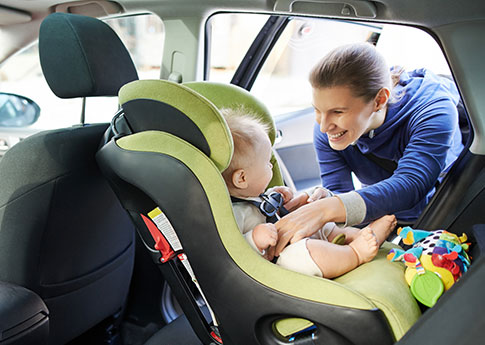
Babies are entirely dependent on their parents when it comes to car safety. From birth, it’s essential to protect them in the car and gradually teach them the right behaviours:
These reflexes take practice, patience … and a good role model to follow.
The SAAQ advises against using second-hand car seats, as their lifespan is limited (6 to 12 years). It’s better to recycle children’s car seats when they’re no longer needed.
Good to know: CAA-Quebec’s Mobility Advisory Services offer support to anyone looking for information on children’s car seats.
There are several models of child bike seats available (front, rear, with or without support). As with a car seat, you should choose a model suited to the child’s weight and compatible with the bike.
Road safety experts and the SAAQ recommend using bike seats and trailers for children aged 12 months and older. Children must be able to sit up on their own and wear a helmet. This isn’t a law, but a recommendation—and caution remains essential.
Tip: Installing a small mirror on the bike’s handlebars lets you keep an eye on your passengers without taking your eyes off the road.
The earlier a habit is formed, the more it will stick for life. With children, the key is making road safety learning fun and engaging. Games, real-life scenarios, and regular repetition make it easier to retain the basic rules:
This approach builds lasting reflexes. It can also lead children to join the school safety patrol to look out for their classmates.
Adolescence is often when young people take their first steps behind the wheel. It’s a key stage for young drivers to adopt safe driving behaviours.
To develop good reflexes, it’s important to:
The choice of driving school and a good role model are crucial for building safe habits.
Even as a passenger, teens must learn to say no to a driver who is not fit to drive. These decisions strengthen their sense of responsibility and their safety on the road.
With experience comes the challenge of staying vigilant behind the wheel. Overconfidence can lead to risky behaviours, especially under the influence of alcohol. The consequences can be serious: accidents with victims, injuries, financial losses.
Distractions also affect adults: GPS, onboard computers, music, eating and drinking while driving. It all comes down to applying CAA-Quebec’s PAP method before leaving:
Driving doesn’t depend on age, but on physical and cognitive abilities: vision, reflexes, and physical condition. Even though certain abilities may begin to decline as early as age 45, it is possible to adapt.
The CAA-Quebec Foundation offers the guide Safe driving has no age limit, which covers:
The Highway Safety Code evolves over time. New road configurations sometimes require relearning. That’s why a driving course tailored to older drivers can be beneficial—for example, to better handle winter driving or navigating roundabouts.
If cognitive or physical abilities are no longer sufficient, other options exist to stay mobile: public transit, carpooling, taxis, and shuttles.
Good to know: Many people feared losing their independence when they handed over their keys. Instead, they discovered unexpected benefits: less stress, financial savings, and new social connections.
In short, road safety awareness is everyone’s responsibility. Through its research, conferences, and awareness initiatives, the CAA-Quebec Foundation contributes to saving lives and making roads safer for all users.
Do you have questions about gas-powered or electric vehicles, driving, or need recommendations to find an Approved Auto Repair Service?