
Benefit from personalized advice
Do you have questions about gas-powered or electric vehicles, driving, or need recommendations to find an Approved Auto Repair Service?
To contact our Mobility Advisory Services:
1-888-471-2424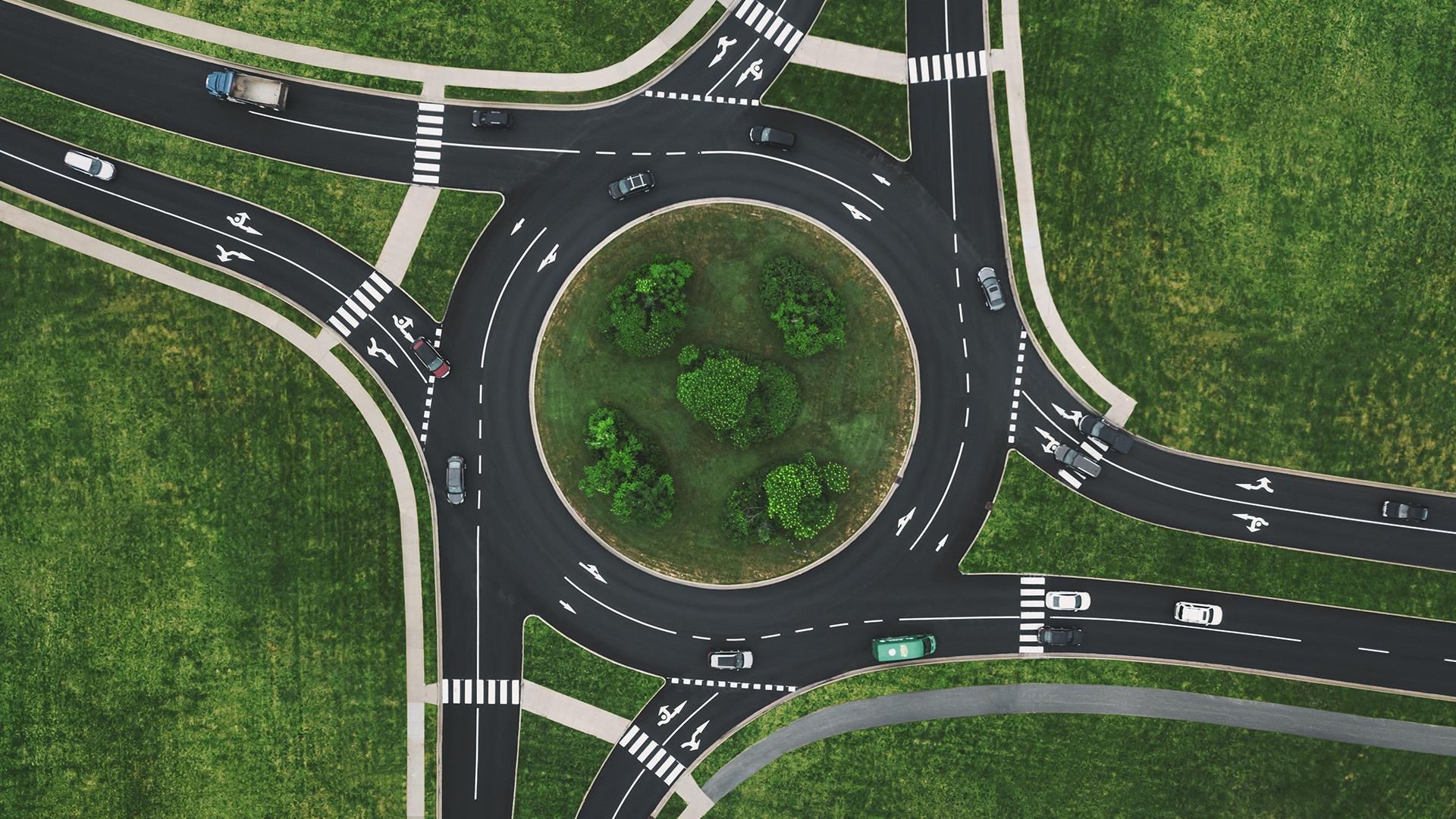
Roundabouts improve traffic flow and reduce both the number and severity of accidents. Yet many drivers don’t know how to approach them. Discover the rules to follow, the mistakes to avoid, and how to get through them safely.
A roundabout functions differently from a traffic circle. In a roundabout, you must yield to vehicles already inside the circle, whereas in a traffic circle, it’s the opposite.
Since traffic moves continuously and at low speed, the risk of serious collisions is greatly reduced. This also improves traffic flow. Despite this, many drivers still find it difficult to enter or exit a roundabout.

“Confusion between roundabouts and traffic circles is common, especially among older drivers who are more accustomed to traditional traffic circles. Younger drivers, for their part, lack hands-on experience. Their introduction to roundabout rules is often limited to a theoretical approach or the use of a driving simulator.”
Roundabouts are an effective solution to road congestion. They eliminate complete stops, unlike traffic lights and stop signs. They also significantly improve road safety. Their design reduces serious collisions, particularly right-angle crashes, which are among the most dangerous.
Additionally, this circular solution is considered less costly to maintain than a traditional signalized intersection.
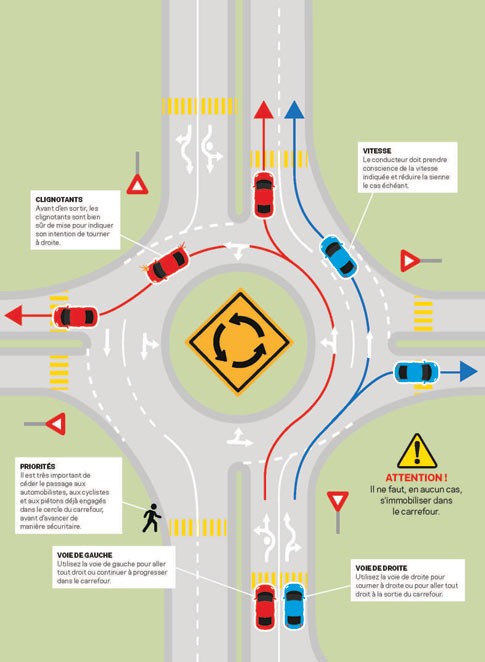
Which lane should you use depending on where you want to go, who has the right of way, what speed to maintain, and when to signal?
Here are the steps for navigating a roundabout safely:
Slow down: Roundabouts are designed for low-speed traffic. Recommended speed signs (often 25 or 30km/h) may be posted.
Check for pedestrians and cyclists: If present, be prepared to stop.
Identify your exit: Look at the signs indicating destinations for each exit. Have a clear idea of which exit you need before entering the circle.
Drivers, cyclists, and pedestrians already inside the roundabout have priority over you. Slow down and yield as needed to proceed safely.
Key points for entering and driving through the roundabout:
Note: Stopping inside a roundabout is strictly prohibited.
Don’t panic—and above all, don’t brake suddenly or reverse inside the roundabout. Simply go around again and take the correct exit on your next pass.
These common roundabout mistakes create unsafe conditions and unnecessary traffic disruptions:
Here is an overview of the penalties for failing to comply with road safety rules in roundabouts.
Infraction | Penalty in Quebec |
|---|---|
Failing to yield to vehicles already in the roundabout (at entry) | Fine of $200 to $300 |
Failing to yield to pedestrians crossing | Fine of $200 to $300 |
Failure to signal (turn signal) when exiting | Fine of $100 to $200 |
Stopping or coming to a standstill in a roundabout | Fine of $100 to $200, plus fees |
The Highway Safety Code is clear. At all times, you must yield to emergency vehicles (fire trucks, ambulances, police) operating with their lights and sirens on. However, yielding to an emergency vehicle in a roundabout is handled differently than on other roads:
The goal is to clear the way without blocking traffic, while respecting other road users.
In short, roundabouts save time—but more importantly, they save lives, by reducing the number and severity of accidents.
Do you have questions about gas-powered or electric vehicles, driving, or need recommendations to find an Approved Auto Repair Service?