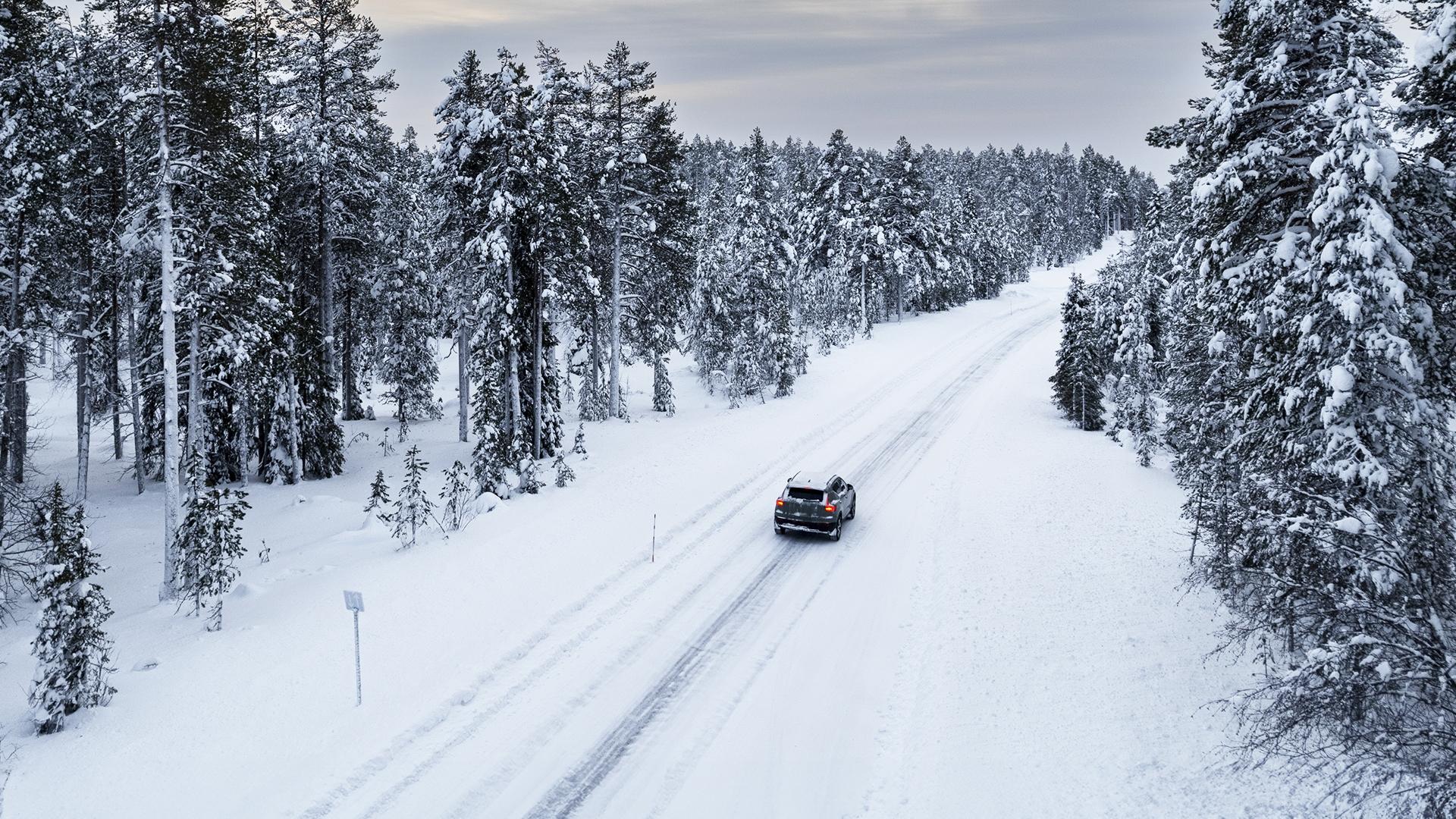
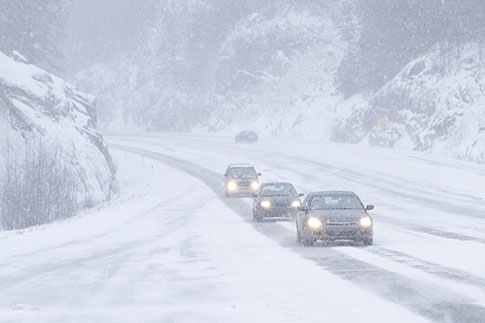
In winter, road conditions change quickly and require you to adapt your driving. Discover our expert tips for safe winter driving, from preparing your vehicle to the right actions to take if you start to skid.
Prepare your vehicle for winter
Before hitting the road, make sure your vehicle is ready for cold-weather conditions. Here’s what you should check:
Also take the time to restock your winter emergency kit. In addition to the usual items, add:
shovel
snow brush
ice scraper
traction aids or a bag of abrasive material
winter windshield washer fluid
For your safety, also keep reflective triangles or a reflective safety vest. Add a battery-free flashlight, a few tools, a first-aid kit, a warm blanket and nonperishable food.
Completely clear snow off your car before driving
You may not know this, but driving with snow or ice on your car, windows or licence plate can be costly. It can lead to a $60 to $100 fine (plus fees). Read our tip How to properly clear snow and ice off your car to avoid getting a ticket—and, more importantly, to stay safe on the road.
accelerate gradually to help your tires grip the road
turn the steering wheel smoothly to maintain control of your vehicle
Watch out for areas prone to black ice—bridges, overpasses and open sections—especially when the temperature hovers around 0°C.
Good to know: On rural roads, the surface can quickly switch from dry to snow-covered or icy. Slow down to avoid surprises on slippery patches.
What to do if you start to skid on icy roads
How to react to front-wheel skidding (understeer)
Understeer occurs when centrifugal force exceeds the grip of the front tires and your vehicle slides forward, often due to excessive speed or sudden braking (wheel lockup).
To correct your course:
reduce pressure on the accelerator or brake pedal
steer the wheels toward the curve, looking where you want to go
Perform this manoeuvre gently—especially if you drive a front-wheel-drive or rear-wheel-drive vehicle. Releasing the accelerator too quickly could cause the rear end to skid.
How to react to rear-wheel skidding (oversteer)
Oversteer occurs when the rear of your vehicle starts to swing out.
If the back end of your car slides:
turn the front wheels in the direction the rear has started to skid
look in the direction you want to go
repeat the correction quickly and precisely if the vehicle swings back the other way
What is a safe following distance in winter?
During the winter months, increase your minimum following distance from the vehicle in front: aim for at least 6 seconds, or more depending on conditions. This longer following distance gives you more time to react and makes your driving smoother and more predictable. Keep it in mind on your next trip!
Avoid cruise control on slippery roads
In winter, it is generally recommended to avoid using cruise control, especially when roads are slippery or snow-covered.
Expert’s insight
“Using cruise control in winter limits your ability to adjust acceleration and braking based on road traction. To maintain optimal control of your vehicle, choose manual, smooth and reactive driving instead.”
Daniel FrappierSupervisor, CAA-Quebec Driving Schools
Practice if you’re not confident driving in winter
If you’re not fully comfortable driving in winter, practice in a large, empty parking lot. Test your turns, braking distances and skids at moderate speed. This will help you better understand how your vehicle reacts and anticipate situations for improved road safety. Winter driving courses are also a great idea!
Postpone your trips during a storm or poor visibility
It’s best to postpone your trip if a storm is coming, visibility is reduced or weather conditions become too unstable. Sometimes this is the safest choice. Wait until the weather improves and roads are cleared before heading out.
Winter driving for electric vehicles (EVs)
Winter driving tips apply to electric vehicles (EVs) too. On icy roads, accelerate gently, since the instant power of an EV can cause a loss of traction. Make sure your tires are suitable and your EV’s traction battery is properly managed to drive safely when temperatures drop.