Cycling and the Highway Safety Code: What you need to know

Updated on June 22, 2026
4 mins reading time
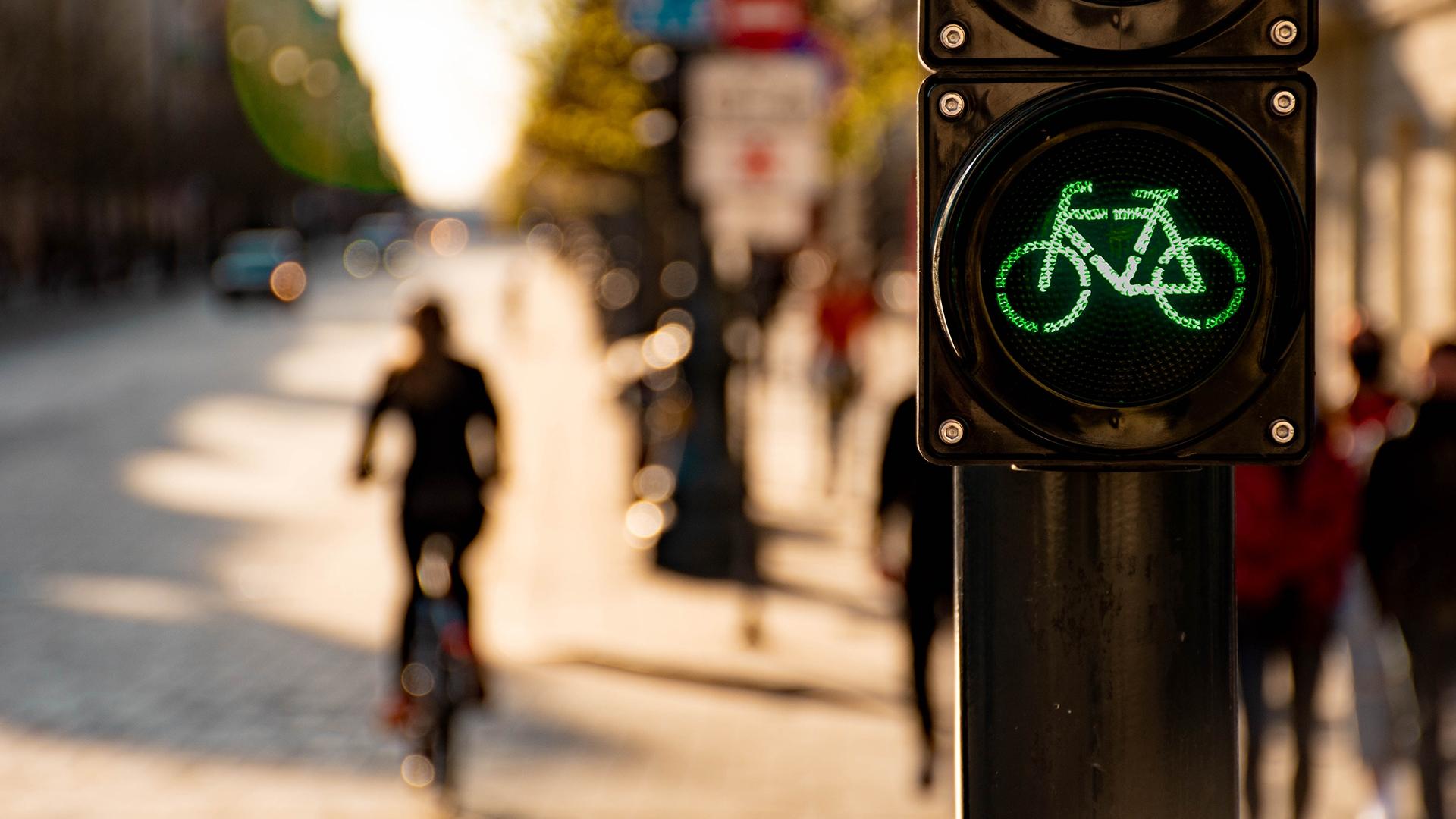
Close-up of a green traffic light for bicycles. In the blurred background circulate motorists, cyclists, and pedestrians.

Just like motorists, cyclists must comply with the Highway Safety Code (HSC). Here’s a reminder of the main obligations and best practices to improve your cycling safety and promote better road sharing.

General riding rules for cyclists

  • Riding a bike on public roads comes with responsibilities. Keep these essential rules in mind, regardless of the type of bicycle you use.
  • Ride on the sidewalk only when necessary (to ensure your safety) and when signage allows it.
  • Obey all traffic signs, including stop signs, even when the road is clear.
  • Stop at least five metres away from school buses when their red lights are flashing.
  • Stay as close as possible to the right side of the road (or curb). This reduces the risk of dooring accidents from parked cars (a suddenly opened car door) and gives you more room to avoid obstacles.
  • Maintain a safe passing distance from vehicles overtaking you:
    • 1.5 metres on roads with speed limits over 50km/h;
    • 1 metre on roads with speed limits of 50km/h or less. Keep this buffer to ride straight, especially on damaged pavement.
  • Do not consume alcohol while cycling. An offence may result in a $80 to $100 fine.

See our advice Are cyclists required to use bike lanes? to better understand where you can ride safely.

What are the HSC rules for electric bikes?

All cyclists must follow the Highway Safety Code. However, specific requirements apply if you ride an electric bike (e-bike)

  • Wearing a helmet is mandatory on an electric bike at any age, or you risk a fine.
  • You must be at least 14 years old to use an e-bike.
  • From 14 to 17, a Class 6D licence is required.
  • From 18 and up, no licence is needed.
  • E-bikes are generally allowed on bike paths, unless they are equipped with footrests.

Riding must always be adapted to your surroundings. For example, in urban areas, heavy traffic and pedestrian presence require increased vigilance. 

These rules are in addition to the general obligations for cyclists, whether you ride a traditional bicycle or an electric bike. 

Pedestrian and cyclist priority lights

Pedestrians always have priority at pedestrian crossings. As a cyclist, you must stop first to let them pass. Then you may proceed while staying seated and pedalling at a reasonable, cautious speed. 

Good to know: The same rule applies at painted crosswalks without traffic lights. Always stay alert to pedestrians and other road users to ensure safe road sharing. 

Road sharing and protecting the most vulnerable

Cyclists and the new Highway Safety Code rules
Cyclists in Quebec must remain vigilant around pedestrians — even those crossing illegally or glued to their smartphones! The concept of sharing the road truly applies here.

Reflectors and lights: Mandatory equipment on your bicycle

If you use a road bike for daily commuting or long-distance rides, make sure it’s properly equipped and compliant with the Highway Safety Code. 

You must have at least six reflectors on your bicycle, electric or not. These may include: 

  • Reflective strips on tires
  • Reflective elements on rims
  • Reflective strips on your cycling shoes

A front white light and a rear red light are also mandatory  when riding in the dark. CAA-Quebec recommends installing active lights (battery-powered, dynamo, or induction) so you can see and be seen.

How to navigate an intersection with a right-turn-only lane by bike

The Highway Safety Code allows cyclists to ride between two rows of vehicles only when going straight through an intersection where a lane is reserved for right turns. 

Here’s how to position yourself: 

  • Place yourself to the left of vehicles turning right, carefully.
  • Make sure you’re clearly visible and avoid the many blind spots of heavy vehicles (trucks, buses).
  • If the intersection has a bike waiting box (bike box), move forward into that space.

This lets you position yourself in front of the line of cars, clearly visible, while waiting for the light to turn green. 

Fines and penalties: What you risk for cycling violations

Cycling fines in Quebec can reach $100 (plus fees) — the same amount whether you ride an electric bike or a standard bicycle. These measures aim to promote accountability. For example, the following prohibited behaviours may lead to a fine: 

  • Riding without lights at night;
  • Riding while wearing headphones;
  • Riding while handling an electronic device, such as a smartphone.

Simple habits for riding safely

Before heading out: 

  • Do a quick bike check: brakes, tires, chain.
  • Wear a helmet, even when it’s not always mandatory.
  • Choose reflective clothing or accessories.
  • Clearly signal your intentions with your arms.
  • Stay predictable: avoid zigzagging and sudden direction changes.
  • Call on Bike Assist, exclusive to members, if something happens to your bicycle.

Finally, review your insurance coverage so you can ride with peace of mind.

Do you have questions about gas-powered or electric vehicles, driving, or need recommendations to find an Approved Auto Repair Service?

To contact our Mobility Advisory Services:
1-888-471-2424