
Benefit from personalized advice
Do you have questions about your home, need specific information, or are you looking for referrals to find an Approved Supplier?
To contact our Residential Advisory Services
1-877-803-1118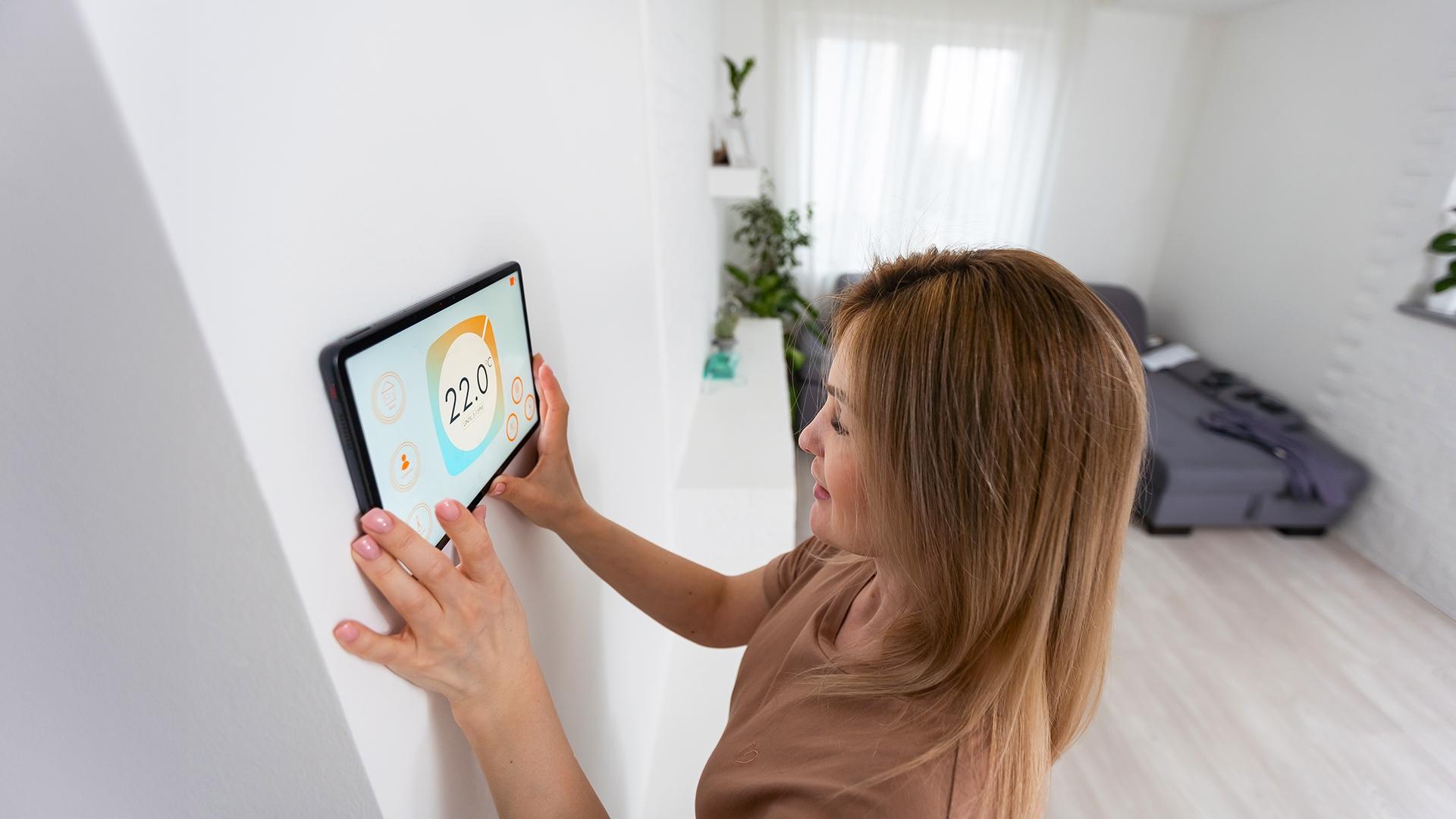
Do you want to reduce your utility bills while boosting your comfort? Smart-home technology, intelligent devices, and renewable energy sources like home solar panels offer accessible solutions. Discover how to improve your home’s energy efficiency with practical tools that are simple to use and cost-effective in the long term.
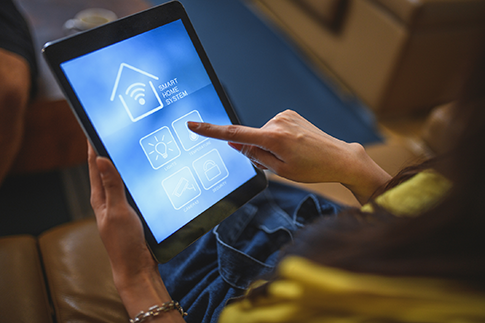
Smart-home technology automates a home’s systems. It allows you to control heating, air conditioning, lighting, and even certain electrical appliances. Most of these settings can be adjusted remotely using a smartphone, tablet, or computer.
This means you can adapt your home’s energy consumption to your real needs, whether you’re at home, at the office, or travelling abroad.
Although often associated with energy savings, smart-home technology also enhances day-to-day safety and comfort. To learn more, read our guide Home automation and AI at home: Safety, comfort and energy savings.
If you don’t plan to “robotize” your entire home, several smart accessories can still simplify your life and help optimize your energy consumption. Here are the most common options and their benefits.
A smart thermostat automatically adjusts the temperature in each room based on your lifestyle.
Cost: Varies from $100 to $300
Return on investment: With proper programming, you can save 10% to 20% on heating and about 15% on cooling.

“Simply owning smart devices doesn’t guarantee energy savings. The key is learning how to program them so they work to your advantage. If you’re unsure where to start, I recommend contacting CAA-Quebec’s Residential Advisory Services, which can guide you efficiently.”
How does an energy monitor work, and what are the benefits? An energy monitor features real-time energy consumption tracking and monitors the operating cost of your appliances. It is usually connected directly to the electrical panel or plugged into wall outlets. It helps you:
Some models can even alert you when an appliance is malfunctioning.
Cost (purchase + installation): Between $100 and $300
Energy performance: Up to 7% to 25% more efficient than a standard device
Is solar energy a good option for your home? That’s up to you, but it’s definitely worth getting information from a reliable specialist and calculating the installation cost versus potential savings.
Home solar power is free, renewable and non-polluting. How does it work? Panels installed on your roof or property convert sunlight into electricity.
In Quebec, solar power is still marginal because of the low cost of hydroelectricity. However, it can be ideal for powering an off-grid cottage power setup, a garage, or a shed.
Cost (purchase + installation): $10,000 to $23,000
Return on investment: Solar panels eventually pay for themselves over the long term
In addition to smart-home technologies, a few practical actions can help you save energy at home:
Good to know: Water heating represents 20% of the energy used in a Canadian household. Check your unit’s age—a leaking, outdated water heater could lead to an insurance coverage refusal from your home insurer.
Some home energy management apps connected to energy monitors can help you track your consumption data and spending (including monthly bills):
Do you have questions about your home, need specific information, or are you looking for referrals to find an Approved Supplier?