
Benefit from personalized advice
Do you have questions about gas-powered or electric vehicles, driving, or need recommendations to find an Approved Auto Repair Service?
To contact our Mobility Advisory Services:
1-888-471-2424
Want to keep your vehicle longer and preserve its value? Rustproofing treatment is one of the best ways to do that. Discover how to choose the right treatment, when to do it, and what other steps to take to help protect your car from rust. Let’s dive in!
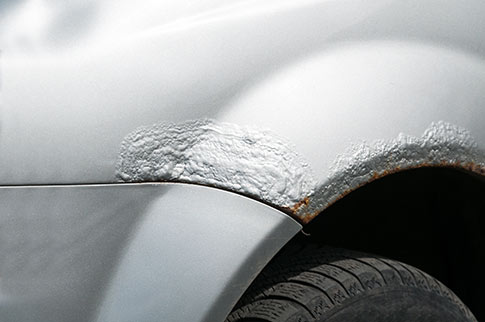
Cars rust because the layer of paint that protects the metal becomes damaged. Gravel kicked up from the road can chip it, making it easier for rust to form. Harsh winters and frequent temperature changes also play a role: water and salt can reach the exposed metal surface and trigger a corrosion process. Over time, rust can shorten your vehicle’s lifespan and reduce its value.
Good to know: Corrosion is covered by all manufacturers under a limited warranty.
Rustproofing treatment involves applying a protective product to the metal parts of a vehicle. This helps slow down corrosion caused by salt, moisture, and road contaminants. It’s a smart investment if you plan to keep your vehicle for a long time.
Each type of rustproofing treatment has its own advantages and characteristics. The best choice depends on your vehicle, your driving habits, and how long you plan to keep it.
This type of treatment offers long-lasting protection and generally doesn’t require annual application.
Points to consider: Its effectiveness depends on the product used and the quality of the installation. Its upfront cost is also higher than that of other treatments.
Cost: $400 to $700, depending on the vehicle and the product chosen.
Thanks to its fluid texture, this treatment—one of the most widely recognized in the industry—seeps into many hard-to-reach areas and protects surfaces exposed to moisture.
Points to consider: The treatment must be renewed every year to stay effective. It can also drip after application.
Cost: $100 to $175 per year, depending on the vehicle and the shop.
Good to know: CAA-Quebec members enjoy a discount on a complete rustproofing treatment at Metropolitan Rust Proofing.
It offers a balance between the penetrating ability of a liquid oil and better surface adhesion.
Points to consider: Thicker than a liquid oil, it doesn’t penetrate as easily into certain hard-to-reach areas.
Cost: $150 to $300, depending on the vehicle and the type of product used.
Its thicker texture allows it to stay in place longer and form a protective barrier against moisture.
Points to consider: improper application can block drainage holes and prevent water from draining properly.
Cost: $350 to $750, depending on the vehicle and the extent of the treatment.
Available evidence doesn’t clearly show that electronic modules effectively replace traditional rustproofing treatment.
Cost: a few hundred dollars to over $1,000, depending on the model and installation.
CAA-Quebec’s Mobility Advisory Services can help you choose the rustproofing treatment that’s right for your vehicle. They can also recommend a specialized shop.
Late summer and early fall—from August to October—are the ideal times to apply a rustproofing treatment. This protects your vehicle before road salt returns for the winter.
Ideally, you should start rustproofing treatment in the first few years of your vehicle’s life, before corrosion sets in. Even a new vehicle isn’t immune to gravel damage.
It’s generally best to apply rustproofing treatment in dry weather, when the vehicle is clean. Rain, snow, or water on the body of the vehicle can interfere with the application and adhesion of the product.
That said, some specialized shops have drying equipment that allows them to apply the treatment in less favourable conditions. Others use products designed to provide effective protection even when the weather isn’t ideal. Check with your chosen shop to find out about their application method.
Yes. Electric vehicles can also benefit from rustproofing treatment. However, it’s recommended to choose a specialized shop that uses a product designed for electric vehicles—our partner Metropolitan Rust Proofing is one such option.
Yes. Heat speeds up the corrosion process when a vehicle is covered in salt and moisture. In addition, rapid temperature changes can cause condensation to form on certain parts of the vehicle, keeping moisture in contact with the metal and promoting rust formation.
Rustproofing treatment provides excellent protection, but certain habits can also help reduce the risk of corrosion. Regular inspections, in particular, allow you to spot surface rust quickly and take action before it spreads.
As soon as the temperature allows, wash your vehicle to remove accumulated salt and dirt. Pay special attention to the area around the fenders and other hard-to-reach spots, where deposits can build up. Check out our video: Washing the outside of your car the right way (in French only).
Sealant protects and seals imperfections in the paint. This helps prevent rust from forming, while also protecting your vehicle against dirt and UV discolouration. Lasting 6 to 8 months, sealant is much more effective than wax, which only sits on the surface.
Debris kicked up from the road can chip paint and promote rust. To limit damage:
Here’s how to repair rust effectively, step by step.
Paint chips
Surface preparation is an important step before any touch-up. Start by cleaning the surface with a solvent designed for this purpose. Use water and a wax-free soap, then dry the body thoroughly.
Then apply touch-up paint (pen or spray) that matches your vehicle’s colour to protect the exposed metal.
Good to know: Before buying paint for your vehicle, check its colour code. It’s usually located on the driver’s side door jamb. A well-done touch-up protects exposed metal and helps limit damage before rust sets in.
Scratches
Use a mild abrasive (rubbing compound) to improve the appearance of scratched paint. Choose a paste if you’re working by hand, or a liquid if you’re using an electric buffer. Finish with a coloured wax to complete the job.
Rust bubbles
A bubble usually means rust has formed under the paint. Using a razor blade or small utility knife, remove the lifted paint. Scrape away the visible rust until you reach sound metal, clean the area, then apply primer and touch-up paint.
Rust patches
For more extensive damage, start by removing the visible rust with a sanding disc (using 320-grit wet sandpaper). Sand the surface, then apply a metal conditioner, primer, and several thin coats of paint to restore a sound, protected surface.

“For a small area, use a piece of cardboard with a hole the size of a quarter to limit the spray zone. Hold it about 4cm from the body and apply the primer, then the paint, in thin coats. For a larger area, hold the spray can about 25cm from the vehicle. Use a continuous up-and-down motion without stopping to avoid drips. Several thin coats will be needed.”
It’s best to call a specialist when rust is extensive, has penetrated the paint, or when repairs go beyond a simple touch-up. DIY touch-ups can slow the progression of corrosion, but they don’t always provide a lasting result or a flawless finish.
CAA-Quebec’s Approved Auto Repair Services include body shops and auto detailing centres that can offer advice and carry out the necessary repairs.
Rustproofing treatment applied at the right time, combined with regular maintenance, can help extend your vehicle’s lifespan and preserve its value. If you’re unsure, CAA-Quebec’s Mobility Advisory Services can help you choose the solution best suited to your vehicle.
Do you have questions about gas-powered or electric vehicles, driving, or need recommendations to find an Approved Auto Repair Service?