
Benefit from personalized advice
Do you have questions about your home, need specific information, or are you looking for referrals to find an Approved Supplier?
To contact our Residential Advisory Services
1-877-803-1118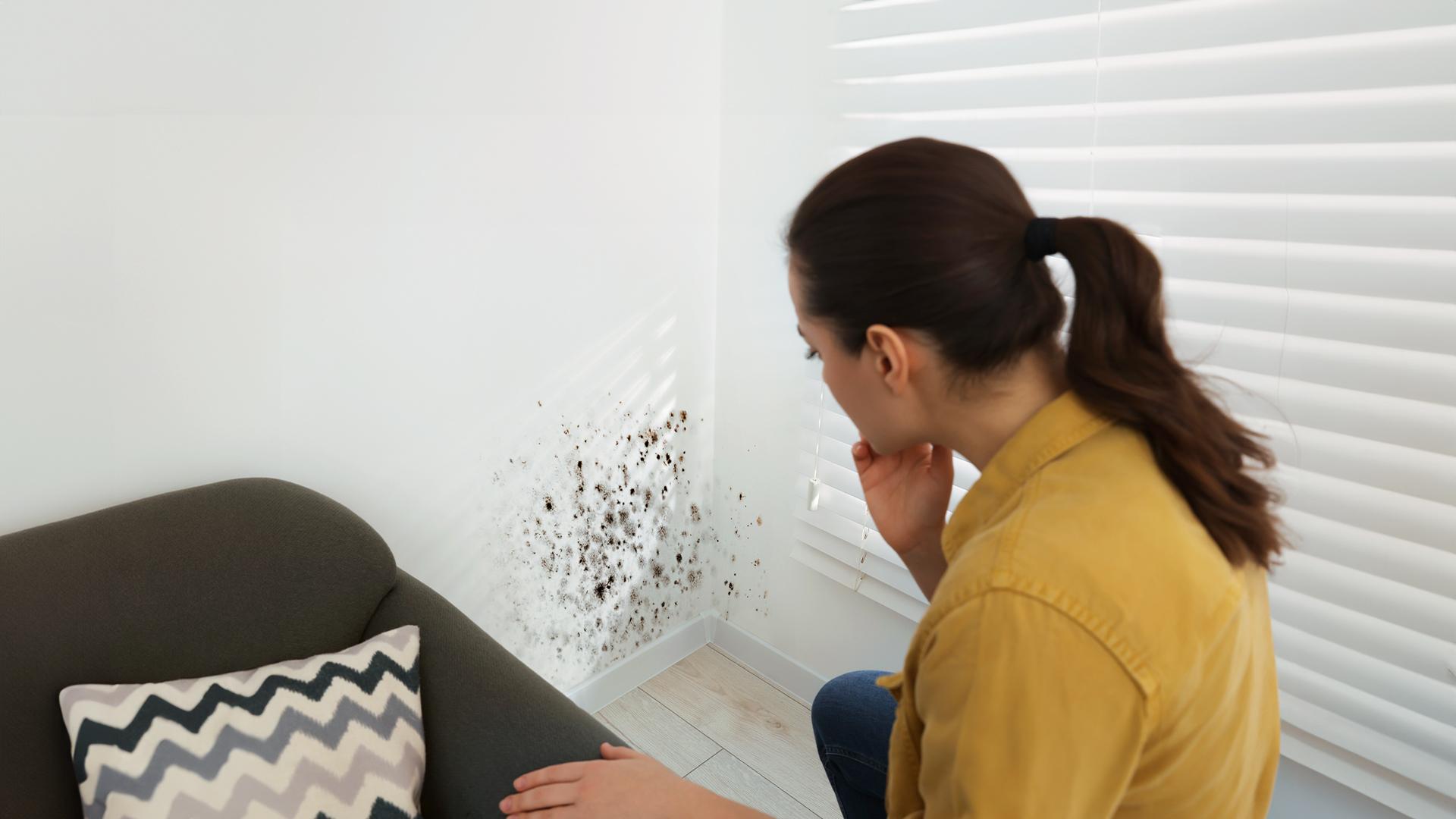
Mould can take hold in just 48 hours on any wet or damp material. Wood, gypsum board and some textiles are the most vulnerable materials in your home. Since mould can affect your indoor air quality and your health, act fast. Fix the moisture source, then clean.
Health Canada defines mould as very small fungi that grow on damp materials or food. Mould is a natural part of the environment, but once it builds up indoors it can trigger health problems and degrade your indoor air quality.
Watch for these common signs:

Mould always comes back to one thing: excess moisture. The usual culprits are:
Fix the source of the excess moisture first—a small water leak, for example—before you worry about cleaning. If you skip this step, the mould will be back before you know it.
You can do it yourself if you’re in good health and if:
First, gear up with:

“Keep everyone away from the work area throughout the entire job. If necessary, seal off the area with polyethylene vapour barrier sheeting to keep other rooms clean. Keep the area under negative pressure to prevent mould from spreading throughout the home.”
First, vacuum up the surface particles with a HEPA vacuum. Do not dry-brush, as this scatters spores into the air and only makes the problem worse.
If building materials like gypsum board or wood are badly contaminated, you will probably need to remove and replace them.
Reach for mild cleaners suited to the surface and skip the bleach.
Surface | Cleaning solution | Technique |
|---|---|---|
Smooth surfaces (including silicone joints) | Water + mild detergent (unscented dish soap) | Wipe with a damp cloth, rinse, and dry well so no moisture lingers. |
Gypsum board (small areas) | Water + mild detergent or baking soda | Wipe gently with a barely damp cloth. Be careful not to soak the material. Check to see if the back is affected, too. |
Wood (e.g., window frames) | Water + mild unscented detergent | Scrub with a damp cloth or sponge, and dry quickly. Sand lightly if needed and vacuum as you go. |
Concrete | Water + unscented soap Heavy contamination: Trisodium phosphate diluted with water (biodegradable TSP) | Wet, brush, rinse and repeat as needed. |
Once you’re done, ventilate the room well until everything is completely dry.
If the mould returns or the contamination is significant, it’s time to call a company that specializes in decontamination or post-disaster response.
These professionals can treat the root cause and prevent the spores from spreading.
Insurers usually won’t cover damage caused by the gradual deterioration that mould causes.
That said, you may be compensated if the mould resulted from sudden and accidental water damage that is covered by your home insurance.
Do you have questions about your home, need specific information, or are you looking for referrals to find an Approved Supplier?