

Benefit from personalized advice
Do you have questions about your home, need specific information, or are you looking for referrals to find an Approved Supplier?
To contact our Residential Advisory Services
1-877-803-1118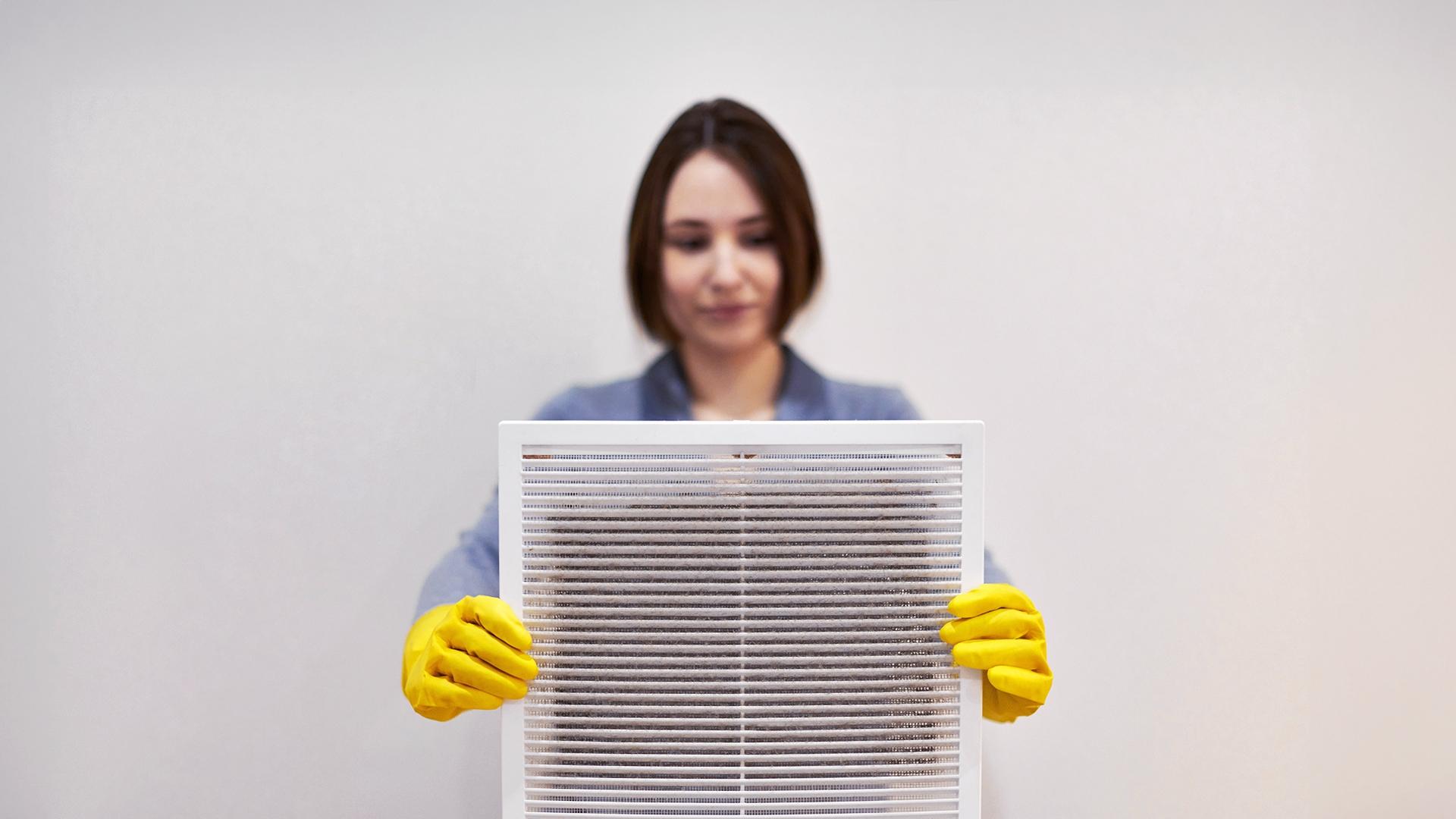
Your air exchanger helps keep the air in your home healthy by expelling humid air and bringing in fresh air. Proper air exchanger maintenance ensures good indoor air quality and helps prevent humidity problems. Before you begin, always turn off and unplug the unit.
Filters must be kept clean to allow proper air circulation. The type of filter varies depending on the unit and must be replaced regularly to ensure optimal performance.
Washable filters (metal)
Non-washable filters (disposable)
Some disposable filters (cardboard, foam, charcoal, or pleated filters) must be replaced. Consult your unit’s owner’s manual to identify the correct type.
Don’t have the manual anymore?
Important reminders
Clean or replace filters every 3 months, especially in spring and fall. Do it more frequently if you:
Dirty or dusty grilles are often a sign that filters need attention. Don’t forget about filters installed on return air duct grilles.
No. Use mild soap instead to avoid damaging the filters over time.
Outdoor air intake
The surface of the outdoor air outlet can become blocked easily. Even a partial obstruction reduces the unit’s performance.
Indoor air intake
In the kitchen, the grille must trap cooking grease.
Return air duct grilles must also be maintained to protect the components of the air exchanger and maximize its performance.
By cleaning the following components at least once a year:
The air exchanger plays an important role in maintaining good indoor air quality. Maintaining the ventilation system also helps optimize comfort related to your heating system, especially in winter.
A clean core improves the unit’s energy efficiency. Ideally, clean it in the fall, whether it is made of polypropylene (plastic) or aluminum:
If you have an energy recovery ventilator (ERV), do not submerge it. Use a vacuum or compressed air instead.
Use a vacuum to clean the fan. If dirt is difficult to remove, call in a specialized contractor. Improper handling or even slight pressure can throw the blades off balance.
Follow these steps:
Yes, but with specialized equipment. Take the following into account:
Check the condition of the ducts by looking inside the unit or at the air diffusers. Flexible ducts that are overstretched must be replaced. Even with regular maintenance, certain signs may point to a problem.
Some indicators may suggest your air exchanger is not functioning properly:
If you notice one or more of these signs, check your unit’s operation or call in a specialist.
To ensure good indoor air quality, an air exchanger must bring in and expel the same amount of air.
Simple bag air test
If there is a significant difference, consult an HVAC and ventilation specialist. Pricing varies depending on the tools and techniques used. You are not obligated to accept all additional treatments that may be proposed.
1. How often should an air exchanger be maintained?
Filters should be cleaned or replaced every 3 months. A more thorough maintenance of the unit is recommended at least once a year.
2. How do you know if an air exchanger is working properly?
A properly functioning unit makes no unusual noises, produces no odours, and does not cause excessive condensation. Pressure or humidity fluctuations may indicate a problem.
3. Can filters be cleaned with vinegar?
No. It is best to use mild soap to avoid damaging the filters over time.
4. Is it necessary to clean the ducts?
Yes, but with specialized equipment. How often depends on factors such as the environment, the number of occupants, and the presence of pets or recent renovation work.
With thanks to FixAC, a member of CAA-Quebec’s network of Approved Residential Suppliers, for their contribution to this article.
Do you have questions about your home, need specific information, or are you looking for referrals to find an Approved Supplier?