



Benefit from personalized advice
Do you have questions about gas-powered or electric vehicles, driving, or need recommendations to find an Approved Auto Repair Service?
To contact our Mobility Advisory Services:
1-888-471-2424
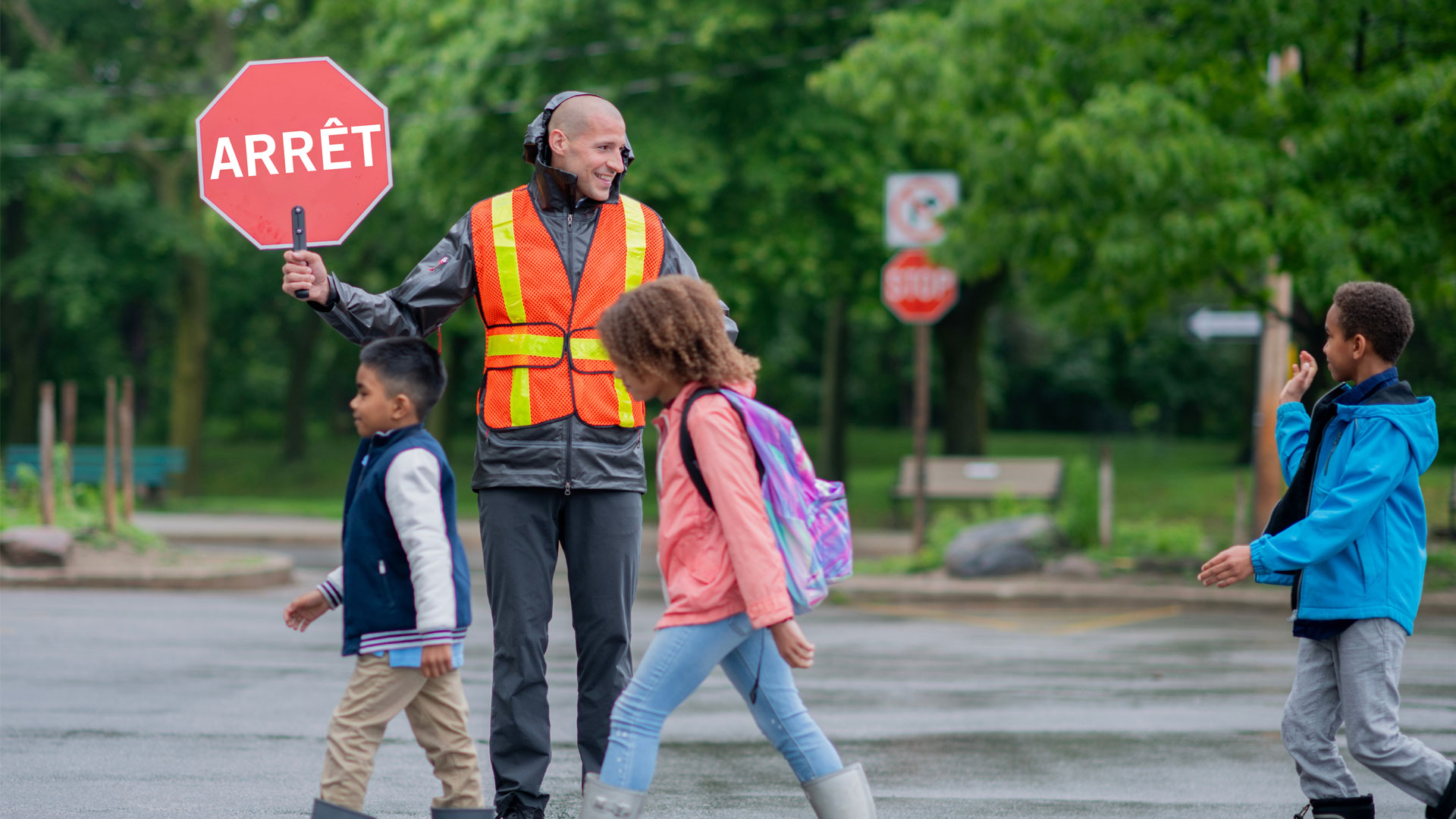
At school entrances and exits, vigilance is essential—and not just at the start of the school year. Following the Highway Safety Code helps protect children and all road users. Reduced speed, visible traffic signals, stopping for school buses: here’s what you need to know and how to adopt the right behaviours.
In school zones, several signs alert road users to the traffic rules specific to children’s safety:
The speed limit in school zones is generally 30km/h, even though the Highway Safety Code sets it at 50km/h. Respecting these speed limits is essential for children’s safety. Speeding fines are doubled during the school year. Here are also a few realities to keep in mind in school zones:

“Every action counts when it comes to protecting children and all road users. I recommend familiarizing yourself with the Highway Safety Code and strictly following all traffic laws in school zones. Vigilance is not optional—it’s a must!”
In Quebec, you must stop your vehicle or bicycle more than 5 metres away from a school bus when:
This rule applies whether you are behind the bus or travelling in the opposite direction on the other side of the road. The fine is $200 to $300 (plus applicable fees) and 9 demerit points. You may resume driving only when:
Caution: Stay alert, as a child may step out at any moment.
Exception: You are not required to stop if the bus is travelling on a roadway separated by a median, except at intersections where children might cross.
Make sure you know where the drop-off zones are and how close they are to the school’s entrances and exits:
Avoid double parking or unauthorized stopping at all costs. These behaviours unnecessarily endanger children, can obstruct emergency vehicle access, and disrupt traffic flow.
Parking lots around schools are high-risk areas:
Even if parking spaces are available in the visitor section, park a little further away and walk. It’s safer and helps improve traffic conditions.
Walking your children to school has several benefits:
If your children walk on their own, accompany them once or twice first. This will allow you to:
Children must be placed in a car seat appropriate for their weight and height until they:
Depending on their size and weight, your child may need to use a booster seat. The Société de l’assurance automobile du Québec provides full details on choosing car seats for children. CAA-Quebec members can also call on our Mobility Advisory Services.
Put your knowledge to the test with this short school zone safety quiz:
1. Taking a school bus is 10 times safer than travelling by family car.
True. Thanks to its size and unique compartmentalization system, a school bus offers better protection for children, even without seatbelts.
2. It is always illegal to pass a school bus.
False. The driver faces a fine of $200 to $300, plus 9 demerit points.
3. Drivers can ignore a school bus’s yellow flashing lights.
False. Yellow lights are a mandatory warning that the bus is about to stop. Slow down immediately to avoid sudden braking.
4. It is always illegal to pass a school bus.
False. A driver may pass a school bus in a zone where passing is permitted and when the red flashing lights are off and the stop sign is retracted.
Do you have questions about gas-powered or electric vehicles, driving, or need recommendations to find an Approved Auto Repair Service?