Collision with an animal: What to do and how to prevent it

Updated on June 19, 2026
4 mins reading time
A roadside sign warning of the presence of moose and urging caution.

Hitting an animal on the road—whether a moose or a deer—can cause serious injuries or death as well as significant damage to your vehicle. What should you do after a collision with an animal? Does your car insurance cover this type of car accident? Here is everything you need to know to better prevent and respond to a wildlife vehicle collision.

When and where are animal collisions most common?

Spring and fall are the seasons when moose and deer collisions are most frequent. As food becomes scarcer, animals venture closer to roads and populated areas.

In Quebec as elsewhere, wildlife crossings and deer fencing have been installed along certain national roads and highways. Despite these measures, some areas remain high-risk, particularly the edges of forests and rural areas.

How to avoid hitting a deer or moose

Practising a few key road safety habits can reduce the risk of a wildlife collision:

  • Exercise extra caution, particularly at dawn and dusk.
  • Adjust your speed in areas marked by animal crossing signs.
  • Slow down as soon as you suspect the presence of deer or moose near the road.
  • Scan the ditches visually and avoid staring at the animal—focus instead on where you want to go.
  • Tap your brakes repeatedly or activate your hazard lights to alert drivers behind you to the presence of wildlife.
  • Never make a sudden swerve to avoid an animal at the last moment—this could cause a more serious accident.
Pro tip

“No driver is immune to an unexpected encounter on Quebec’s roads. Even the greatest vigilance cannot rule out an unfortunate run-in with a wild animal. That is why it is recommended to look as far ahead as possible, adjust your speed accordingly, and remain especially alert at dusk and when approaching wooded areas.”

Daniel FrappierSupervisor, CAA-Quebec Driving Schools

Can my forward collision warning system help me avoid hitting an animal?

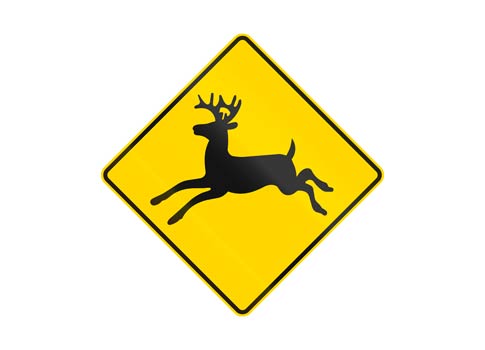
Road sign warning of animals on the road
Not necessarily. Most systems are designed to detect slow-moving or stopped traffic ahead, and only more advanced systems detect pedestrians, cyclists, and large animals.

A forward collision warning system can therefore reduce the severity of an impact—for example, a deer strike—but it does not eliminate the risk entirely.

Additionally, the animal must be close enough to the sensors and radar, which may not leave enough time to issue a warning or initiate emergency braking. While it is a valuable safety aid, it is not a substitute for driver alertness.

If a collision with an animal seems unavoidable

If a collision appears unavoidable:

  • Sound your horn to try to scare the animal away.
  • Hold firmly to the steering wheel to avoid going off the road.
  • Brake firmly and bring your vehicle to a safe stop, preferably on the shoulder.

What to do if you hit a domestic animal

If you hit a domestic animal, come to a safe stop and stay calm.

  • If the animal is with its owner, check whether they need assistance.
  • If not, look for a tag or any form of identification to locate the owner.
  • Note the exact location, take photos if possible, and wait for the authorities or the owner to arrive to avoid any dispute.

What to do after hitting an animal

  • Call emergency services if there are any injuries.
  • Notify the police if the animal weighs more than 25kg. This is a legal requirement under the Highway Safety Code (including for domestic animals). Failure to do so can result in fines of up to $300 and 9 demerit points on your record.
  • Contact a wildlife protection officer if the animal is on the mandatory reporting list.
  • Complete a joint report if a second vehicle is involved, and promptly provide all required information to the police officers.
  • Take photos (of the vehicle, the animal, and the surroundings).
  • Gather witness statements if possible.
  • Contact your car insurance provider.

Does my car insurance cover an accident with an animal?

  • Yes—if your insurance policy includes collision or comprehensive coverage. You will, however, be responsible for the insurance deductible set out in your contract.
  • No—if you only carry civil liability insurance. In that case, you will be responsible for all vehicle repair costs.

In a collision with an animal, the driver is automatically considered at fault. In the event of bodily injury, the SAAQ compensates the victims.

What documents should you provide to your insurer after hitting an animal?

To avoid any delays or complications in processing your claim, provide your insurer with the following as quickly as possible:

  • The police report number from the accident.
  • The amicable report, if another vehicle is involved.
  • The contact information of your garage or auto body shop, if you are planning repairs.

Keep in mind that your insurer must approve all repair costs before your mechanic or auto body technician begins any work.

In short, stay alert, anticipate the presence of animals on the road, and always adjust your speed. These simple reflexes can help prevent injuries and protect your vehicle.

See how our Auto and Vehicle Insurance can meet all your needs!

To ask your questions:
1-844-446-3636