
Benefit from personalized advice
Do you have questions about your home, need specific information, or are you looking for referrals to find an Approved Supplier?
To contact our Residential Advisory Services
1-877-803-1118
Meteorological phenomena such as strong winds, storms and severe thunderstorms take their toll on the power grid, especially in winter. As a result, power outages happen more frequently and for longer periods of time. Read on to find out how to prepare for a winter blackout, and our advice on how to minimize the disruption and stay safe.
Your basic emergency plan should include an emergency kit that provides for your basic needs for at least 72 hours. You should include:

Tip: Make sure you have a manual can opener and scissors.
Grilling on a barbecue is one of the best solutions during power outages … provided it’s done outside and not in your garage, well away from air intakes. Tip: if you don’t use your barbecue all year round, don’t store it in the back of your garden shed. Doing so will let you put it back into service quickly, should the need arise. Be sure to keep a full propane tank as well.
A fondue set can also come in handy for a few evenings, but it is not a long-term option, as it involves both the risk of explosion and serious burns. Tip: make sure you have a good supply of fuel – preferably in gelled capsules.
Your other options for feeding yourself in the event of a power outage:
Claim eligibility with your insurer depends on whether or not your home insurance policy includes coverage for the loss of food stored in your freezer. Bear in mind that there’s typically a limit of $1000 and a deductible to pay ranging from $300 to $500. It’s ultimately up to you to decide whether it’s worth it to file a claim with your insurer.
During a power outage, fireplaces and auxiliary heaters powered by wood or gas and equipped with a battery back-up are convenient for maintaining a comfortable temperature inside your home.
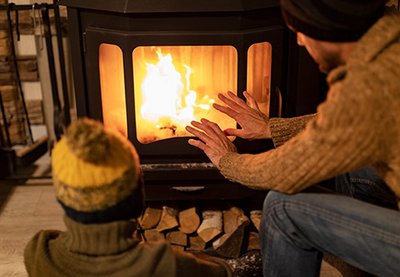
If you rely on a fuel-burning appliance – fuel oil, gas or wood –, make sure you have a battery-powered carbon monoxide detector (one per floor, and especially near bedrooms). Tip: if you need to replace them, favour combination models (electric and battery-powered).
A portable generator powered by fuel, gas (propane or natural gas) or a combination of the two (hybrid) will provide you with a source of energy should you run out of power for an extended period of time, whatever the season. It’ll give you the power you need for lighting, heating and even some essential household appliances. Hybrid models are interesting because they allow you to extend the generator’s autonomy in case you run out of fuel. Before investing in a generator, first identify the appliances you wish to connect to it. This will help you determine the power requirements for your generator:
Other specifications must also be taken into account: autonomy, weight, starting system and noisiness. CAA-Quebec members can take advantage of our Residential Advisory Services to help them select the right model.
Tip: For a safer installation, have your generator connected to the electrical panel by a master electrician. If you haven’t already done so, replace your traditional light bulbs with compact fluorescent or LED bulbs. This will boost your lighting energy tenfold.
A standard model will meet most consumer needs. On the other hand, if you want to use appliances that are sensitive to voltage ripples (computer, TV, etc.), an inverter generator may be a better choice.
Do you have questions about your home, need specific information, or are you looking for referrals to find an Approved Supplier?