
Benefit from personalized advice
Do you have questions about your home, need specific information, or are you looking for referrals to find an Approved Supplier?
To contact our Residential Advisory Services
1-877-803-1118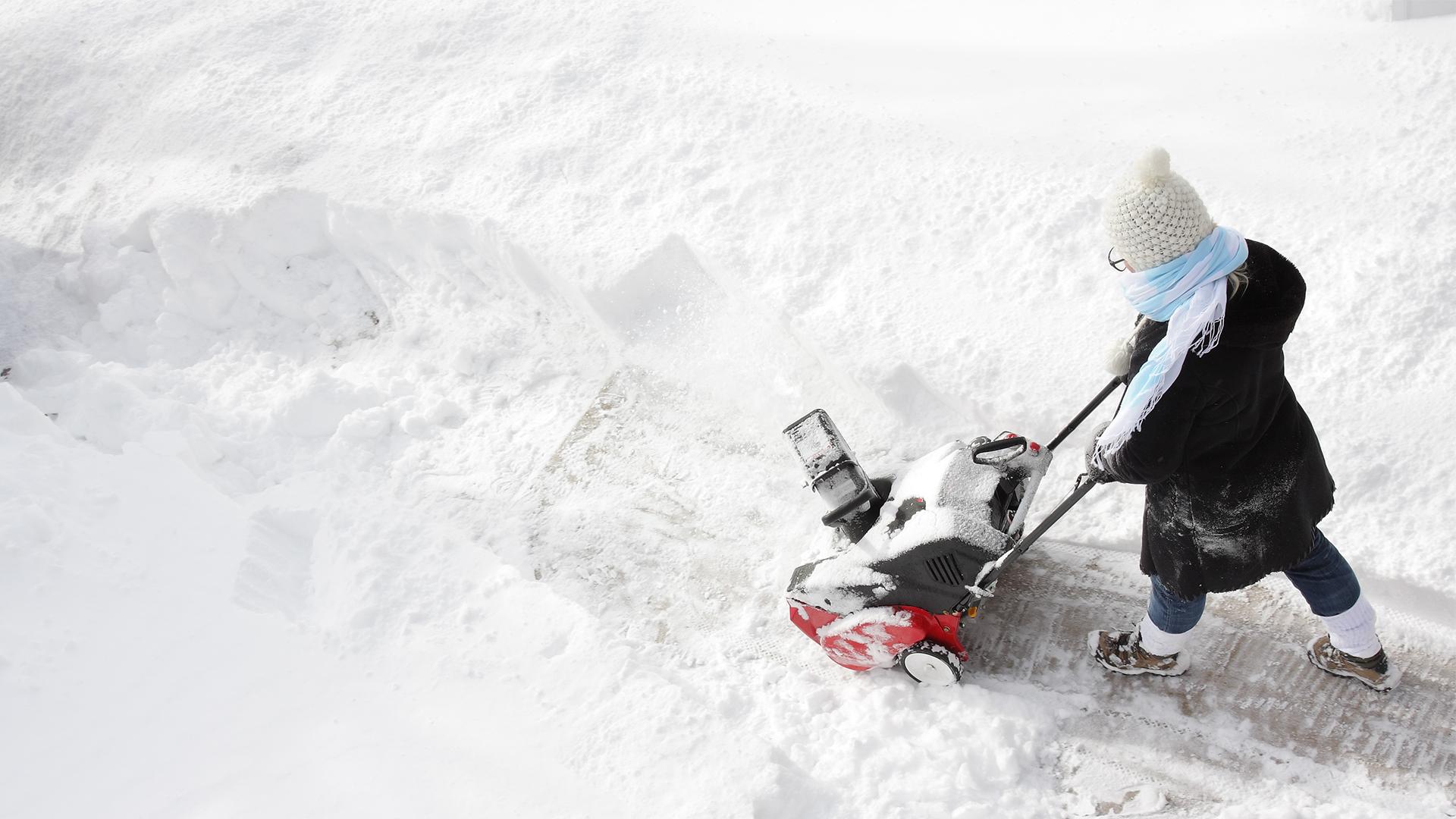
Winter spares no region of Quebec. Sooner or later you’ll have to shovel your entryway—and more than just once! Lifting an average shovelful of snow every 5 seconds is equivalent to clearing 1,000 kg in only 17 minutes, so it’s better to be well equipped with shovels, snowblowers, de-icers—you name it!

The Canadian Physiotherapy Association (CPA) says the ideal shovel should be light—about 1.5kg or just over 3lb.—and have a handle that lets you bend forward no more than 10 degrees when you hold the shovel to the ground with both hands. What else? The blade shouldn’t be too wide and the handle should be made of plastic or wood. Avoid metal, as it conducts cold. Polymer shovels are ideal for fresh snow, while aluminum shovels are easy to handle in all types of snow. The bigger the area to be shovelled, the bigger your shovel should be.
Shovelling can be really hard on your back depending on how much snow has accumulated, its texture (wet or icy), and the size of the area to be cleared. That’s why it’s best to avoid shovels that are too big or too short, as well as heavy loads. Throwing snow over your shoulder or to the side isn’t a good idea either!
Did you know?
According to the CPA, shovelling snow requires as much energy as running at 15km/h. Shovelling for 15 minutes at a reasonable pace can be a good workout if you have a healthy heart. If this isn’t you, it’s best to ask for help or have a snow removal company do it for you.
Electric snowblowers (corded or battery-powered) are suitable for small driveways and tight spaces. They work well in light, powdery snow that’s not too deep (10 to 15cm). But they would have a hard time cutting through the compacted snowbank left by a city plow. These machines can throw snow up to 10 metres and clear the equivalent of up to 10 parking spaces on a single charge, or around a third of that if the snow is heavy or hard-packed.
Pros: Requires less maintenance than a gas-powered snowblower, is lighter and easier to store, can be used on balconies, emits no unpleasant odours, and has zero emissions
Cons: More expensive to buy than a gas-powered snowblower, not suitable for heavy snowfalls (over 15cm), and some components are more fragile
Things to consider before you buy:
A gas-powered snowblower is suitable for large areas (parking for more than four cars).
Pros: Less expensive to buy than an electric snowblower, effective for all types of snow (powder, wet, compacted) and large surfaces, no need to wait for batteries to charge
Cons: Noisy and smelly, requires careful maintenance, gasoline and motor oil must be kept on hand at all times, more complicated to store
Things to consider before you buy:
LED headlights, heated handles, a cab, tire chains, skid shoes, or drift cutters can be added to your snowblower for greater comfort, but most importantly to make snow removal faster, more efficient, and more pleasant.
Entryways can be cleared of snow but still be slippery. That’s where abrasives come in:
Learn about the pros and cons of each in our Buyer’s guide for de-icing products.
Owners and occupants of a premises have an obligation to act as a diligent and reasonably prudent person. That means yes, you have an obligation to clear snow. However, in the event of an accident, the victim must prove it was the owner’s fault.
If you live in a condo, the condominium corporation is responsible for clearing snow and ice from entryways and parking lots. If you’re a tenant, either you or the owner is responsible for snow removal. This is usually specified in the lease.
As mentioned above, as a homeowner, you’re responsible for clearing snow from your entryway, but if, despite your efforts, someone is injured, you may be covered by your liability insurance. Liability coverage is included in your homeowner’s insurance policy and protects you in case of unintentional damage caused to a third party at your home or elsewhere. Snow, ice, and cold weather can also cause damage to your home. Make sure you have good coverage for that too.
Do you have questions about your home, need specific information, or are you looking for referrals to find an Approved Supplier?