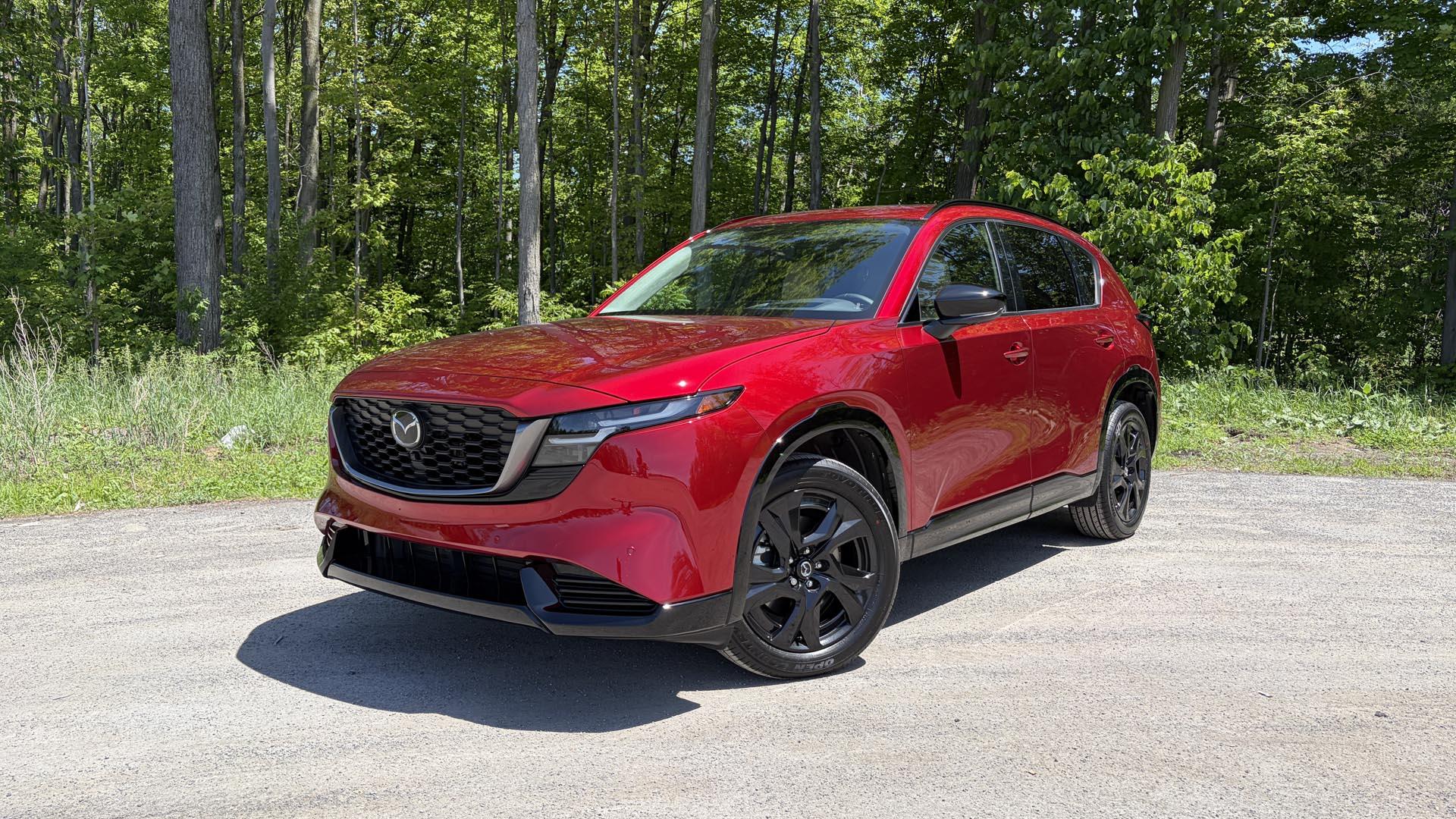
MAZDA CX-5 2026
Solid gains ... held back by a few setbacks
Pros and cons
Pros
- Smoother ride
- Improved sound insulation
- Driving enjoyment preserved
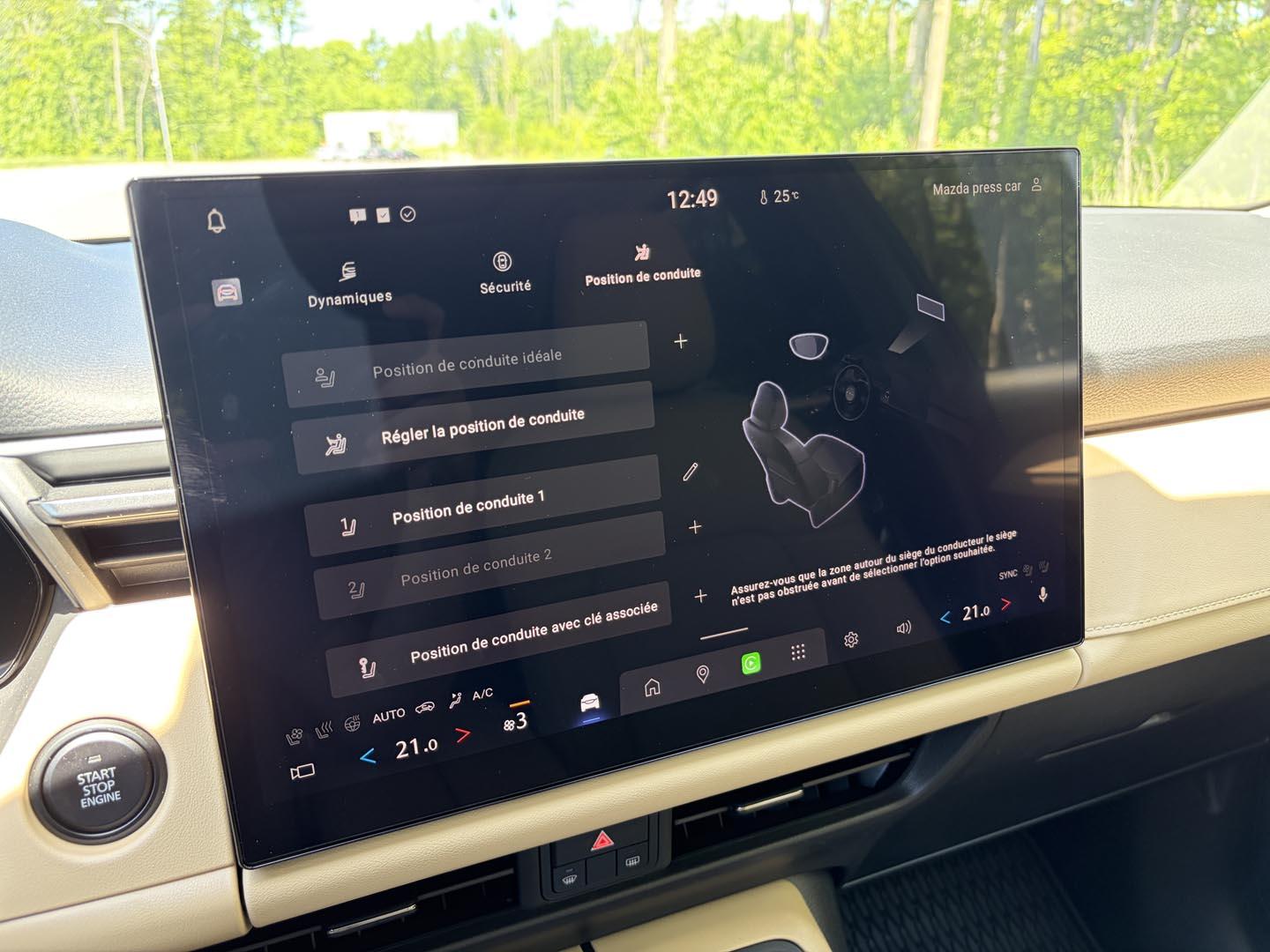
- Driving position finally sorted
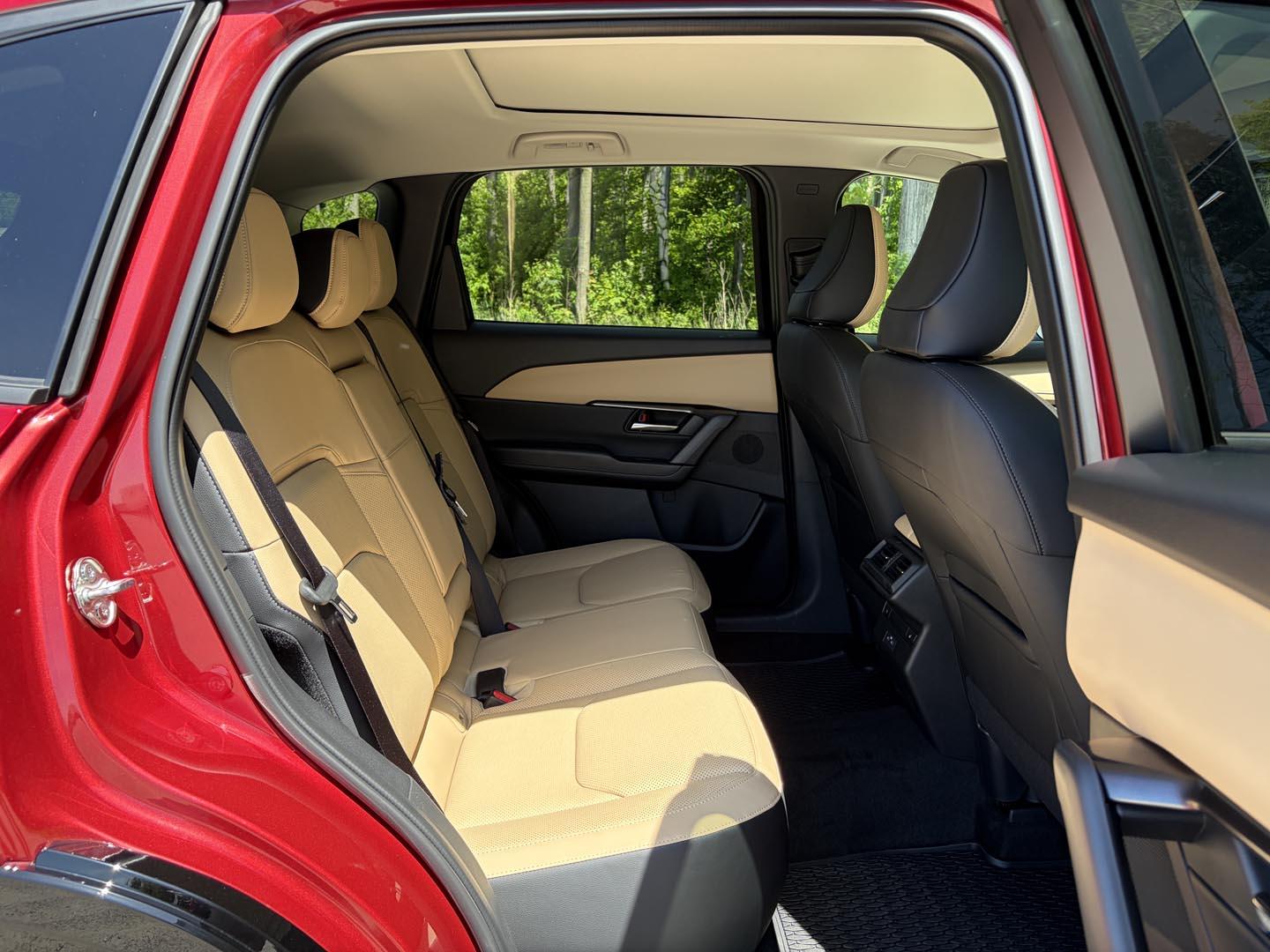
- More interior space
- Proven mechanical reliability
Cons
- No hybrid powertrain
- Engine noisy under acceleration
- Power merely adequate
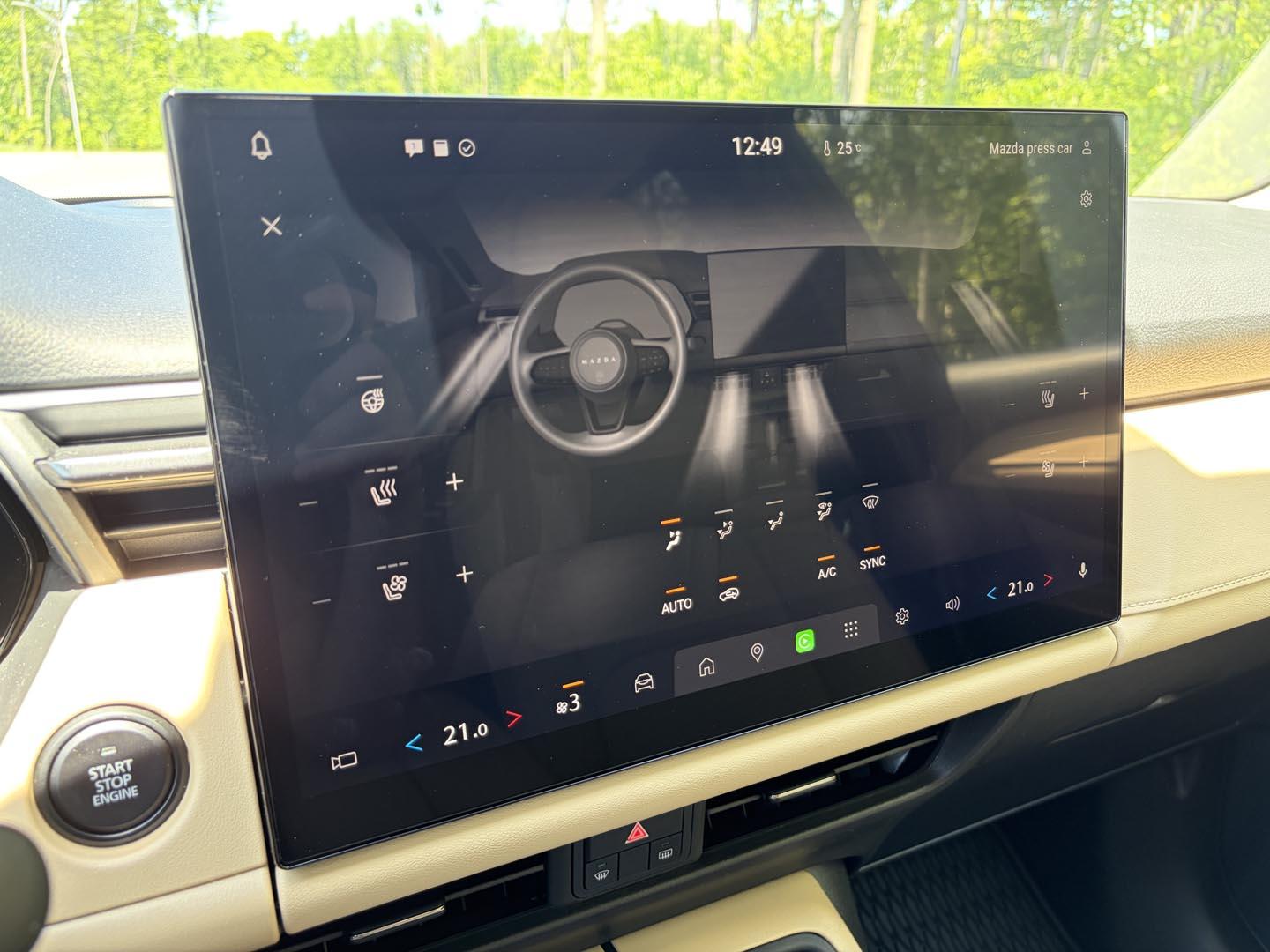
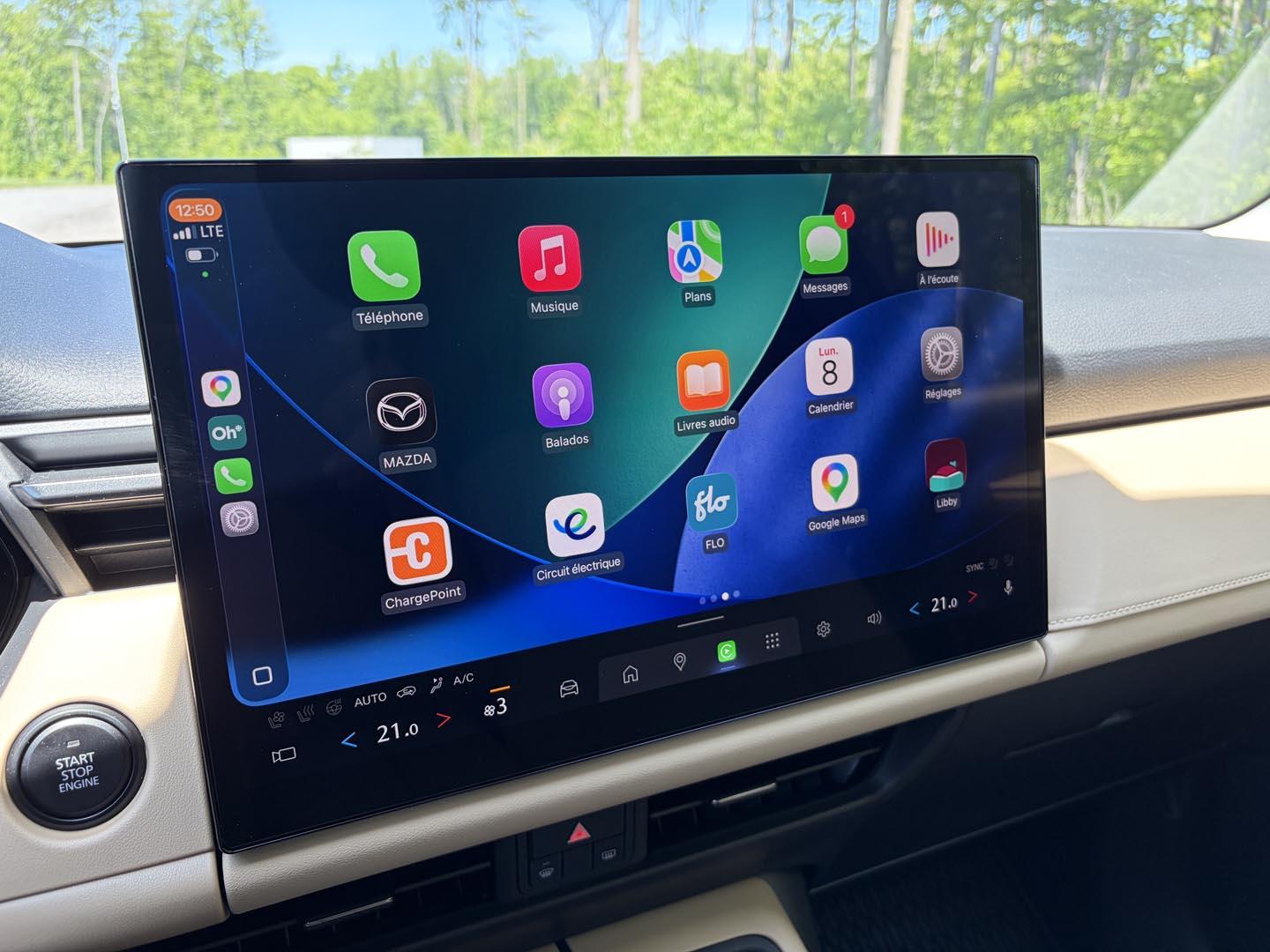
- Complex touchscreen interface
- Lack of physical controls
- Slight decline in interior finish quality
Overview
Mazda has become a master at extending the life cycle of its vehicles through special editions and minor updates. Quebec drivers seem to appreciate the approach: even after nearly 10 years without a major redesign, the CX-5 ranked among the province’s best-selling compact SUVs in 2025, according to AutoMédia magazine.
That said, the redesigned 2026 model arrives at the right time if Mazda wants to maintain its position in such a competitive segment.
What’s new for the 2026 Mazda CX-5?
Although Mazda has retained the platform and core mechanical components from the previous generation, the 2026 CX-5 introduces several important changes.
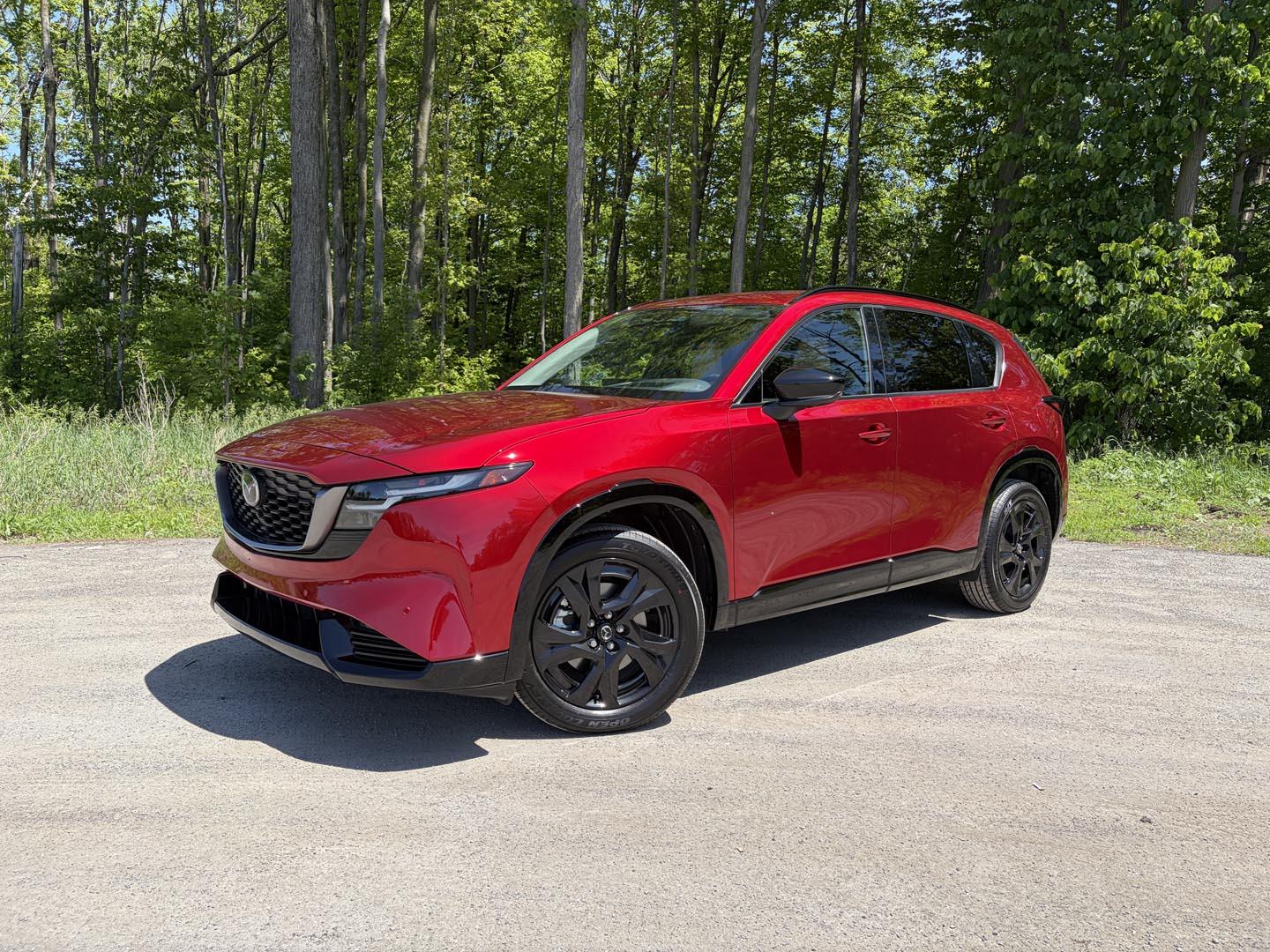
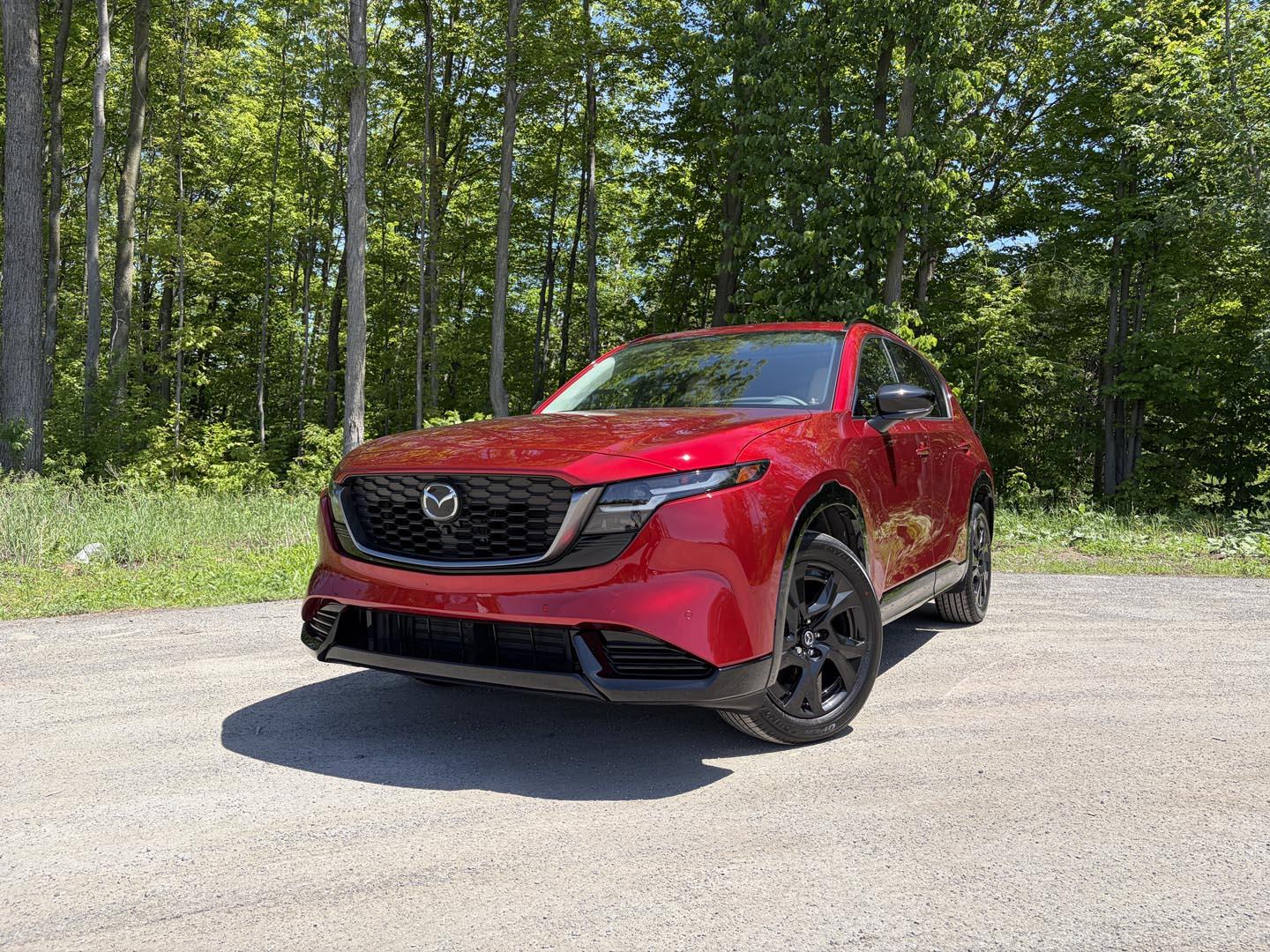
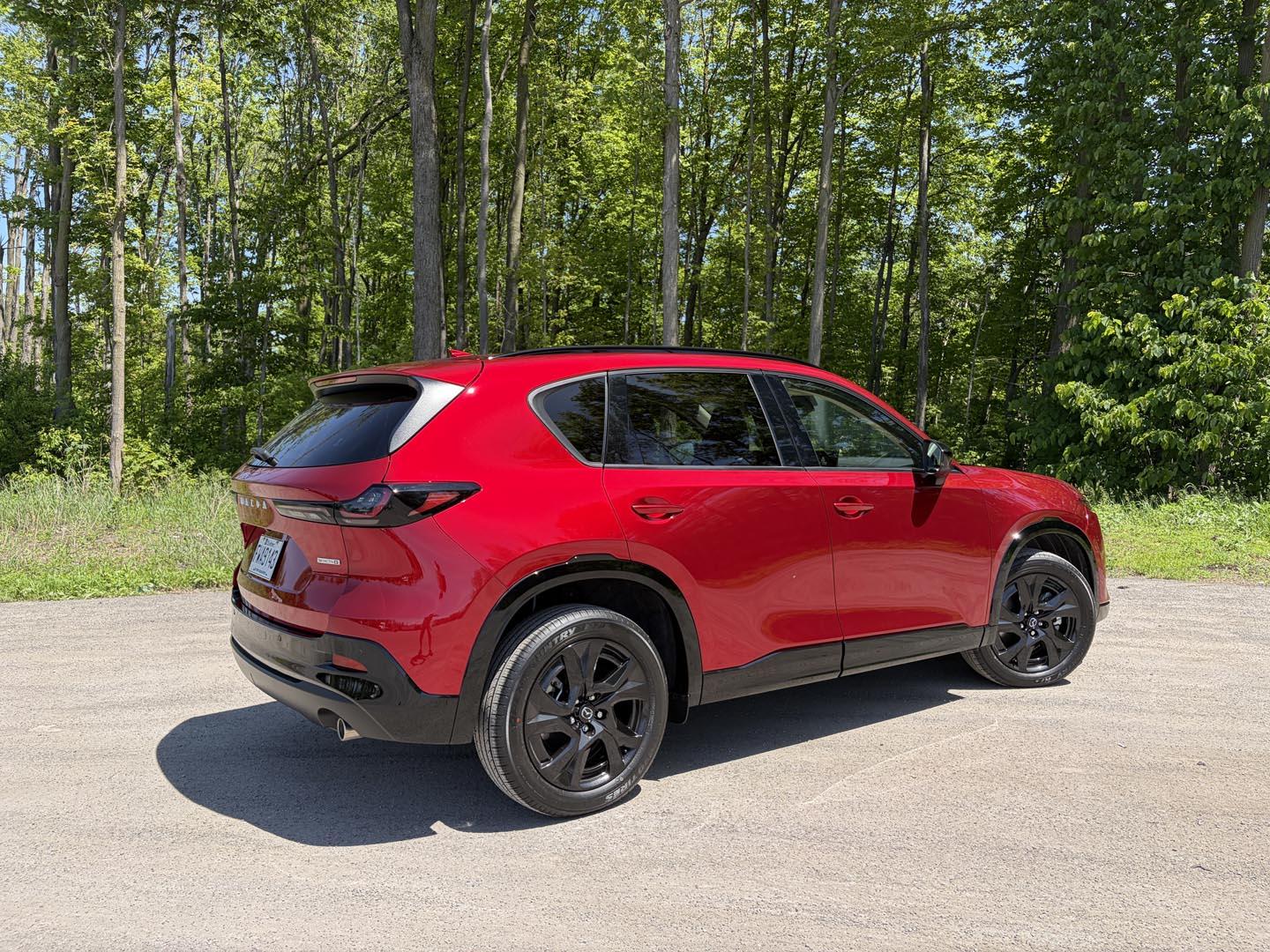
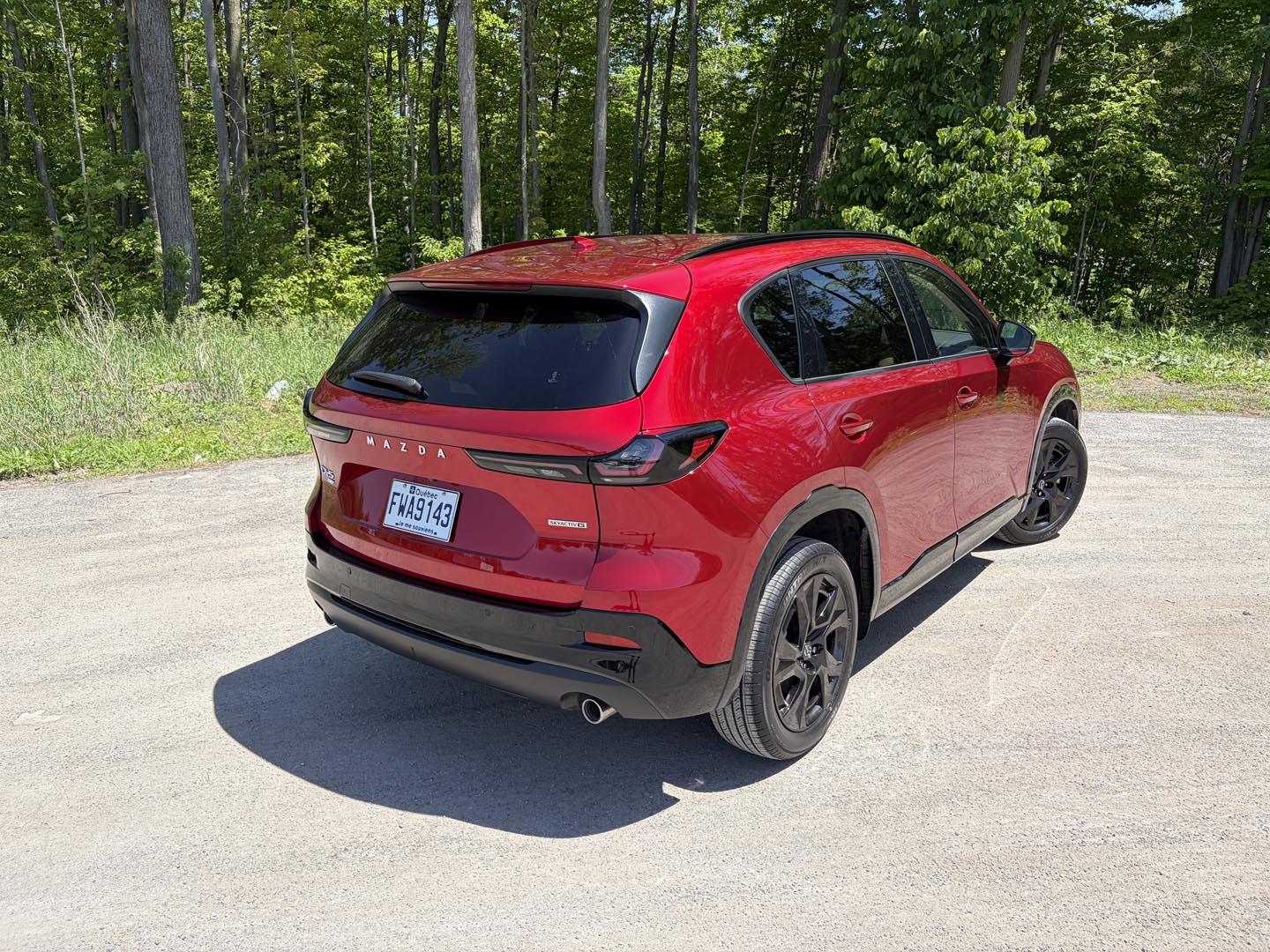
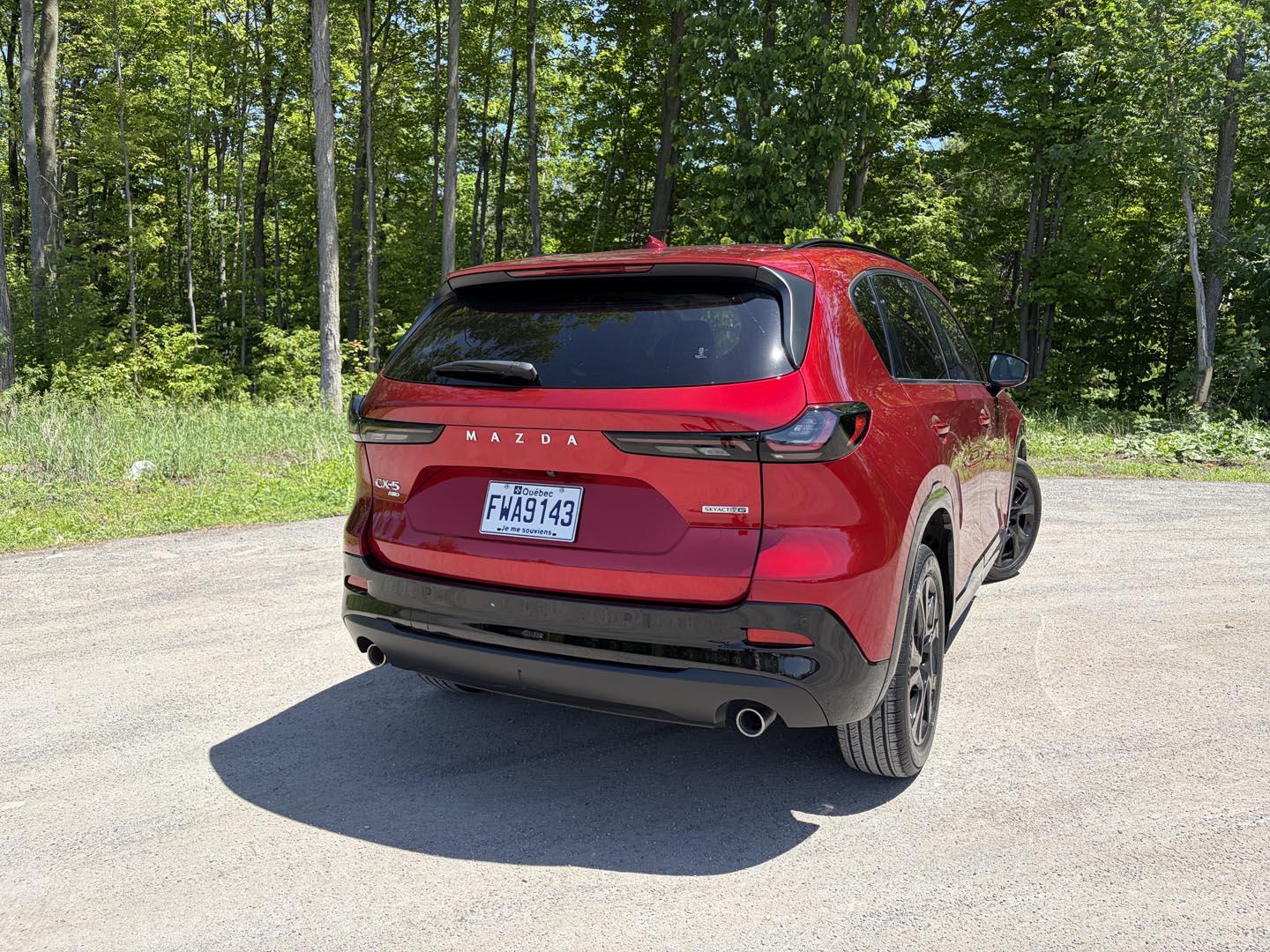
- A refreshed design. Anyone familiar with Mazda will recognize the brand’s signature sculpted styling. However, the new CX-5 borrows several cues from the CX-70, CX-90 and CX-30, giving it a noticeably more modern appearance.
- A larger footprint. For this third-generation CX-5, Mazda simply adopted the version of its corporate platform used by the CX-50, whose Canadian sales have been suspended due to tariff-related issues. The vehicle is 10 cm longer overall, while the wheelbase grows from 269.7cm to 281.5cm, primarily benefiting rear-seat passengers.
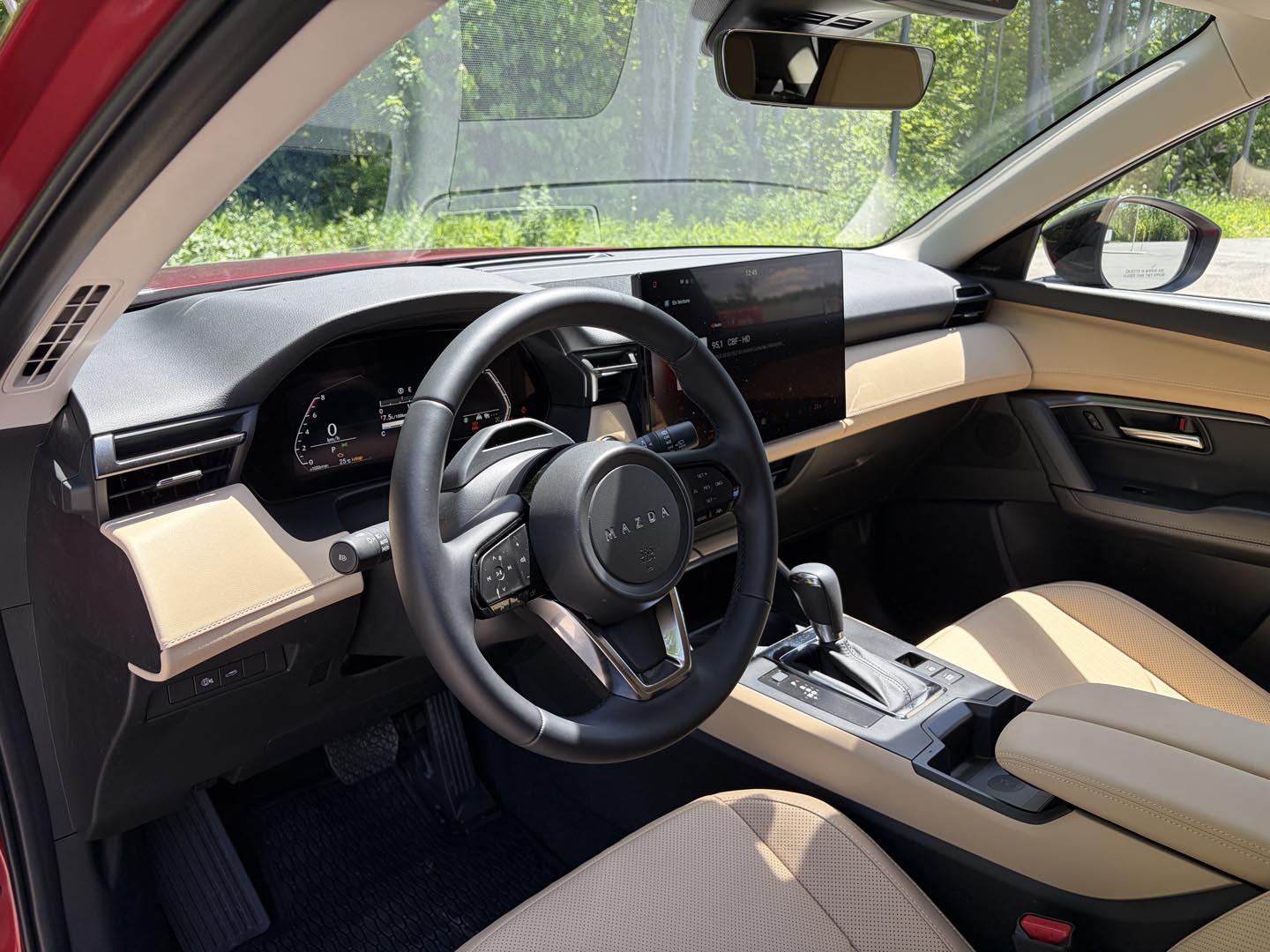
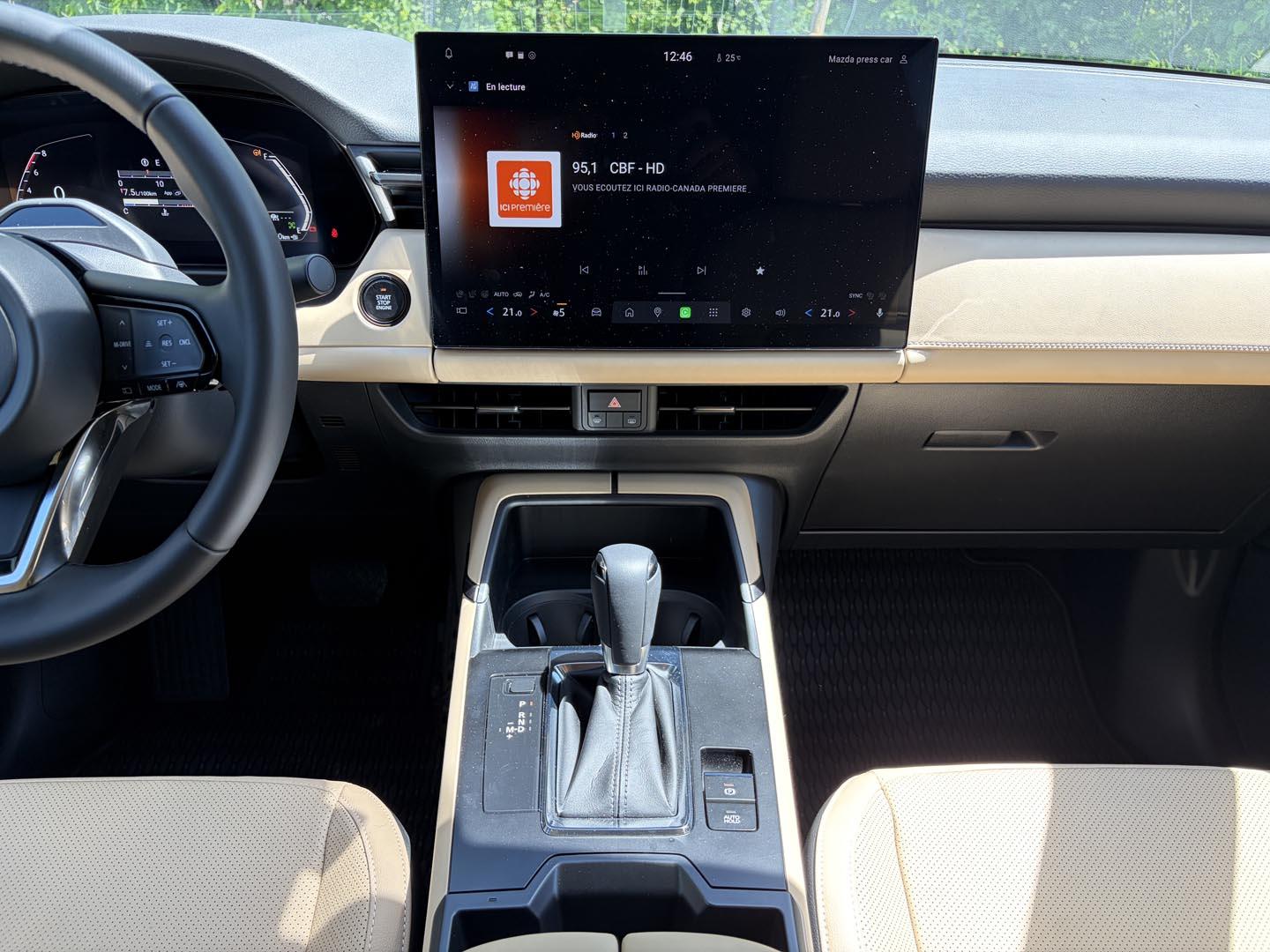
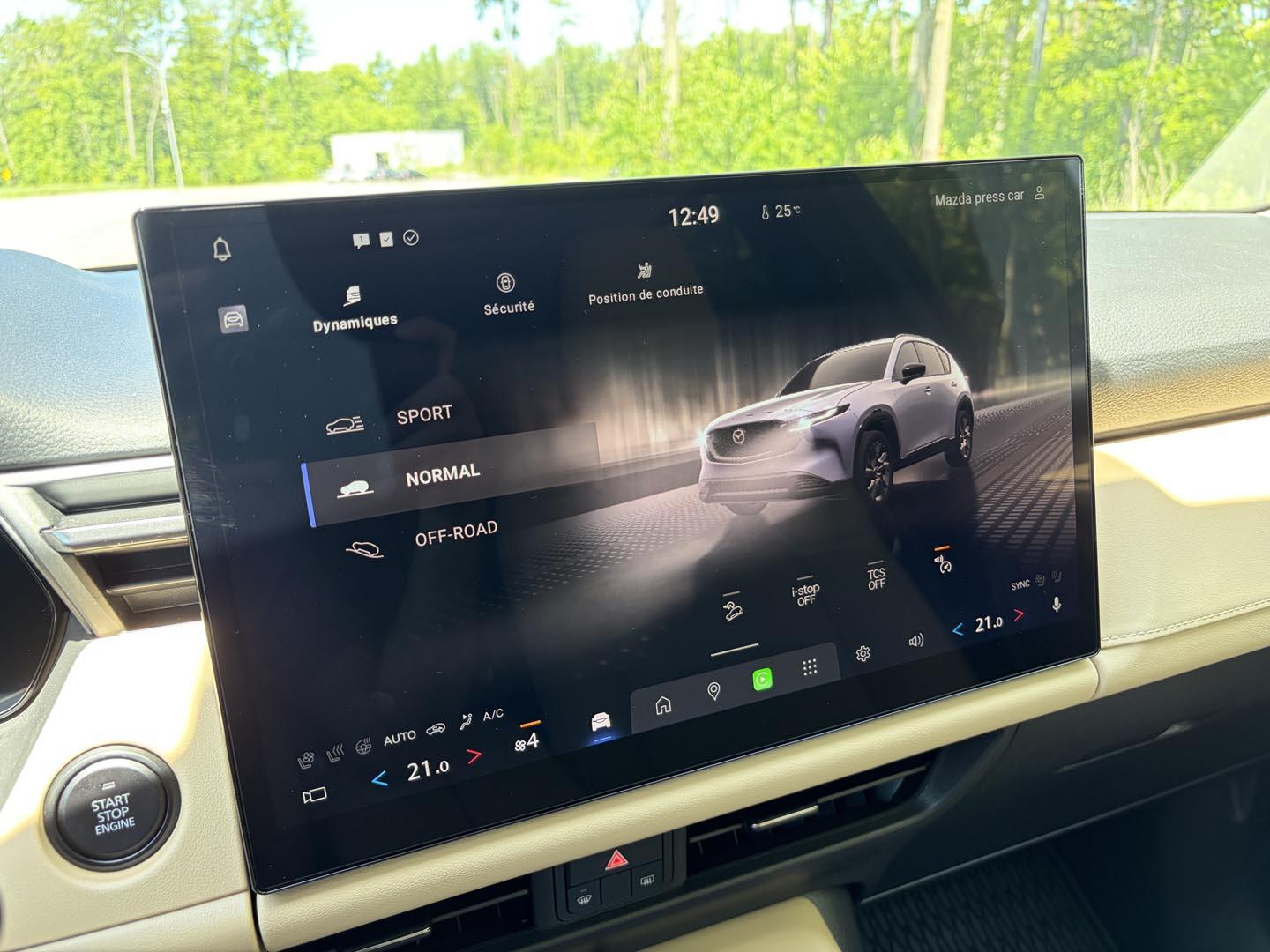
- The adoption of touchscreen controls. The redesigned CX-5 is Mazda’s first vehicle since 2016 to feature a central touchscreen. In addition to consolidating all climate functions, the display replaces the previous setup, which combined a screen that was not touch-enabled except while stopped or when using Android Auto or Apple CarPlay with a rotary controller located between the front seats.
- The loss of the turbo engine. Mazda cites limited demand as the reason for discontinuing the turbocharged four-cylinder offered in upper trims. The automaker also promises a conventional hybrid powertrain sometime in 2027. For 2026, every CX-5 is powered by the naturally aspirated 2.5-litre engine paired with the six-speed automatic transmission that has served Mazda for more than a decade.
Higher pricing
How would you feel if your grocery bill jumped by 12% overnight?
That is the increase Mazda applied to the base CX-5 for 2026. Despite a $3750 hike that brings the retail price to $39,290, including freight, PDI and dealer fees, the Hiroshima-built compact SUV starts near the segment average.
Other trims also cost more, though to a lesser degree. Equipment reshuffling further complicates direct comparisons with equivalent 2025 models.
To find an all-wheel-drive compact SUV that undercuts the 2026 CX-5 on price, you will need to look at the Hyundai Tucson, Kia Sportage, Nissan Rogue, or Subaru Forester. Of course, manufacturer incentives, lease and finance rates, and good old-fashioned negotiation can alter the retail-price hierarchy.
Scroll down to the Evaluation section for our driving impressions of the 2026 CX-5 in five key takeaways.
Verdict
We had the opportunity to cover roughly 2100 kilometres in one week behind the wheel of the updated CX-5. This comprehensive test drive, conducted largely on the highway, highlighted Mazda’s increased focus on comfort.
Driving position, ride quality and sound insulation all improve the long-distance experience. The dynamic character that distinguishes most Mazda products remains intact, though it feels slightly diluted compared with the previous model.
More practical? Yes and no
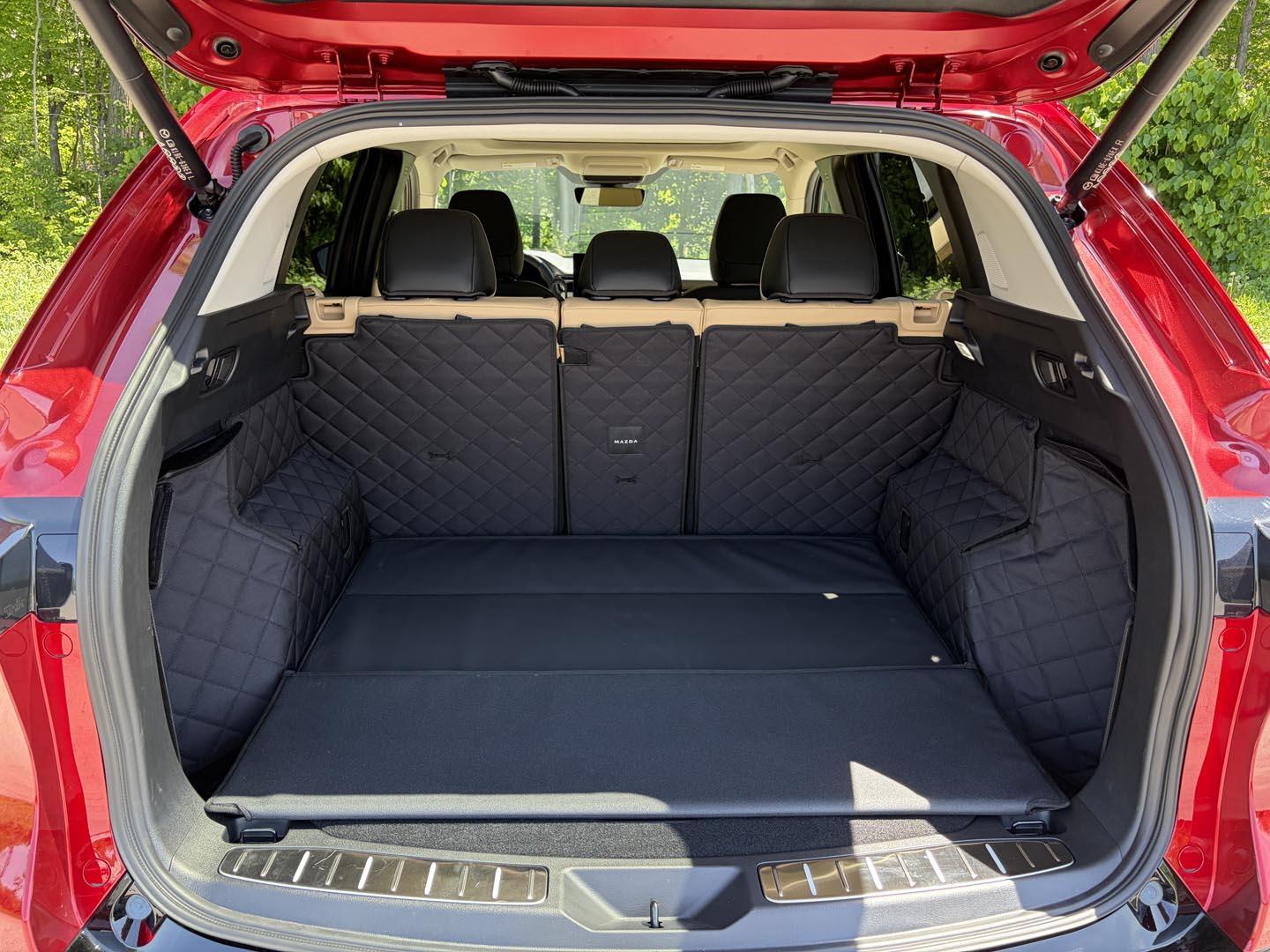
Family road trips with plenty of luggage are now easier thanks to the CX-5’s thoughtfully increased dimensions. Cabin space is significantly improved even though the vehicle occupies only marginally more road space. At last, Mazda has produced a vehicle that matches its rivals in terms of interior room!
Drivers will, however, need to get used to the new touchscreen interface that debuts in the CX-5 for the entire brand. Even after long hours behind the wheel, we still found ourselves searching for basic functions. If you currently drive a recent Mazda, reset your muscle memory and forget the rotary controller!
Little mechanical innovation, but a dependable choice
It is unfortunate that the updated CX-5’s hybrid powertrain did not arrive alongside the redesign. Compact SUV shoppers increasingly value this option, even at a premium. Mazda has often delayed or cancelled alternative powertrains promised in the past; hopefully, the promised 2027 timeline will be respected this time.
Until then, buyers choosing the gasoline-only version will at least benefit from a proven powertrain with an excellent reliability record.
Evaluation
Comfort takes centre stage
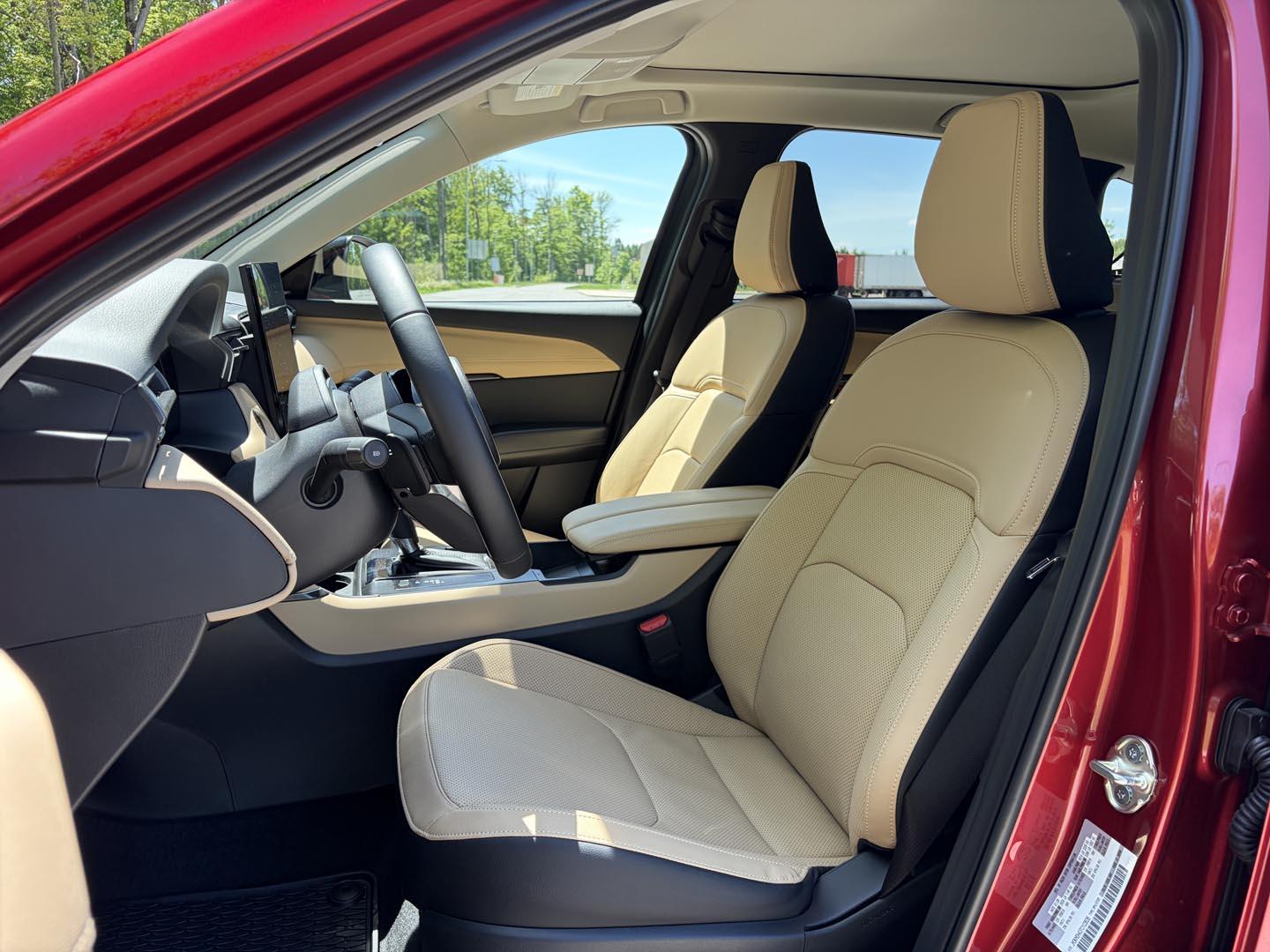
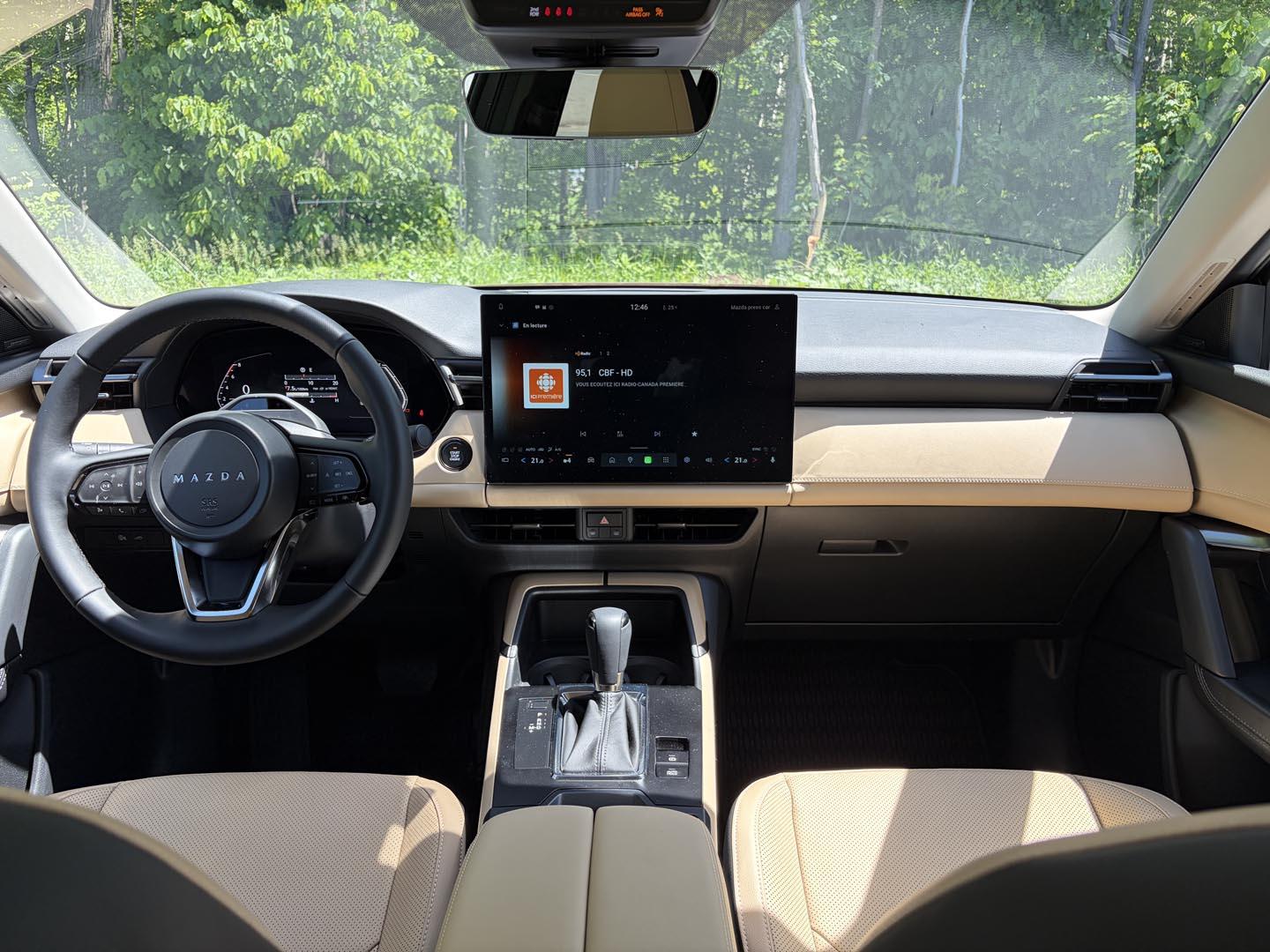
Everyone on board the CX-5 will be more comfortable than before, starting with the driver, who benefits from a significantly improved driving position. Gone are the overly high dead pedal and the absurdly short centre armrest!
The front seats offer better cushioning, addressing complaints from slimmer occupants who found the previous generation’s seats too firm. However, the seat base remains somewhat short, especially since its front section does not adjust high enough.
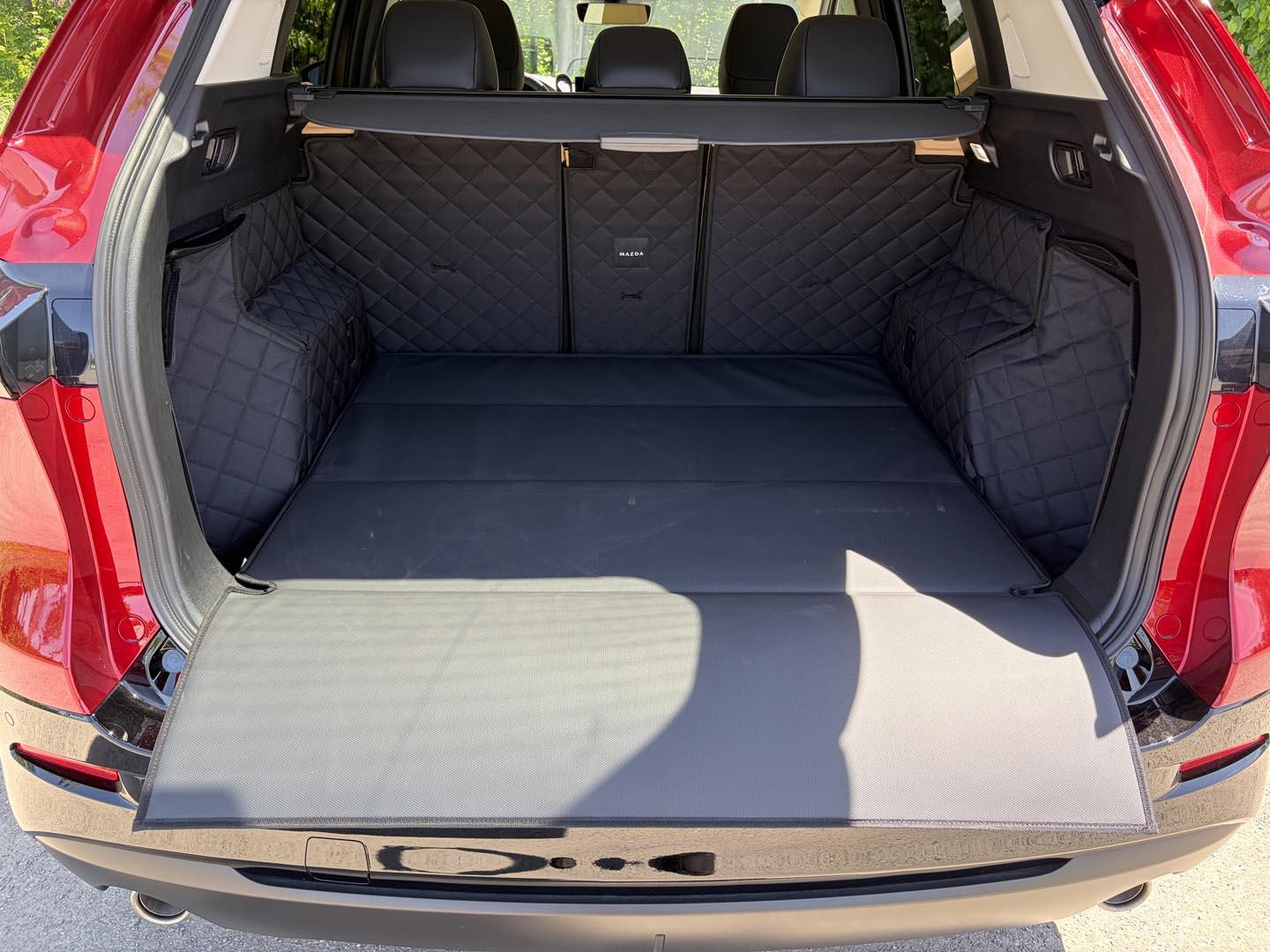
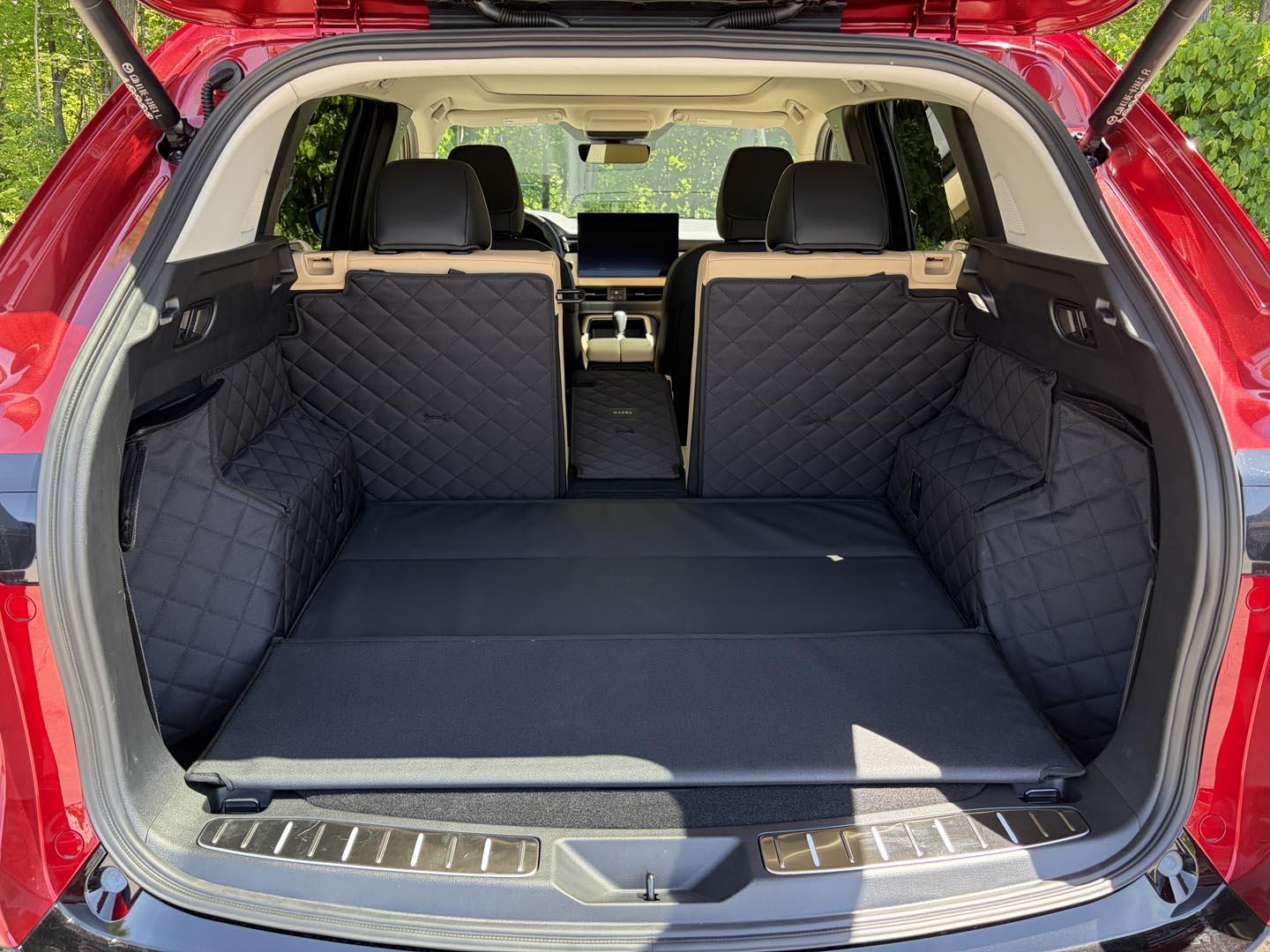
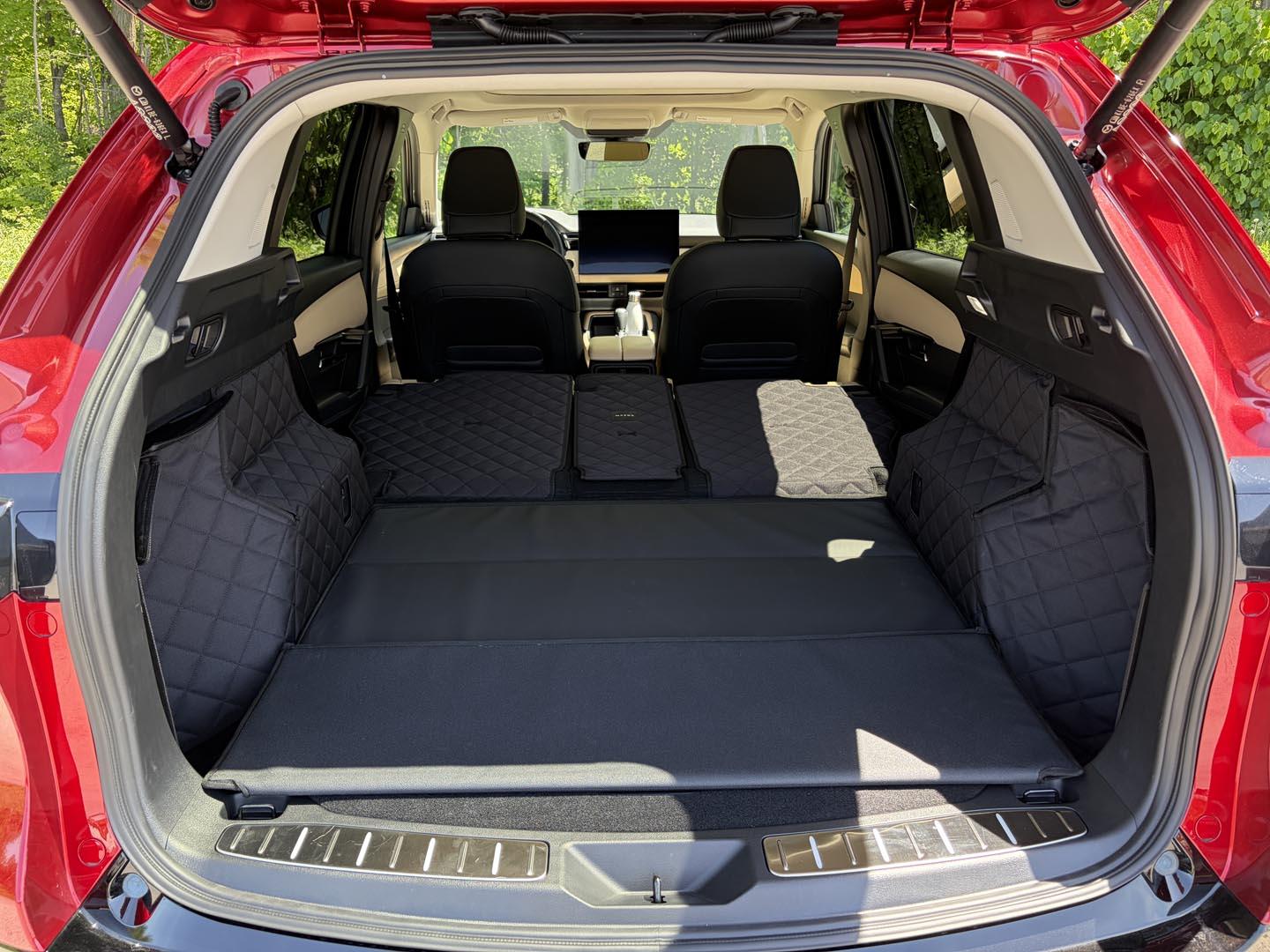
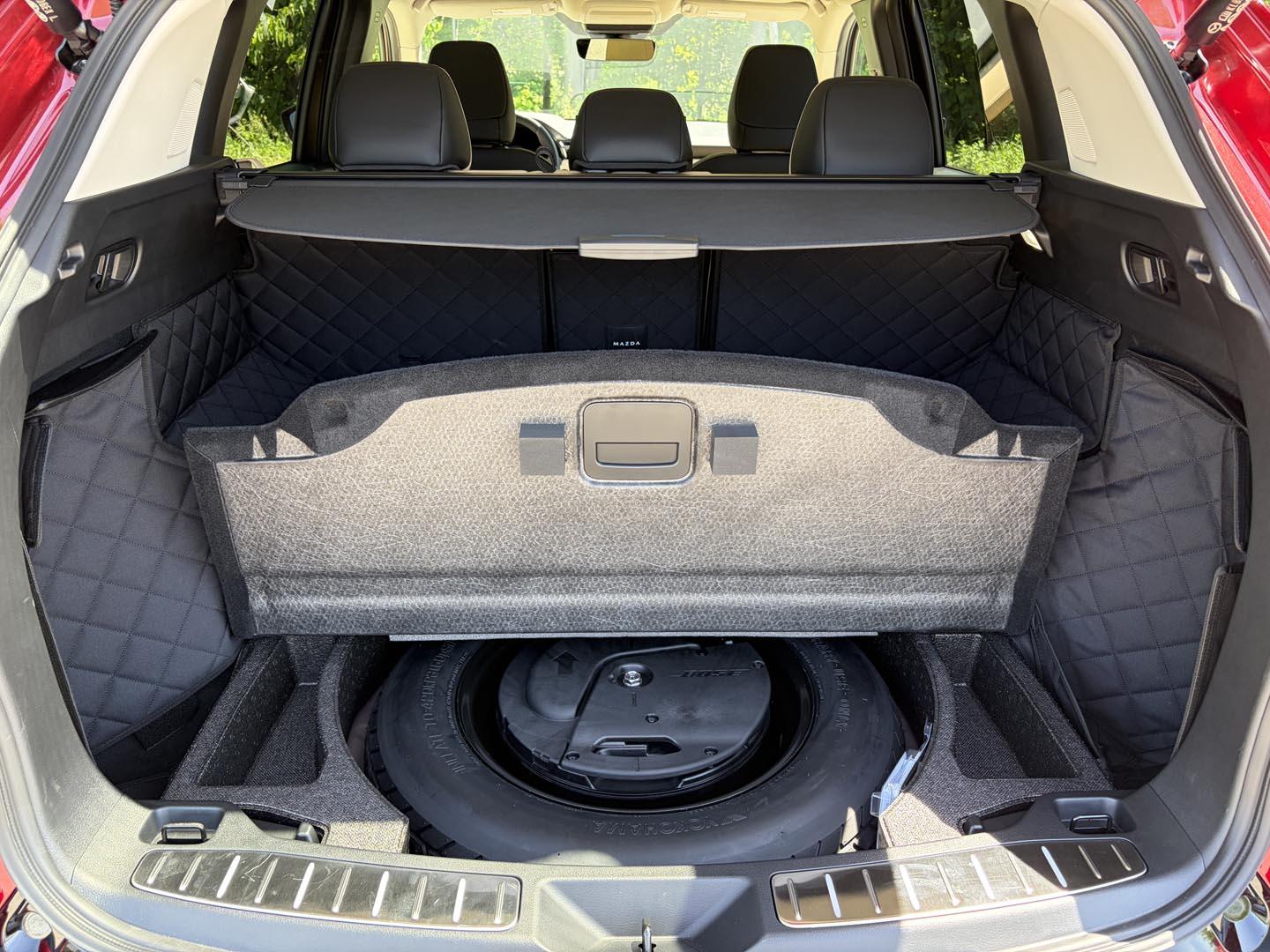
Rear-seat legroom and cargo space gains are immediately noticeable. In this case, making the vehicle larger was absolutely worthwhile.
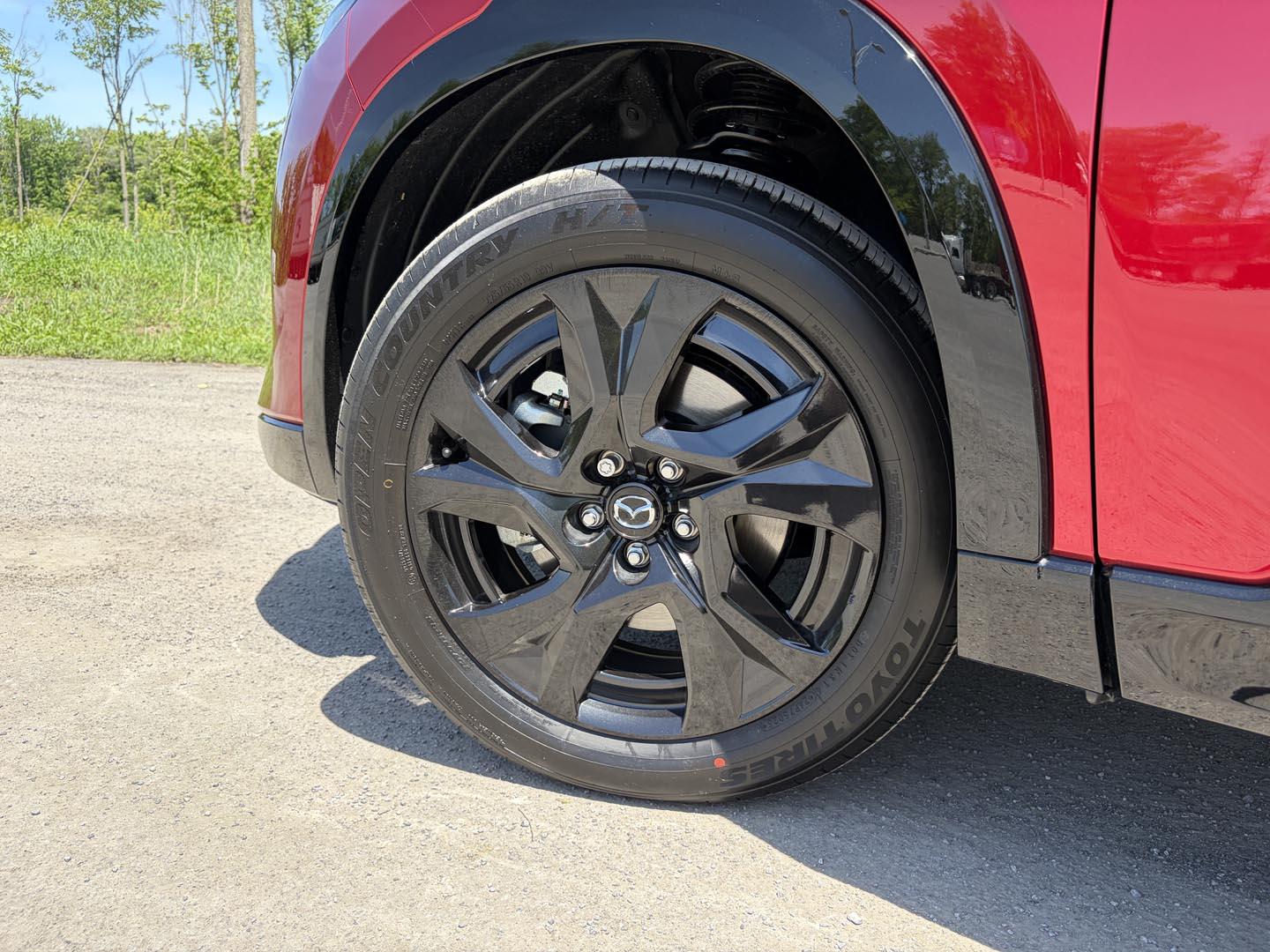
Mazda’s engineers also made meaningful refinements. Tire noise is less intrusive than before, and the cabin remains quiet at cruising speed. The suspension is better at handling rough pavement without significantly reducing driving satisfaction.
Still athletic for its size
Having recently driven just about every competitor in the CX-5 segment, we can confirm that it remains one of the most composed compact SUVs available. Several rivals are equally stable on the highway, but fewer feel as confident and enjoyable on secondary roads.
Mazda’s best-selling vehicle has gained between 50 and 100 kilograms depending on trim level. Combined with the softer suspension, this likely explains the increased body roll at turn-in.
The CX-5 remains enjoyable to drive, provided you appreciate steering that is less assisted than average, much like a sport sedan. We only wish the brakes were as linear and predictable as the steering. As is often the case with Mazda products, initial pedal response remains somewhat weak despite an appropriately firm pedal.
Status quo under the hood ... almost
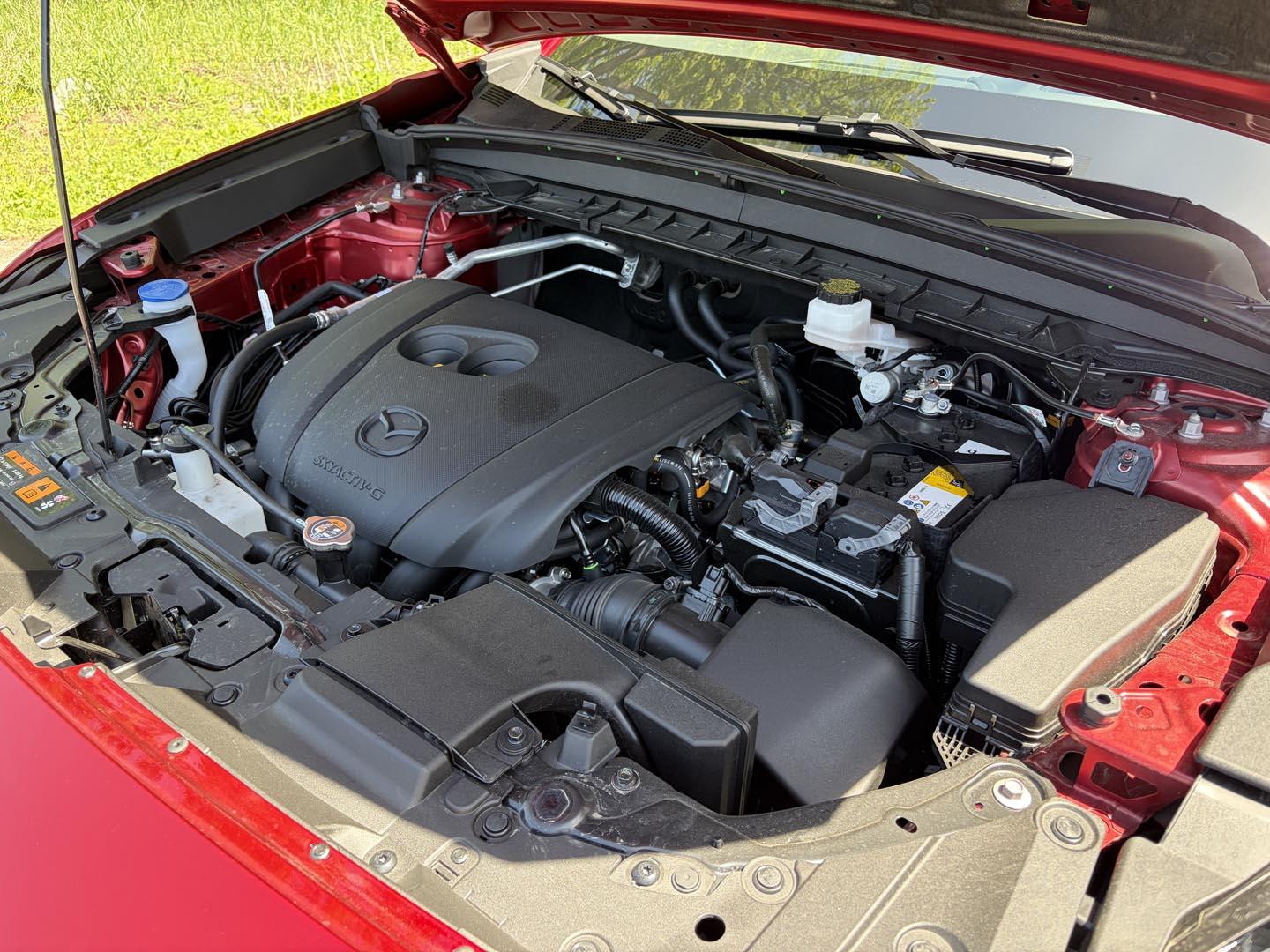
Every CX-5 is powered by a naturally aspirated 2.5-litre four-cylinder engine. Unchanged for 2026 aside from the removal of cylinder deactivation on the GT trim, the engine performs adequately in everyday driving.
Part of the credit goes to the automatic transmission, which Mazda recalibrated to respond more faithfully to throttle inputs. Even with only six gears, it makes effective use of the available power.
Still, the 187-horsepower output feels strained when merging onto a busy highway or passing on a two-lane road. The extra weight added during the redesign is noticeable, and audible, as the engine disturbs the cabin’s serenity during hard acceleration.
We were tempted to criticize the reduction in towing capacity from 908kg (2000lb) to 680kg (1500lb), but ultimately it seems like a sensible decision.
A modern but complex interface
We would like to say the move to a touchscreen improves the CX-5’s functionality, but the verdict is less clear. The new display boots up more quickly, aligns with current industry practices and presents much more information at once. However, it often requires too many taps for simple tasks and scatters information across multiple menus.
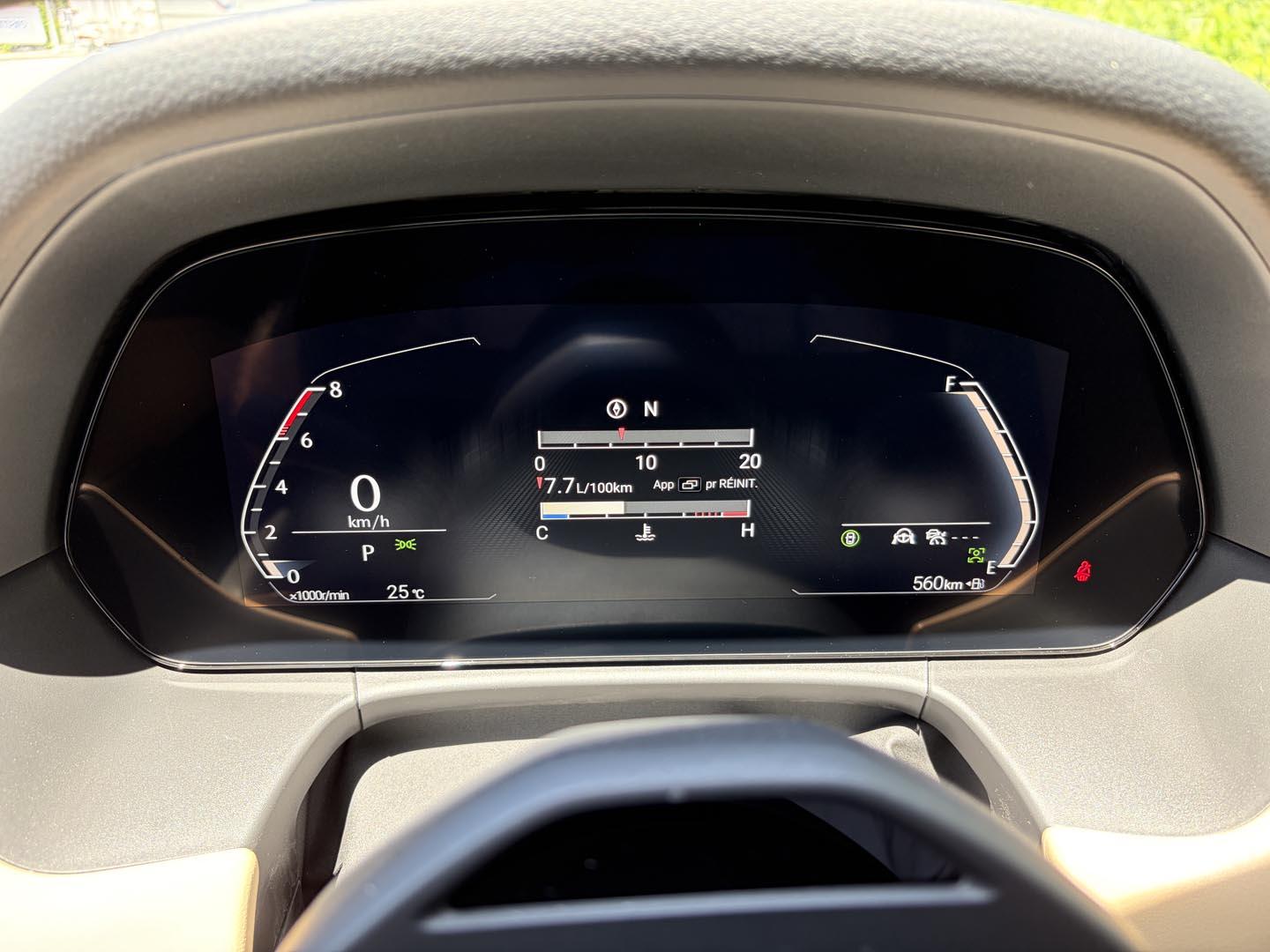
For example, why place the odometer and trip meters in the central display rather than in the main instrument cluster? There is certainly enough room to display this driving data alongside the fuel-economy information already positioned in front of the driver.
A few over-the-air updates may be enough to address some of these irritations. Reintroducing a minimum number of physical controls, such as a volume knob or dedicated climate buttons, would require more time and resources. Users would nevertheless benefit.
A Mazda Canada spokesperson told us that the designers followed market trends. Undoubtedly, but screens are also cheaper to produce than physical controls. That likely explains part of the dramatic shift.
Compromises in finish quality
Mazda interiors are typically praised for their materials and craftsmanship, at least in higher trims, since entry-level models are not always as upscale.
With its two-tone trim and high-quality leather upholstery, our GT tester initially appeared to uphold that tradition. We quickly discovered, however, some fairly obvious concessions to cost-cutting.
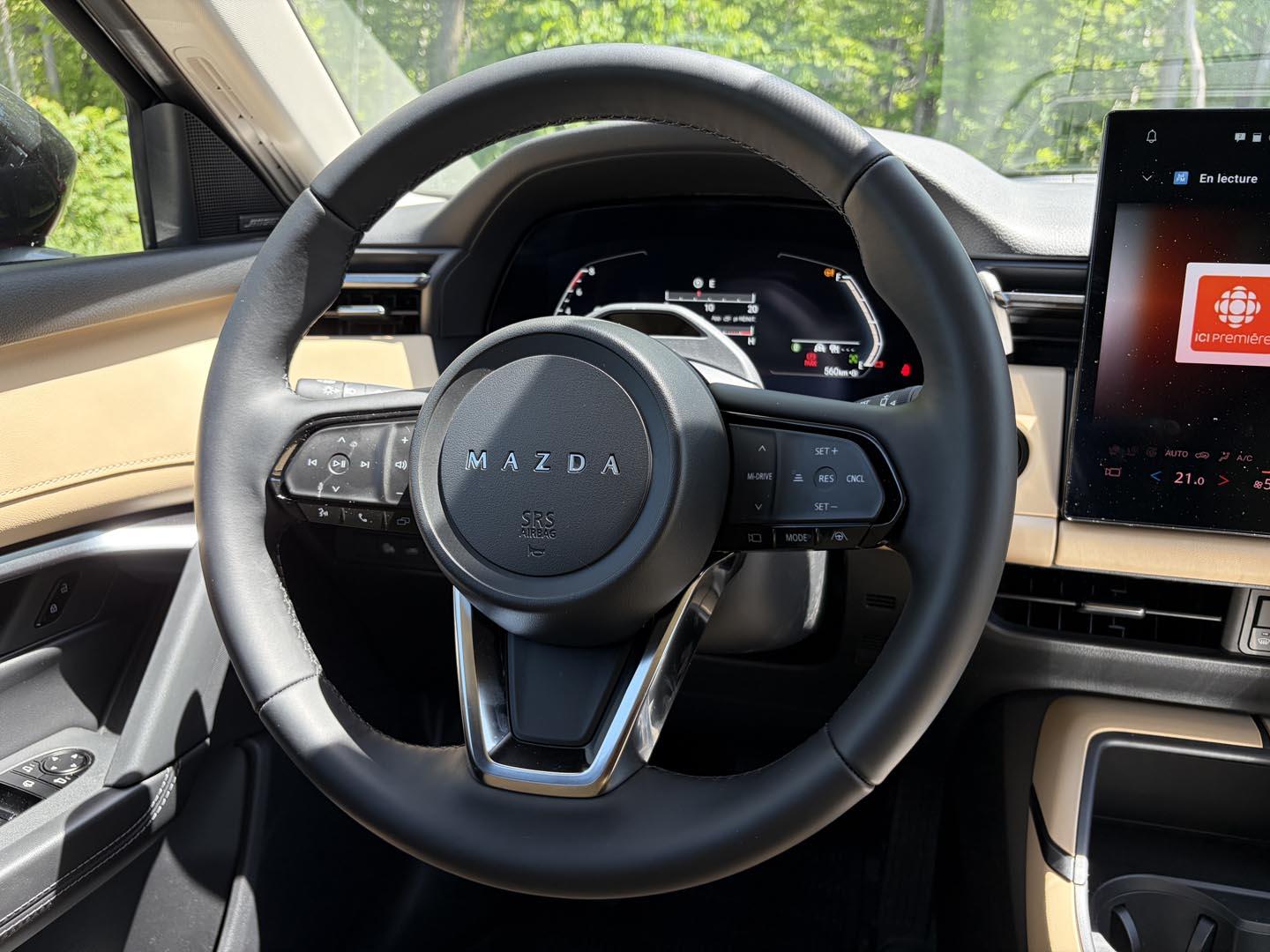
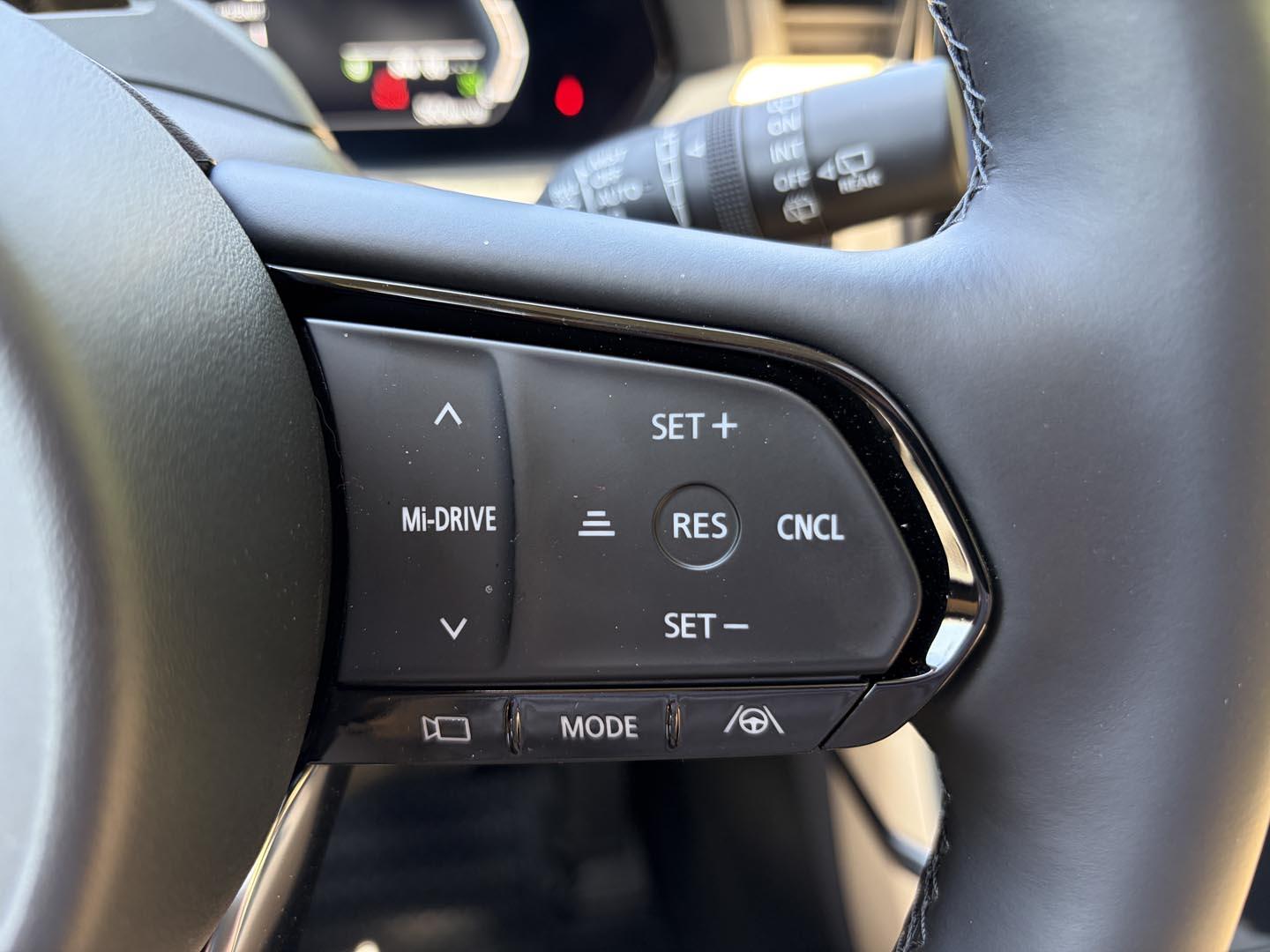
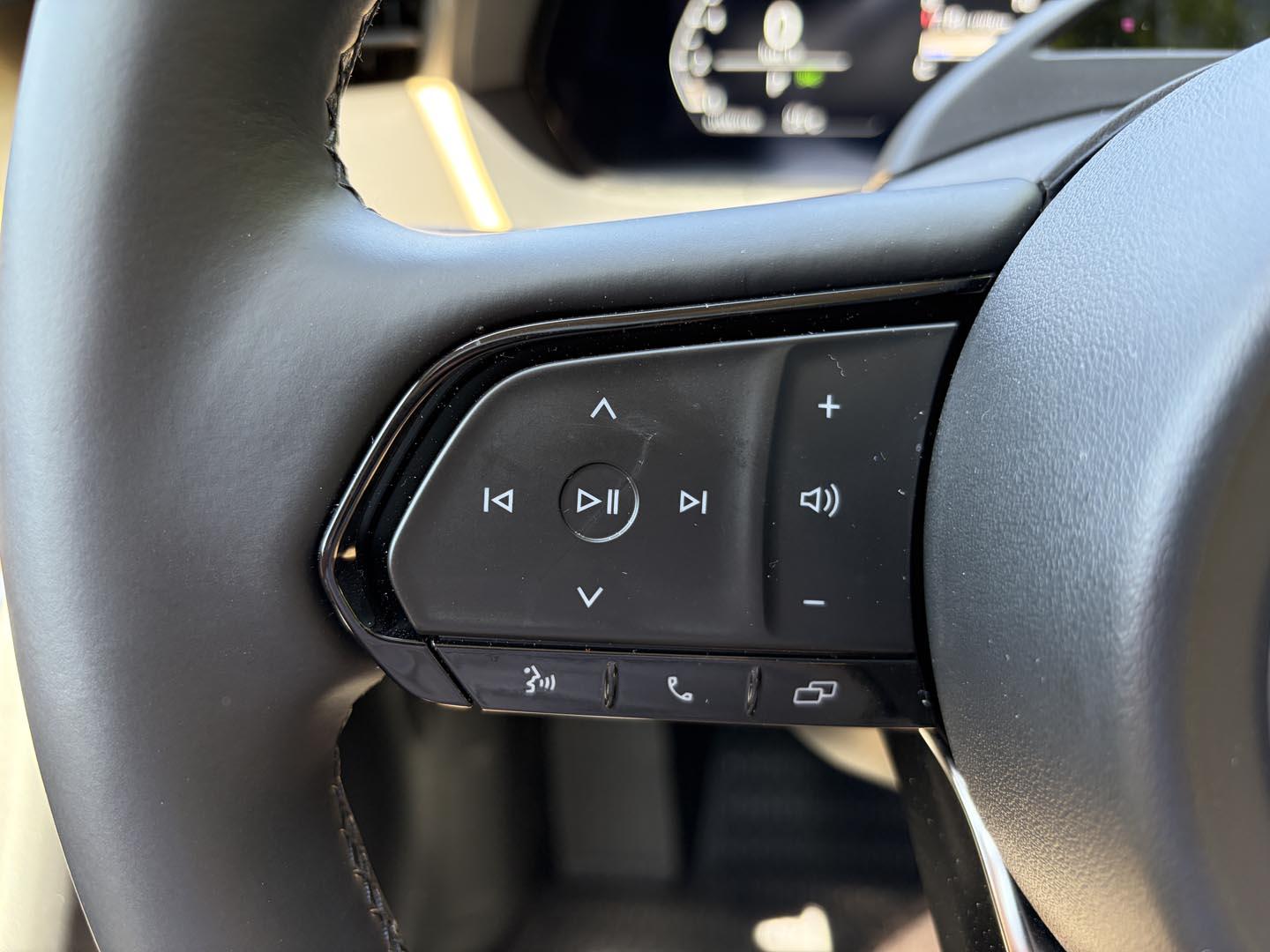
For example, the windowsills are made entirely of hard plastic, as is the upper dashboard on the driver’s side. The excellent toggle-style steering-wheel switches found in every other Mazda have been replaced by flat pads with no separation between the controls, a solution that is neither practical nor attractive. The two screens also use mismatched fonts, giving them a somewhat cheap appearance.
Will these details stop shoppers from buying a CX-5?
Probably not. Still, for a manufacturer that says it is moving toward the premium end of the market, such regressions are disappointing. .
Safety features
- Anti-lock braking system with electronic brakeforce distribution and emergency brake assist
- Electronic stability control with traction control system
- Hill-start assist
- Front airbags
- Driver and front-passenger knee airbags
- Front and rear side airbags
- Side curtain airbags
- Front and rear seat belts with pretensioners
- Five adjustable head restraints
- Rear-seat occupant reminder
- Rearview camera
- Tire pressure monitoring system
- Forward collision warning
- Forward automatic emergency braking with oncoming-vehicle path detection
- Lane departure warning with lane-keeping assist
- Lane trace assist
- Automatic high-beam control
- Blind-spot monitoring with steering assist
- Rear cross-traffic alert with pedestrian detection and automatic braking
- Adaptive cruise control
- Front and rear parking sensors
- Rear automatic emergency braking
- 360-degree camera system, front cross-traffic alert with automatic braking, adaptive front lighting system and lane-change assist (included in the GT Premium Package)
Crash test results
National Highway Traffic Safety Administration (NHTSA)
Overall score: not tested
Frontal impact: not tested
Side impact: not tested
Rollover resistance: not tested
Insurance Institute For Highway Safety (IIHS)
Moderate overlap frontal impact: 4 / 4
Small overlap frontal impact:
- driver side : 4 / 4
- passenger side: 4 / 4
Side impact: 4 / 4
Among the best vehicles in its segment (Top Safety Pick+ award)
Features and specs
Price range (including shipping and preparation) | ||
| Minimum price | $39,290 | |
|---|---|---|
| Maximum price | $50,190 | |
| Price as tested | $50,190 | |
| Trim levels | GX
GS
GT | |
Buick Envision | ||
Chevrolet Equinox | ||
Ford Escape | ||
GMC Terrain | ||
Honda CR-V | ||
Hyundai Tucson | ||
Jeep Compass and Cherokee | ||
Kia Sportage | ||
Mitsubishi Outlander | ||
Nissan Rogue | ||
Subaru Forester | ||
Toyota RAV4 | ||
Volkswagen Tiguan |
| Engine, horsepower and torque | 2.5L 4-cyl.; 187hp at 6000rpm; 186lb-ft at 4000rpm |
|---|---|
| Transmission | 6-speed automatic with manual mode |
| Front suspension | Independent with MacPherson struts |
| Rear suspension | Independent multilink |
| Front brakes | Ventilated disc |
| Rear brakes | Disc |
| Tires | 225/65R17
225/55R19 |
| Wheelbase | 281.5cm | ||
|---|---|---|---|
| Length | 467cm | ||
| Width | 186cm | ||
| Height | 169cm (19-inch wheels)
169.5cm (17-inch wheels) | ||
| Curb weight | 1747kg | ||
| Towing capacity | 680kg (1500lb) | ||
According to Natural Resources Canada | ||
| City | 9.9L/100km | |
|---|---|---|
| Highway | 7.9L/100km | |
As measured by CAA-Québec | ||
| City | 7.8L/100km | |
| Highway | N/A | |
| CO2 emissions | 4240kg/20,000km | |
| Fuel tank | 58 litres | |
| Recommended fuel | Regular-grade gasoline | |