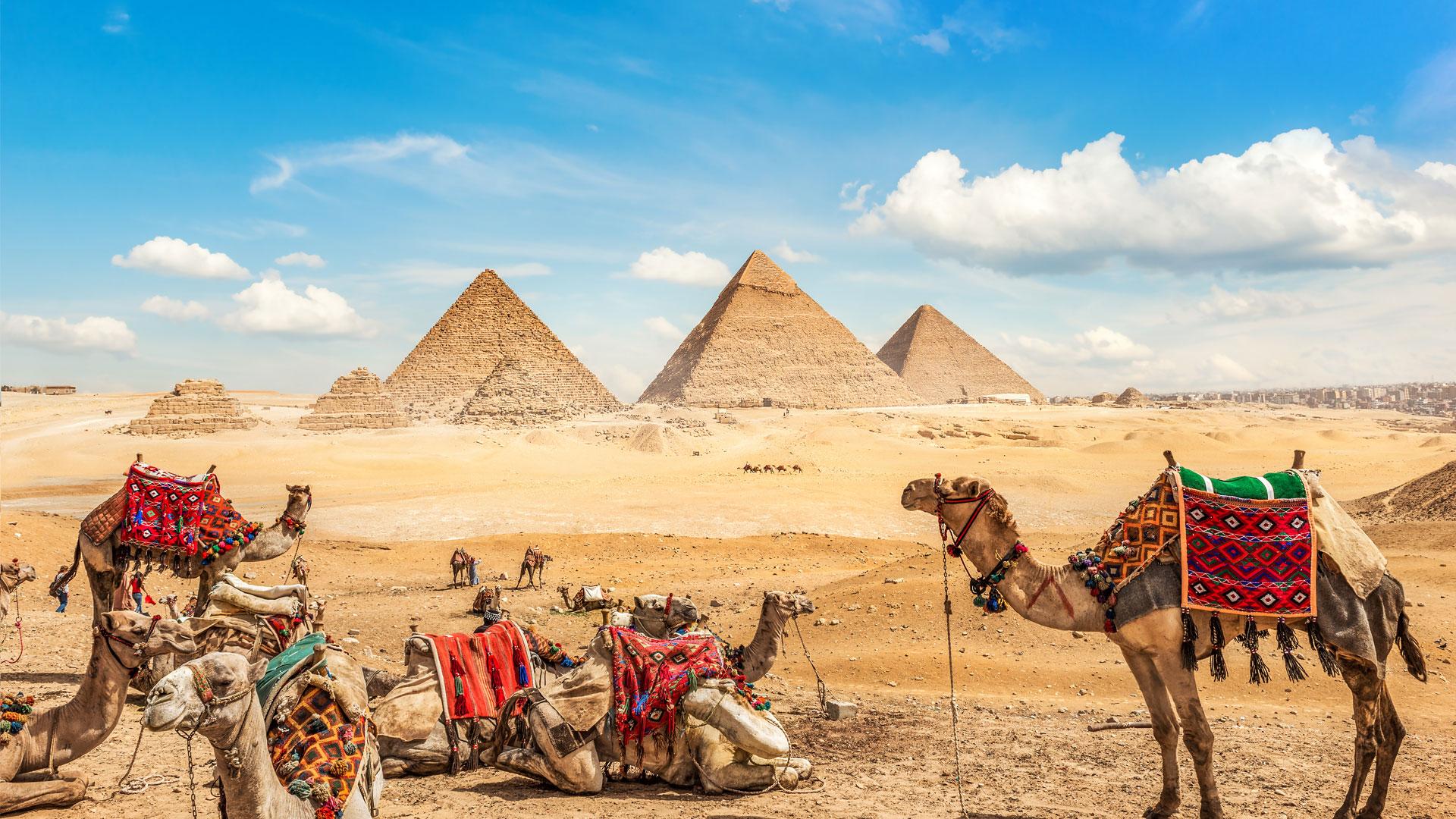
Highlights
- Rich history dating back to ancient times
- Stunning contrasts in the landscapes
- Warm and welcoming people
- Dry and sunny climate
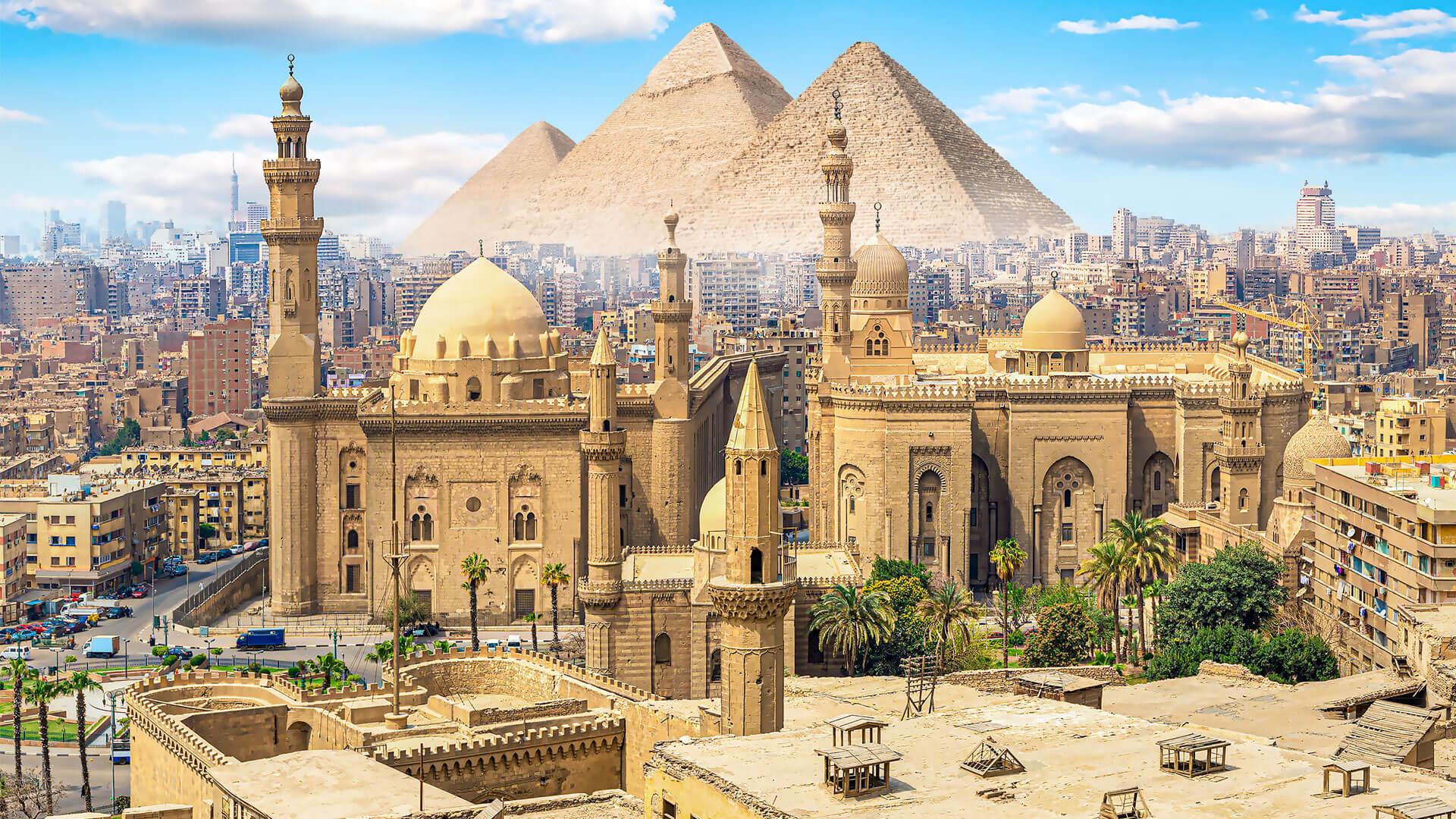


The official language of Egypt is Arabic, but the majority of the population speaks Egyptian Arabic.
English and French are commonly used in tourist areas, hotels, and by guides.
Direct flight: No direct flights to Egypt from Quebec.
Connecting flight: 16 to 21 hours (depending on connection times)
Egypt time zone: UTC +2
7h ahead of Quebec (EST)
6h ahead of Quebec (EDT)
Egyptian pound (EGP or £E), called geneh in Arabic.
Because cash remains the norm, it is recommended to carry both small and large bills. Some hotels and upscale restaurants accept credit cards. It is advisable to refuse damaged bills because they can be difficult to use. U.S. dollars printed after 2006 are also widely accepted.
Tipping, known as bakshish, is customary in Egypt and is considered part of employees’ income. In restaurants, it is common to leave 10–15% of the bill. On average, guides receive 200 to 400 EGP per day; drivers 50 to 100 EGP; and porters, site guards, and restroom attendants small amounts (5 to 20 EGP).
While major archaeological sites and tourist areas are generally safe, with a strong police presence, travellers should remain cautious in Egypt. It is recommended to avoid displaying valuables, stay alert in souks and crowded areas, and avoid regions that the Government of Canada discourages. For transportation, use official taxis, services recommended by your hotel, and guided excursions with licensed guides. Driving is not recommended due to road conditions and local driving habits.
Before any foreign trip, visit the Government of Canada’s Egypt Travel Advice page to find out about the current situation in the country.


Seen from a hot air balloon, the Theban Necropolis stretches along the Nile in all its splendour. Funerary temples, ancient ruins, and desert valleys unfold beneath a soft light, revealing the spiritual and historical significance of this major site of ancient Egypt.

Overlooking the Nile in Kom Ombo, the Temple of Sobek (the crocodile god) and Haroeris (the falcon god) stands out for its perfectly symmetrical architecture. It is famous for its reliefs depicting surgical instruments, showcasing ancient Egyptian medicine’s advances, and for its museum of mummified crocodiles.

El Gouna is an elegant seaside resort known for its turquoise lagoons, lively marinas, golden beaches, colourful neighborhoods, and luxury hotels. It is also a popular destination for scuba diving, snorkeling, kitesurfing, and enjoying evenings along the of the Red Sea’s crystal-clear waters.

The Temple of Horus at Edfu is one of the best-preserved sanctuaries in Egypt. Stepping through its towering stone gateways, you will discover richly decorated halls covered in hieroglyphs recounting divine myths and sacred rituals. An essential stop during any Nile cruise.
Seen from a hot air balloon, the Theban Necropolis stretches along the Nile in all its splendour. Funerary temples, ancient ruins, and desert valleys unfold beneath a soft light, revealing the spiritual and historical significance of this major site of ancient Egypt.
Overlooking the Nile in Kom Ombo, the Temple of Sobek (the crocodile god) and Haroeris (the falcon god) stands out for its perfectly symmetrical architecture. It is famous for its reliefs depicting surgical instruments, showcasing ancient Egyptian medicine’s advances, and for its museum of mummified crocodiles.
El Gouna is an elegant seaside resort known for its turquoise lagoons, lively marinas, golden beaches, colourful neighborhoods, and luxury hotels. It is also a popular destination for scuba diving, snorkeling, kitesurfing, and enjoying evenings along the of the Red Sea’s crystal-clear waters.
The Temple of Horus at Edfu is one of the best-preserved sanctuaries in Egypt. Stepping through its towering stone gateways, you will discover richly decorated halls covered in hieroglyphs recounting divine myths and sacred rituals. An essential stop during any Nile cruise.
Seen from a hot air balloon, the Theban Necropolis stretches along the Nile in all its splendour. Funerary temples, ancient ruins, and desert valleys unfold beneath a soft light, revealing the spiritual and historical significance of this major site of ancient Egypt.
Overlooking the Nile in Kom Ombo, the Temple of Sobek (the crocodile god) and Haroeris (the falcon god) stands out for its perfectly symmetrical architecture. It is famous for its reliefs depicting surgical instruments, showcasing ancient Egyptian medicine’s advances, and for its museum of mummified crocodiles.
El Gouna is an elegant seaside resort known for its turquoise lagoons, lively marinas, golden beaches, colourful neighborhoods, and luxury hotels. It is also a popular destination for scuba diving, snorkeling, kitesurfing, and enjoying evenings along the of the Red Sea’s crystal-clear waters.
The Temple of Horus at Edfu is one of the best-preserved sanctuaries in Egypt. Stepping through its towering stone gateways, you will discover richly decorated halls covered in hieroglyphs recounting divine myths and sacred rituals. An essential stop during any Nile cruise.

Koshari is a hearty mix of rice, lentils, chickpeas, and pasta, topped with a slightly tangy, spiced tomato sauce and garnished with crispy fried onions. Filling, affordable, and flavourful, it is an Egyptian street food classic.

Ful medames is an iconic Egyptian dish made from slowly simmered beans, flavoured with olive oil, garlic, and lemon. Deep brown in colour, it has a thick, creamy, and comforting texture. Often garnished with tahini or fresh herbs, it is served hot with flatbread.

Molokhia is a dish made from finely chopped green leaves (molokhia) simmered in a fragrant garlic and coriander broth. Its intense, sometimes surprising flavour is herbal, with a silky texture. This comforting dish is typically served with rice, chicken, or rabbit.

Om Ali is a traditional Egyptian dessert often compared to a pudding. Made with puff pastry or bread soaked in warm milk, it is topped with nuts and dried fruits. Baked until golden, it has a melt-in-your-mouth yet crunchy texture. Fragrant and lightly sweet, it is best enjoyed warm.

Konafa is a dessert made with delicate, crispy strands of kataifi pastry, filled with mild cheese or cream, then drizzled with a fragrant sugar syrup infused with rose water or orange blossom. Topped with walnuts, almonds, or pistachios, it is served warm, offering an irresistible contrast between a golden crunch and a meltingly soft centre.
Koshari is a hearty mix of rice, lentils, chickpeas, and pasta, topped with a slightly tangy, spiced tomato sauce and garnished with crispy fried onions. Filling, affordable, and flavourful, it is an Egyptian street food classic.
Ful medames is an iconic Egyptian dish made from slowly simmered beans, flavoured with olive oil, garlic, and lemon. Deep brown in colour, it has a thick, creamy, and comforting texture. Often garnished with tahini or fresh herbs, it is served hot with flatbread.
Molokhia is a dish made from finely chopped green leaves (molokhia) simmered in a fragrant garlic and coriander broth. Its intense, sometimes surprising flavour is herbal, with a silky texture. This comforting dish is typically served with rice, chicken, or rabbit.
Om Ali is a traditional Egyptian dessert often compared to a pudding. Made with puff pastry or bread soaked in warm milk, it is topped with nuts and dried fruits. Baked until golden, it has a melt-in-your-mouth yet crunchy texture. Fragrant and lightly sweet, it is best enjoyed warm.
Konafa is a dessert made with delicate, crispy strands of kataifi pastry, filled with mild cheese or cream, then drizzled with a fragrant sugar syrup infused with rose water or orange blossom. Topped with walnuts, almonds, or pistachios, it is served warm, offering an irresistible contrast between a golden crunch and a meltingly soft centre.


The best time to visit Egypt is from October to April. With pleasant temperatures ranging between 20°C and 30°C, this period is ideal for exploring the country comfortably.
May to September are best avoided because extreme heat can set in, with desert temperatures often exceeding 40°C.
There are several effective ways to get around Egypt, depending on the distance you need to travel. Domestic flights are fast and efficient for long journeys, saving valuable time. Trains and tourist buses connect major cities such as Cairo and Alexandria, while a Nile cruise offers a unique way to explore Luxor and Aswan from the river.
Within cities and at popular tourist sites, it is recommended to use official taxis, cars with drivers, or simply walk for both safety and comfort because driving yourself is strongly discouraged due to local drivers’ often reckless behaviour.
Hiring a local guide is highly recommended. Not only do they provide a unique perspective on the country, but they also handle all transportation logistics, allowing you to focus entirely on the experience.
10 to 12 days. It is the ideal duration for a complete immersion, allowing you to experience all of Egypt’s must-see highlights.


Egypt
Departures: Dec 03, 2026, Dec 04, 2026 + 42 other dates
Price from $5,079

Egypt
Departures: Dec 05, 2026, Dec 12, 2026 + 24 other dates
Price from $1,979
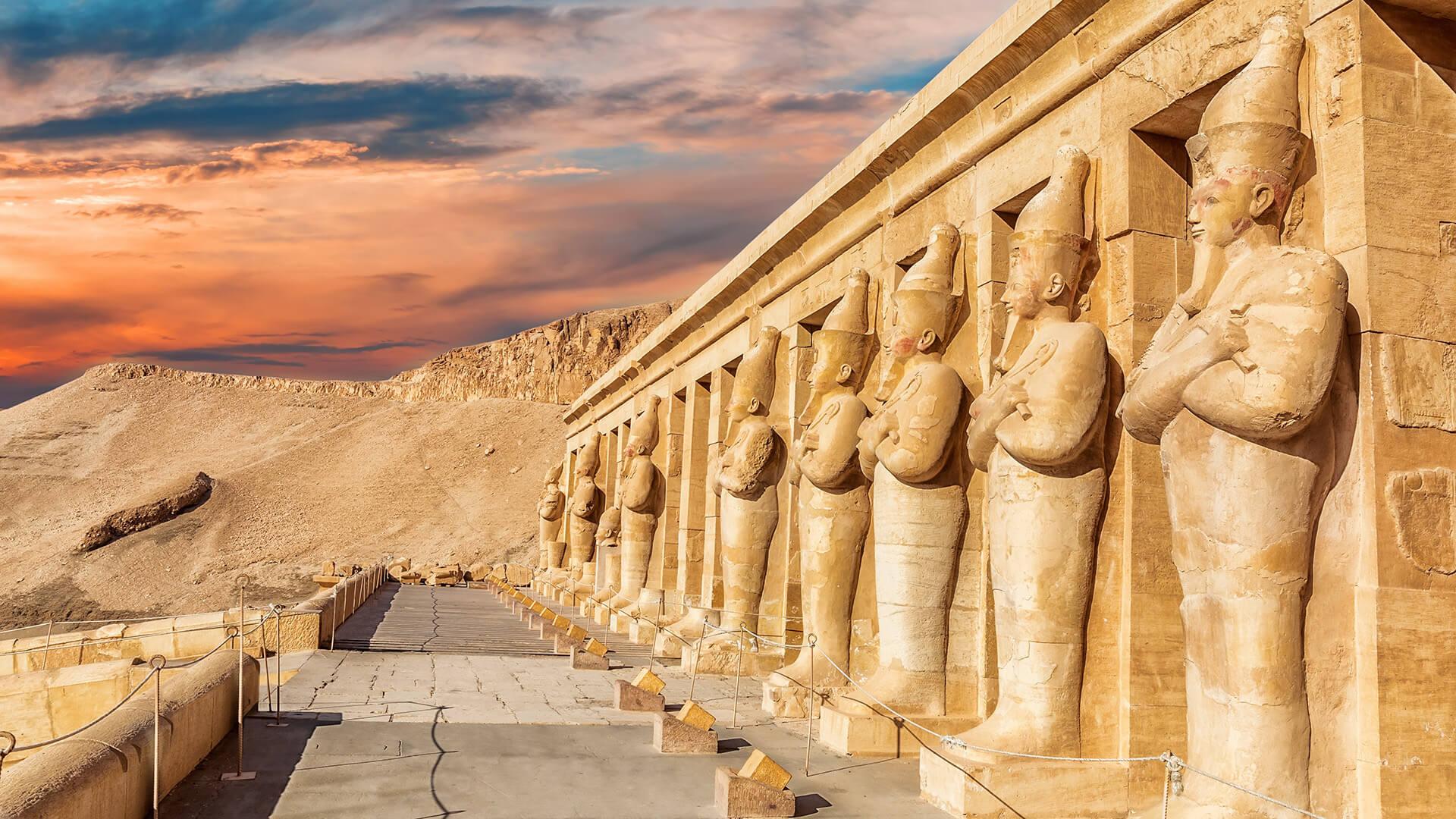
Egypt
Departures: Oct 13, 2027, Nov 10, 2027
Price from $11,399 $11,324
Travel in complete peace of mind.
Fast, compliant and guaranteed service.
Useful for driving abroad.
Online application service.
Double-check the rules before you travel.
Suitcases, anti-theft bags, and more!
Create your personalized travel itinerary.
Road guides and road maps.


