Traffic congestion and its solutions
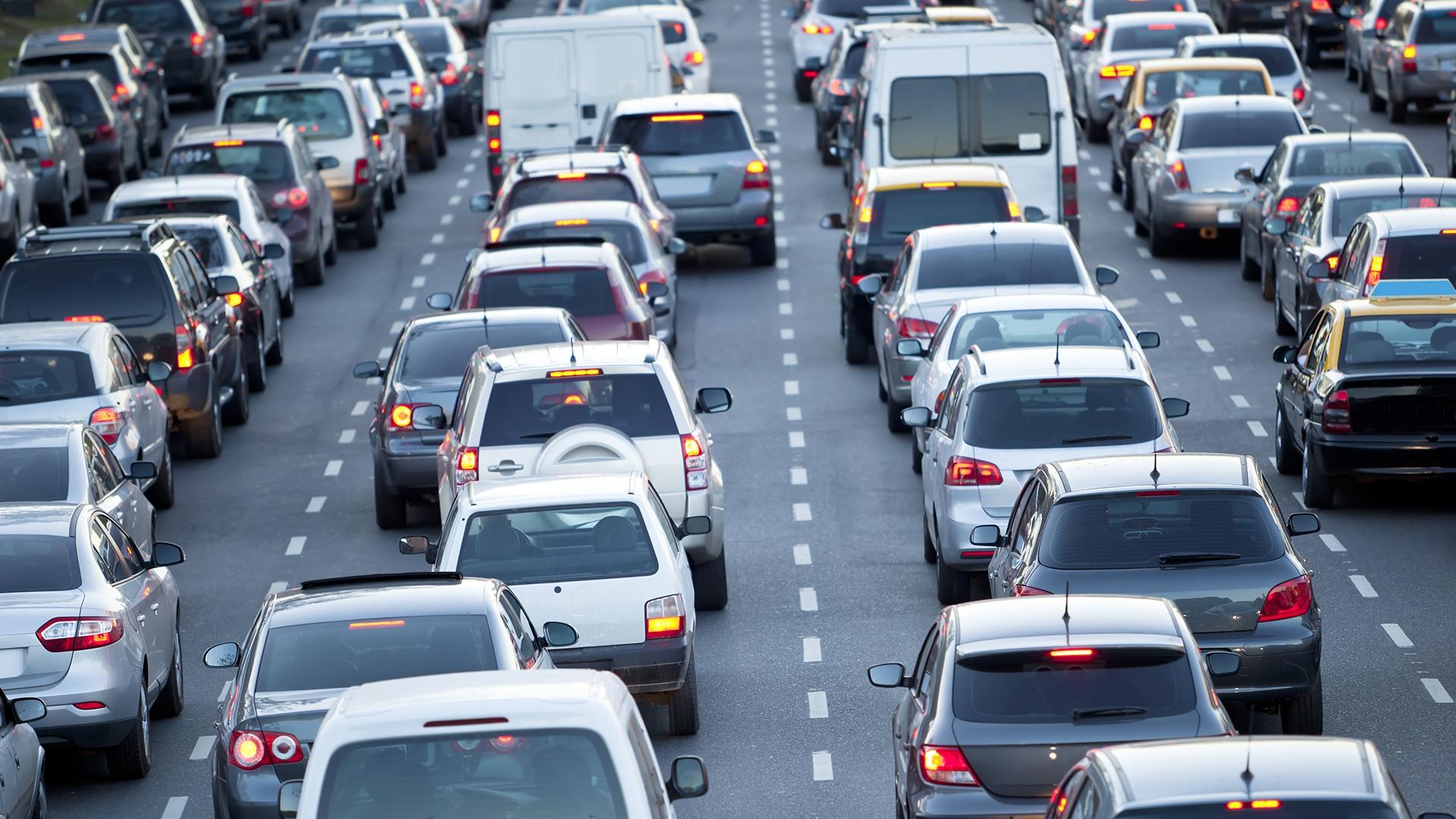
Traffic jams and bottlenecks are a daily headache for motorists across Quebec. Here are some possible solutions.
When traffic jams keep getting longer
Of Canada’s 20 worst bottlenecks, five are in Montreal and one is in Quebec City.1 Though they affect only 65km in all, the annual cost of traffic delays on these roads is enormous:
- 11.5 million hours in lost time to drivers
- 22 million litres in wasted fuel
- 58,000 tonnes of GHGs
- A recent survey found that 62% of motorists believe traffic congestion is getting worse
1. As reported in a comprehensive study on road congestion in Canada, conducted by CPCS for CAA in 2018.
When traffic jams keep getting longer
Things you can do to reduce congestion
Learn the zipper merge (video in French only)
Don’t brake (video in French only)
Quit rubbernecking (video in French only)
Frequent lane changes make congestion worse, so don’t weave in and out of traffic! When cars drive faster, they also drive further apart, which reduces road capacity. Conversely, lowering average speed reduces congestion since vehicles can travel closer to each other.
A small shift in your work schedule can make a huge difference to how much time you spend stuck in traffic. Set the alarm a bit earlier or eat breakfast at work to steer clear of dreaded rush-hour gridlock.
Work remotely. Take public transit. Walk, ride your bike, or hop on your inline skates or scooter. Leave the car at home one or two days a week to help reduce the number of vehicles on the road.
10 low-cost solutions to ease traffic congestion
There’s no one solution or magic cure for traffic congestion. Bridges, tunnels, expressways, and mass transit networks need improvements, but other faster, less expensive solutions have also proven effective elsewhere.
See a summary of all solutions proposed in the CPSC study
- How it works: When approaching a bottleneck, the best way to merge is not for everyone to cram into the available lane as quickly as possible. The best technique is for drivers in the lane that is ending to wait until the last moment and then alternate one by one (like the teeth on a zipper) into the open lane.
- Benefits: 100% of lane space used instead of blocking traffic, smaller difference in speed between both lanes, traffic backup reduced by up to 40%.
- Examples: Zipper merging is encouraged in Germany and the U.S. states of Minnesota, Missouri, and Washington.
- How they work: Temporary visual barriers, called incident screens, are set up to block the view of motorists passing an accident scene. The goal is to keep rubberneckers from slowing down and prevent secondary incidents.
- Benefits: Inexpensive and effective. Motorists passing an accident scene tend to slow down and look for 12 seconds on average. With incident screens installed, that average drops to four seconds.
- Example: Tests in the U.K. show the average economic benefit of using such screens is $300,000 per incident.
- How they work: Authorities use drones to get quicker photos of accident scenes for police investigation.
- Benefits: One-third to one half of road congestion is caused by traffic accidents and incidents, so managing effectively them can really pay off. Drones can be sent to an accident scene faster and more easily, which means roads can reopen sooner.
- Example: Tests in the U.K. show that using drones can cut lane closure times by 30 to 45 minutes.
- How they work: Traffic lights are synchronized and adjust to changing traffic patterns and incidents in real time to improve flow.
- Benefits: Appreciable gains without the need for new infrastructure. Systems increasingly cheaper to install thanks to new technology. The most effective systems reduce delays by up to 40%.
- Examples: The City of Toronto invests $850,000 a year to retime its traffic signals. Studies show that for every dollar spent, $64 is saved (in time, fuel, emissions, etc.). In Colorado, two new systems have been implemented with results showing that cumulative travel time can be cut by 54%.
- How they work: Traffic lights are installed at the start of onramps to ensure smooth, uniform entry to expressways.
- Benefits: Regulation and better control over expressway ramp traffic, resulting in fewer slowdowns caused by vehicles entering the expressway.
- Examples: A pilot project in Paris reported 15% time savings, a 10 km/h increase in average speed of rush hour traffic, a 20% drop in collisions, and a 30% cut in air pollution. In Minneapolis, 433 ramp flow control signals have been installed, reducing travel times by 22%.
- How it works: Bike share systems have multiple stations at strategic spots around a city, perfect for tourists or urban travel.
- Benefits: Bike shares are hugely popular (use in the U.S. has increased twelvefold in five years), plus they’re inexpensive, work well with mass transit systems, and help reduce automobile use.
- Example: The City of Hamilton purchased 825 bikes for SoBi/Social Bicycles Hamilton (now Hamilton Bike Share), and the bike sharing system is already paying for itself.
Cycling infrastructure and other active transportation solutions
- How they work: Solo drivers can buy a permit or sticker to drive in lanes normally reserved for high-occupancy vehicles/HOVs (vehicles with two or more occupants).
- Benefits: More money in government coffers. Cruising speed in other lanes increased by 6%. System less restrictive than traditional toll schemes.
- Example: Solo drivers can pay to use a 16.5km stretch of the Queen Elizabeth Way (QEW) in Greater Toronto. Three-month permits are available in limited quantities and sold by lottery.
Traditional tolls, technology-based tolls, and other solutions based on congestion charges
- How it works: With big corporations and transit authorities on board, carpooling could see a major upswing.
- Benefits: Huge potential: 80% to 90% of vehicles on the road have at least three empty seats. Low cost to companies and individuals, often offset by savings on parking. Far cheaper than taking the bus in lower density areas.
- Examples: In Denver, Way to Go leases vans to any group of 5 to 15 people who travel to the same destination every day. In Toronto and Hamilton, Smart Commute helps companies promote carpooling through a range of diagnostic, logistical, rider matching, and other tools. Loblaws worked with Smart Commute and in three years saw its share of employees driving solo drop from 67% to 51%, while carpooling increased from 27% to 47%. How much does it cost the company? The equivalent of one person-hour a month.
- How it works: Companies guarantee that employees who carpool as passengers can take a taxi home free of charge if they need one.
- Benefits: Removes a major barrier to carpooling by guaranteeing that an employee can get a ride home earlier or later if they need to (for a family emergency, for example).
- Examples: With Smart Commute (Toronto and Hamilton), employees can request reimbursement of up to $75 to cover the cost of an emergency ride home if they have to leave work early or stay late or if their carpooling partner is no longer available.
- How it works: Mass transit riders pay for travel using a smartphone or contactless credit card.
- Benefits: More convenient system for occasional users, who don’t need to spend time figuring out how to buy an OPUS card. Ultimately, it could also lead to savings for transit authorities who would no longer need to maintain a closed-payment system.
- Example: In London, 30% of Underground and commuter rail trips are purchased using an open payment platform. Authorities expect collection costs to drop by one third.