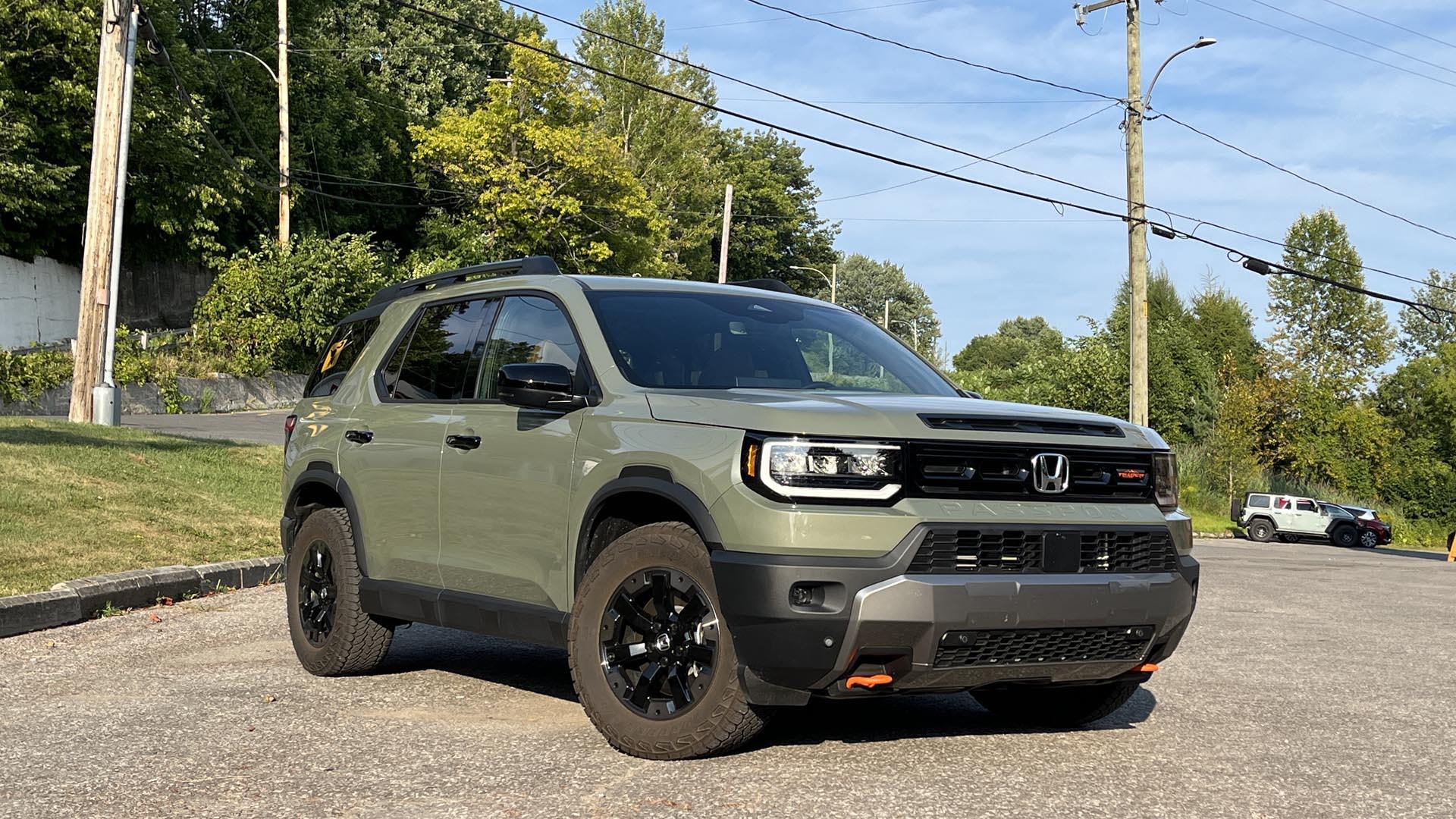
HONDA Passport 2026
Honda's 5-seater midsize SUV embraces its adventurous side
Pros and cons
Pros
- Smooth and responsive V6 engine
- Comfortable ride
- Spacious cabin and cargo space
- Simple and accessible controls
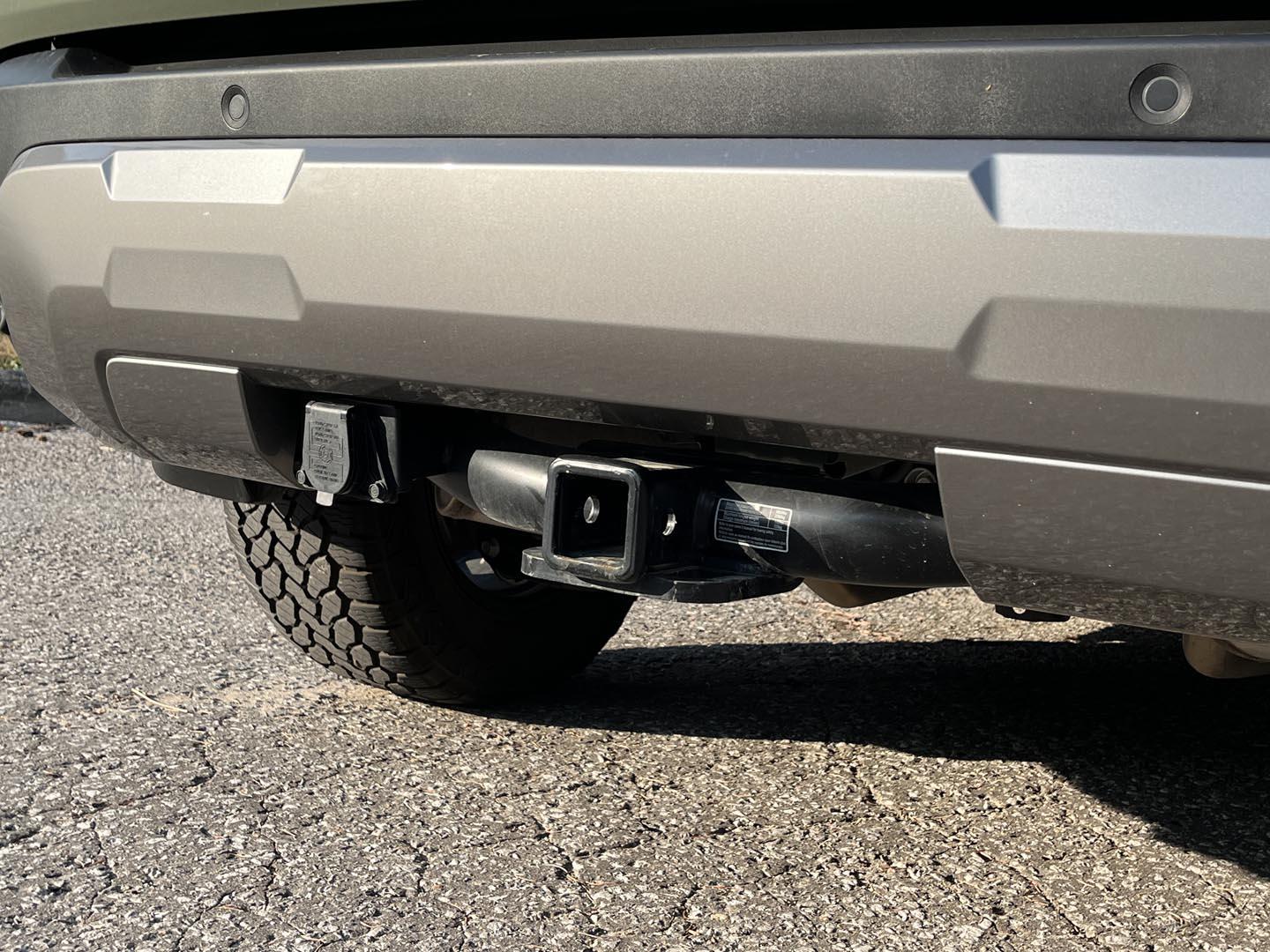
- Easy and efficient towing
- Proven reliability
Cons
- Gearbox sometimes jerky
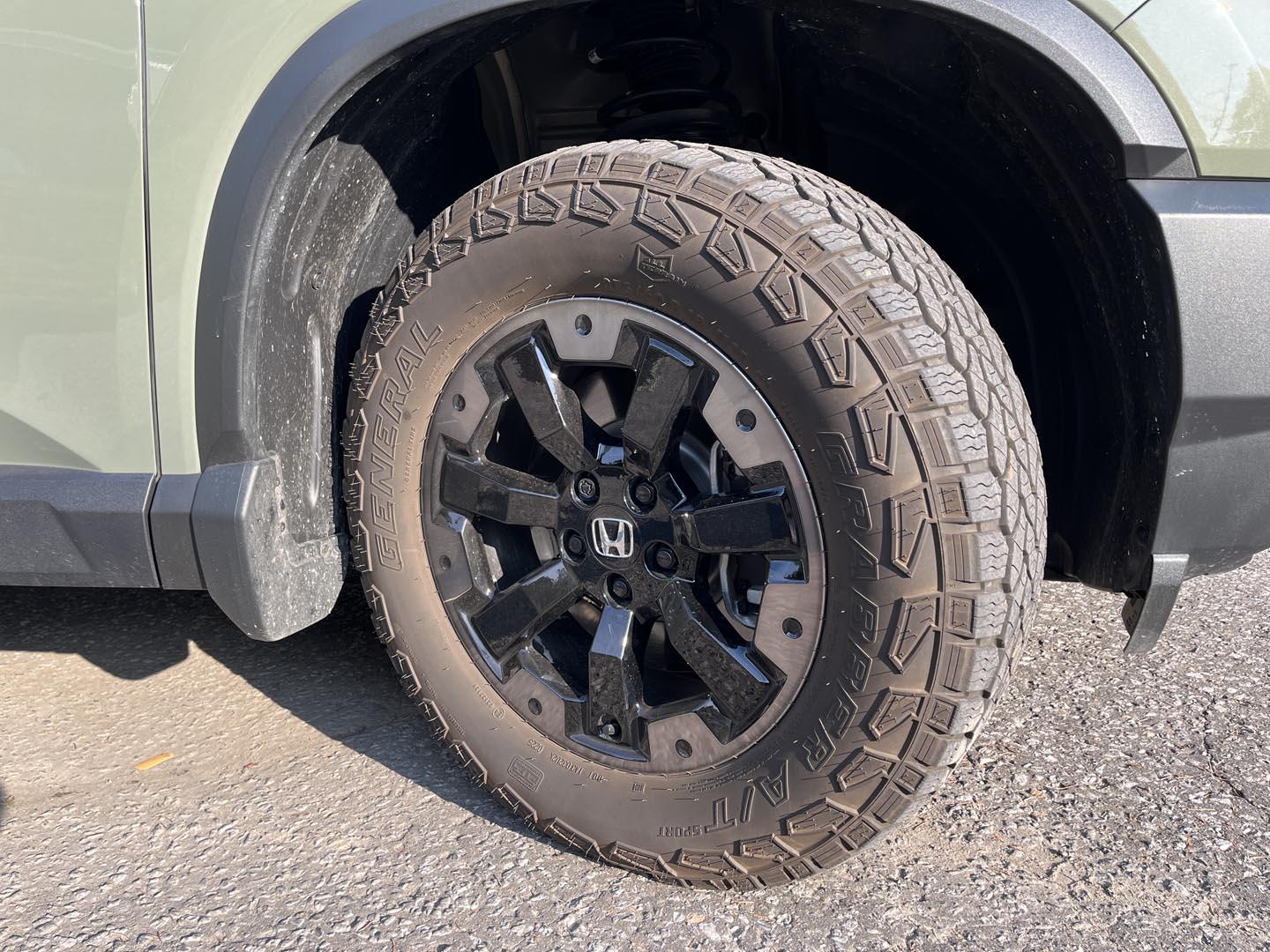
- Noisy off-road tires
- Numb steering
- Front seats lack support
- High starting price
Overview
How did Honda go about creating the Passport in 2019? Simply by shortening its then-current Pilot, removing the third row of seats, and very slightly redesigning the grille and taillights.
The vehicle enjoyed some success, but let's be honest: it looked a little too much like its predecessor to truly challenge the competition. Especially since the TrailSport version, added to the lineup in 2022, offered little more than exclusive tires, a few badges, and a 1-cm wider track—the distance between the wheels on the same axle—to emphasize its off-road credentials.
A clearer purpose for the Passport
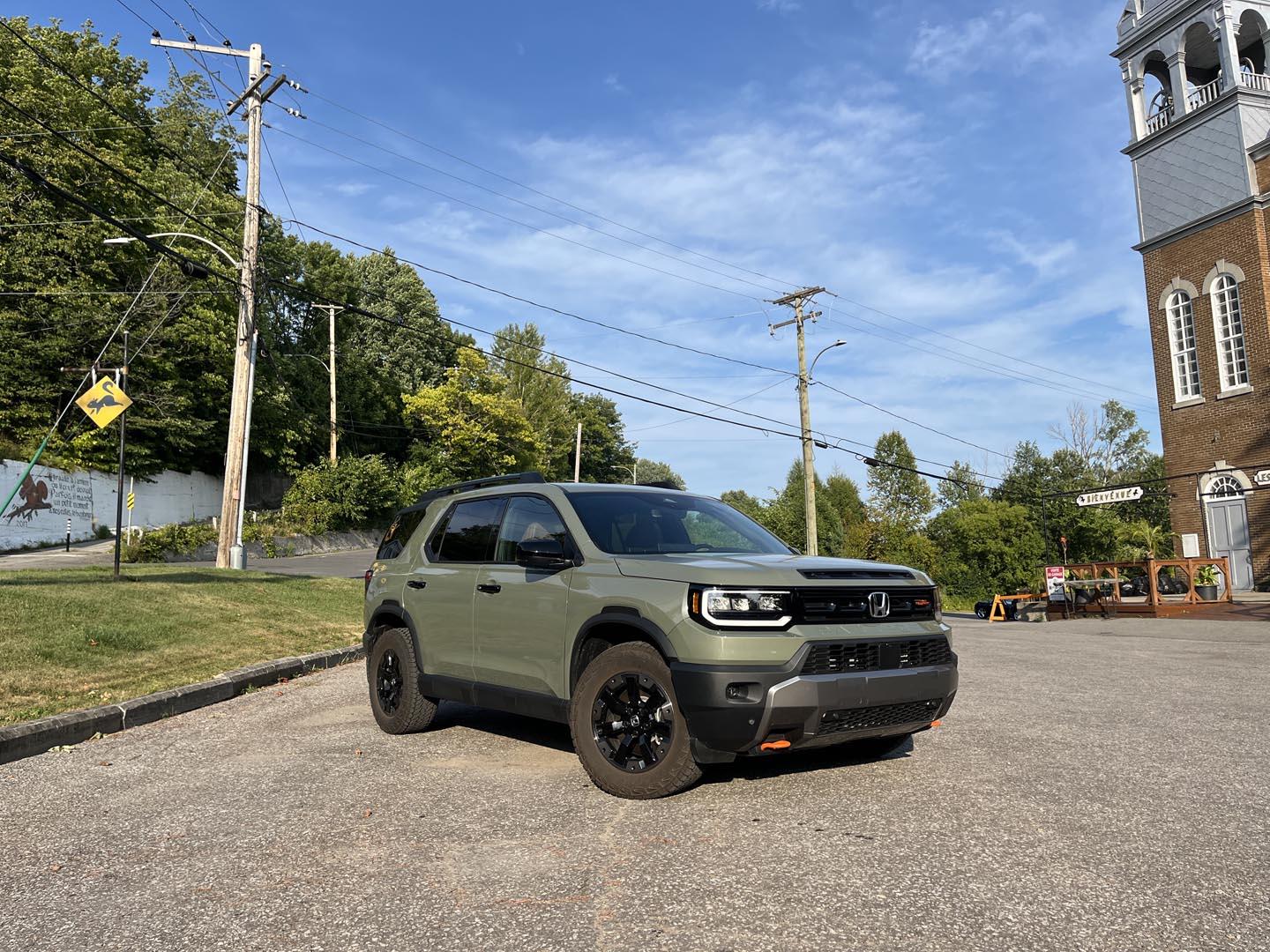
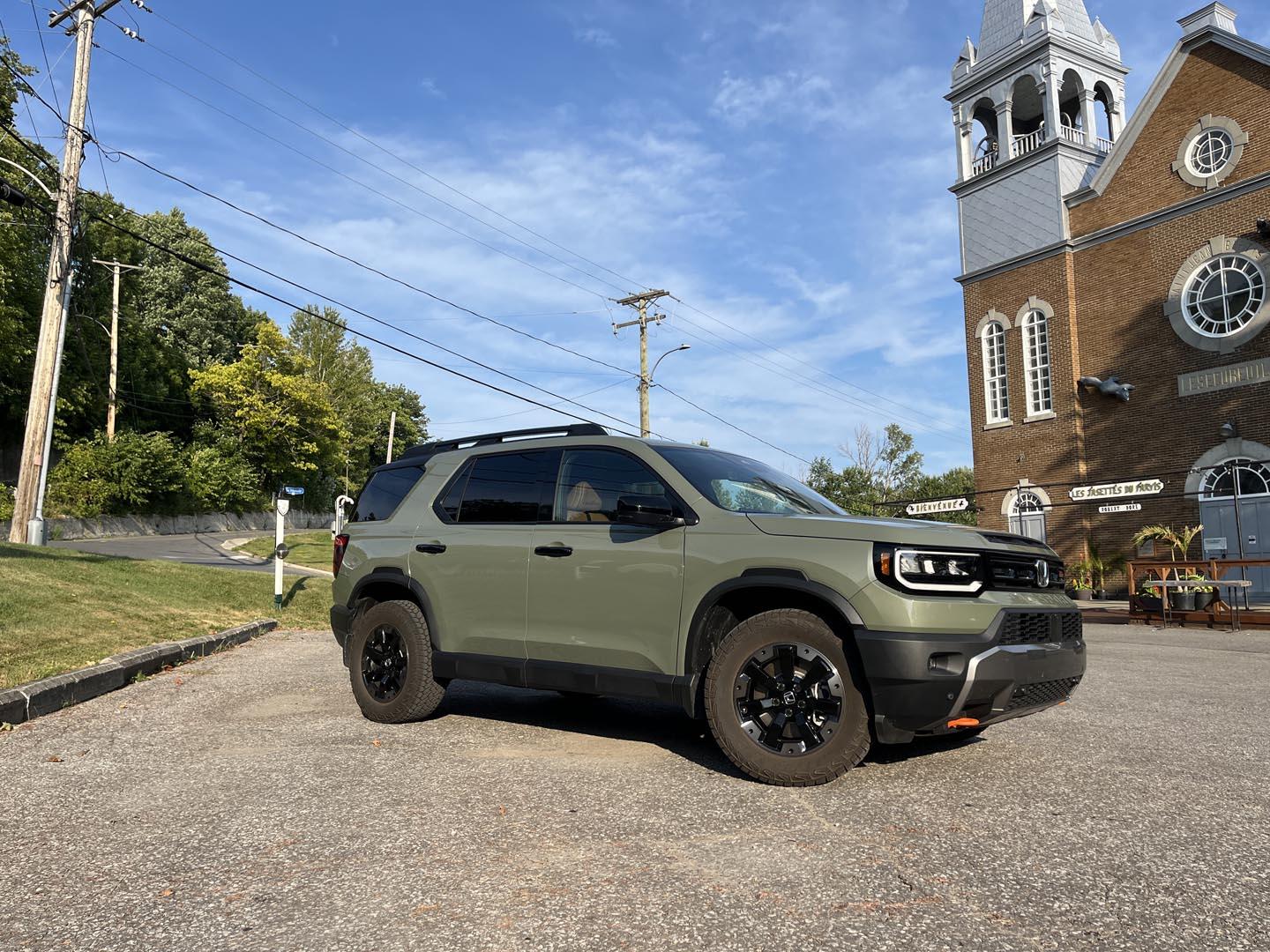
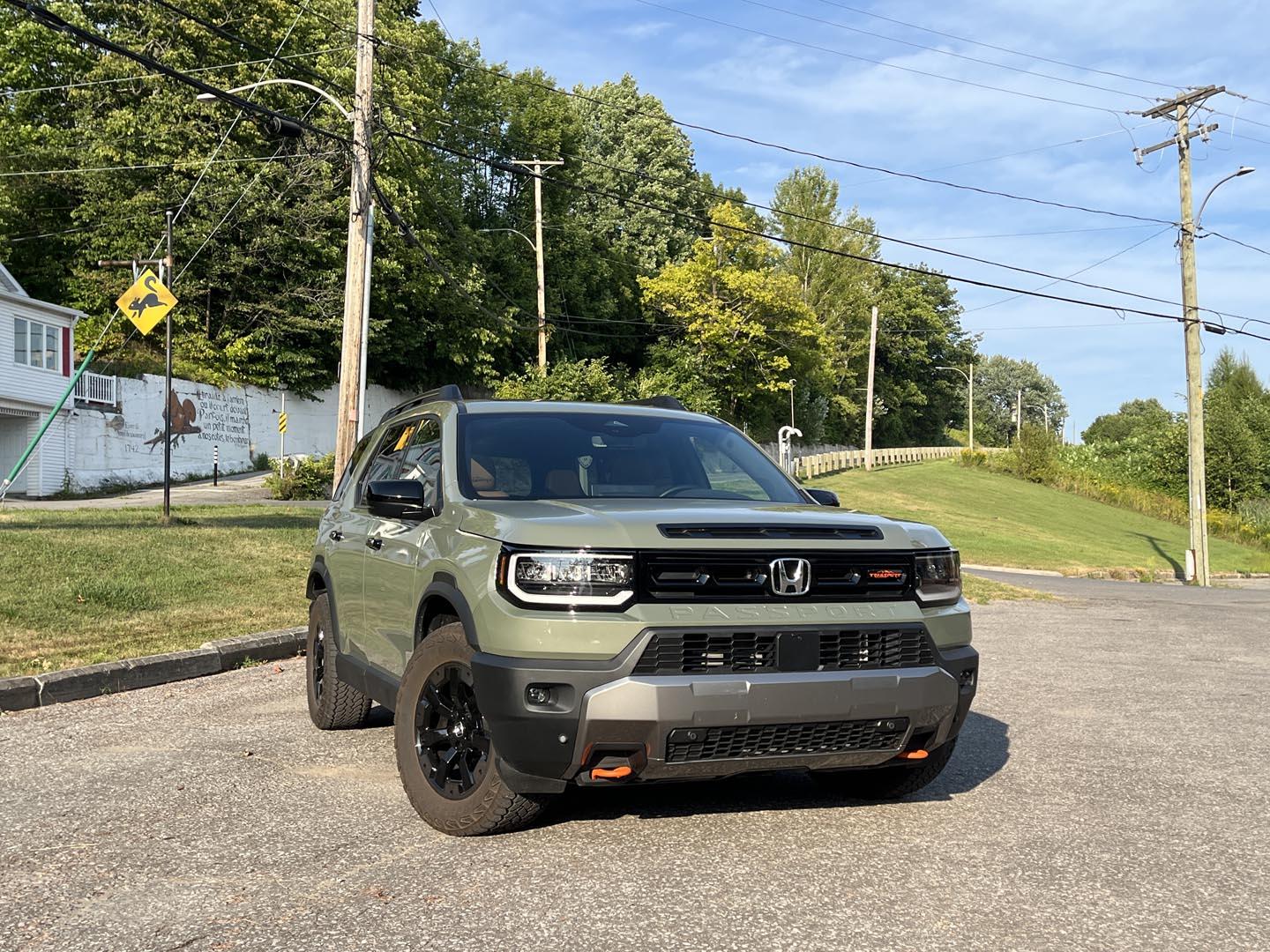
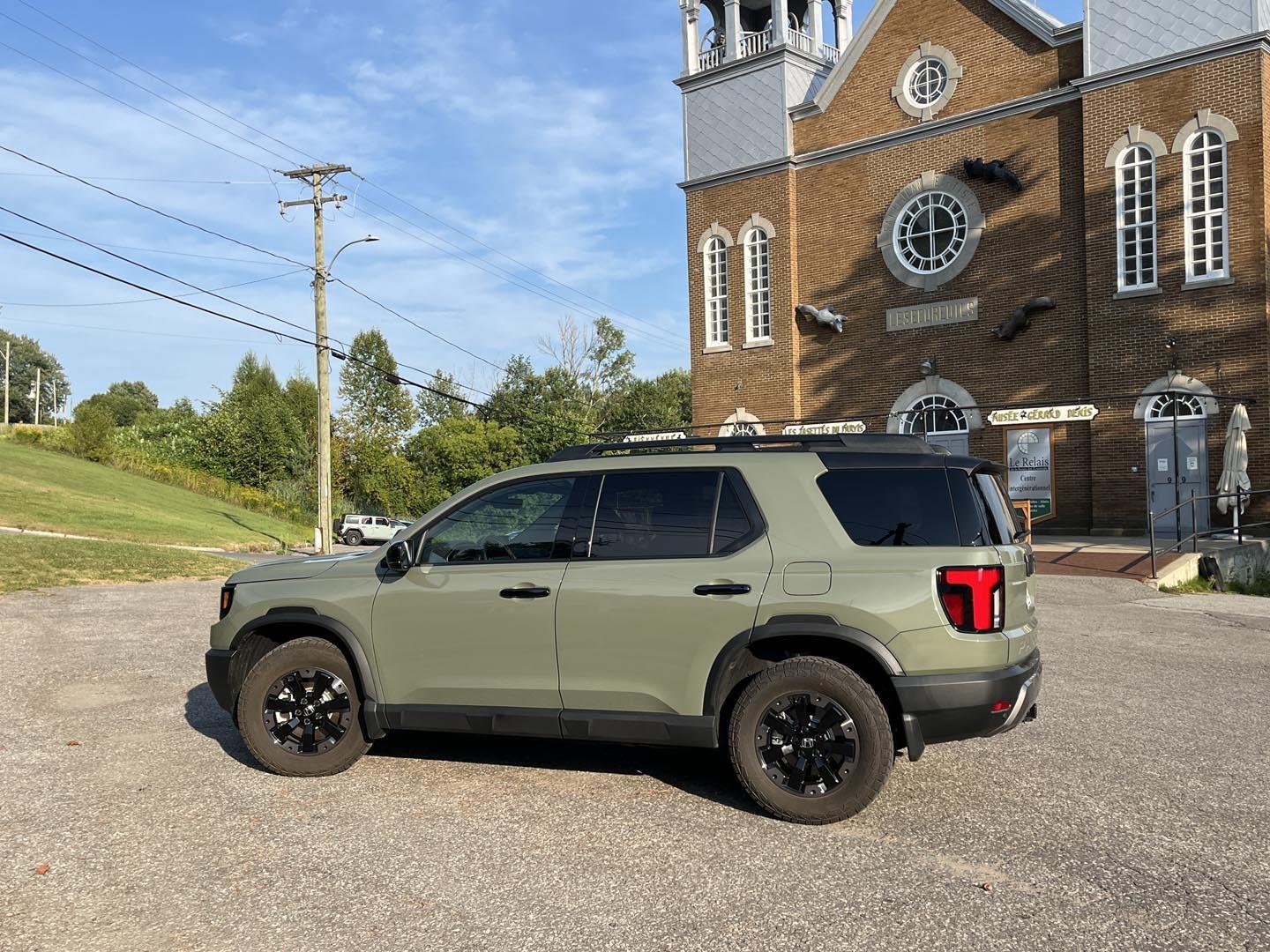
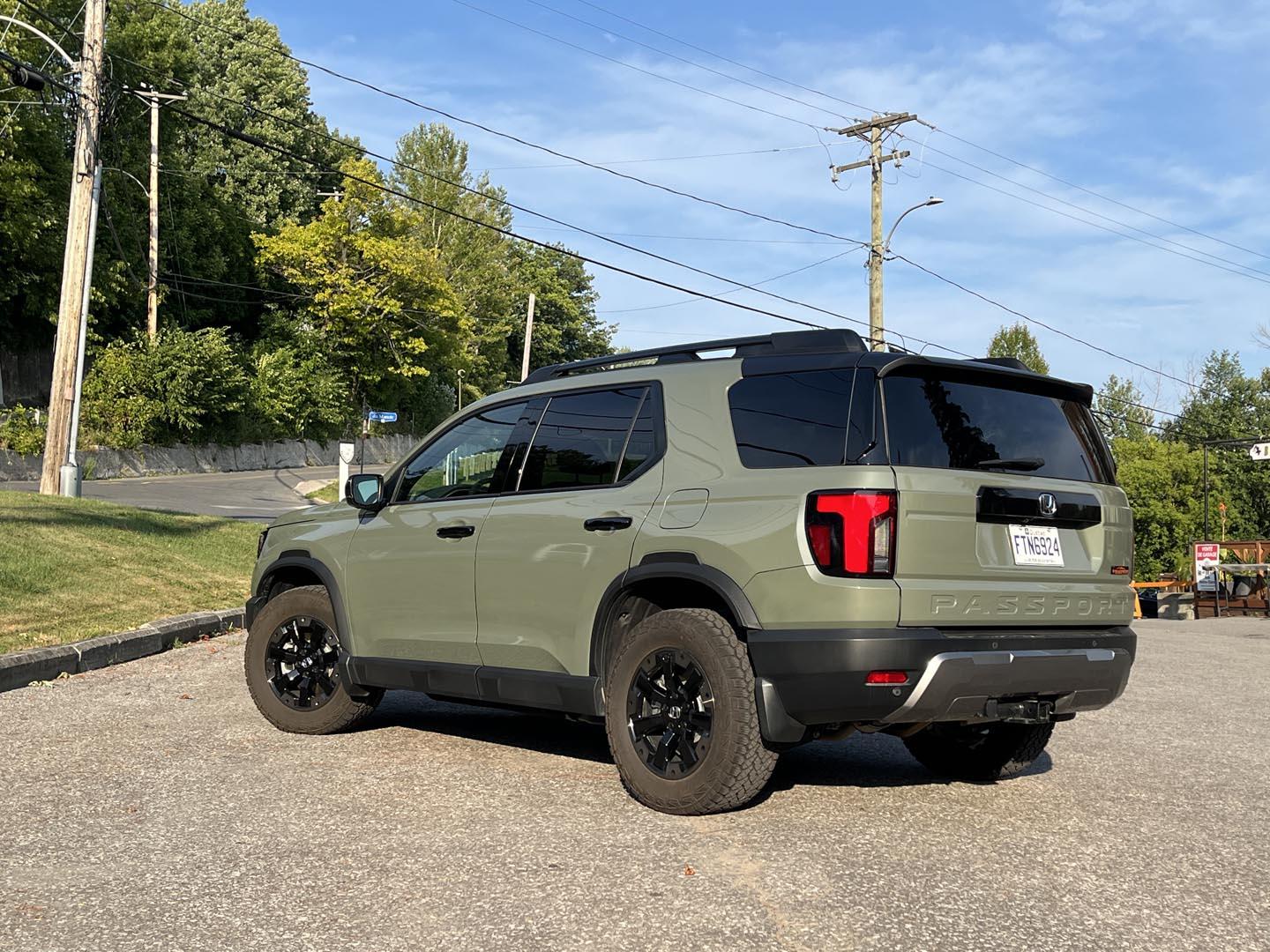
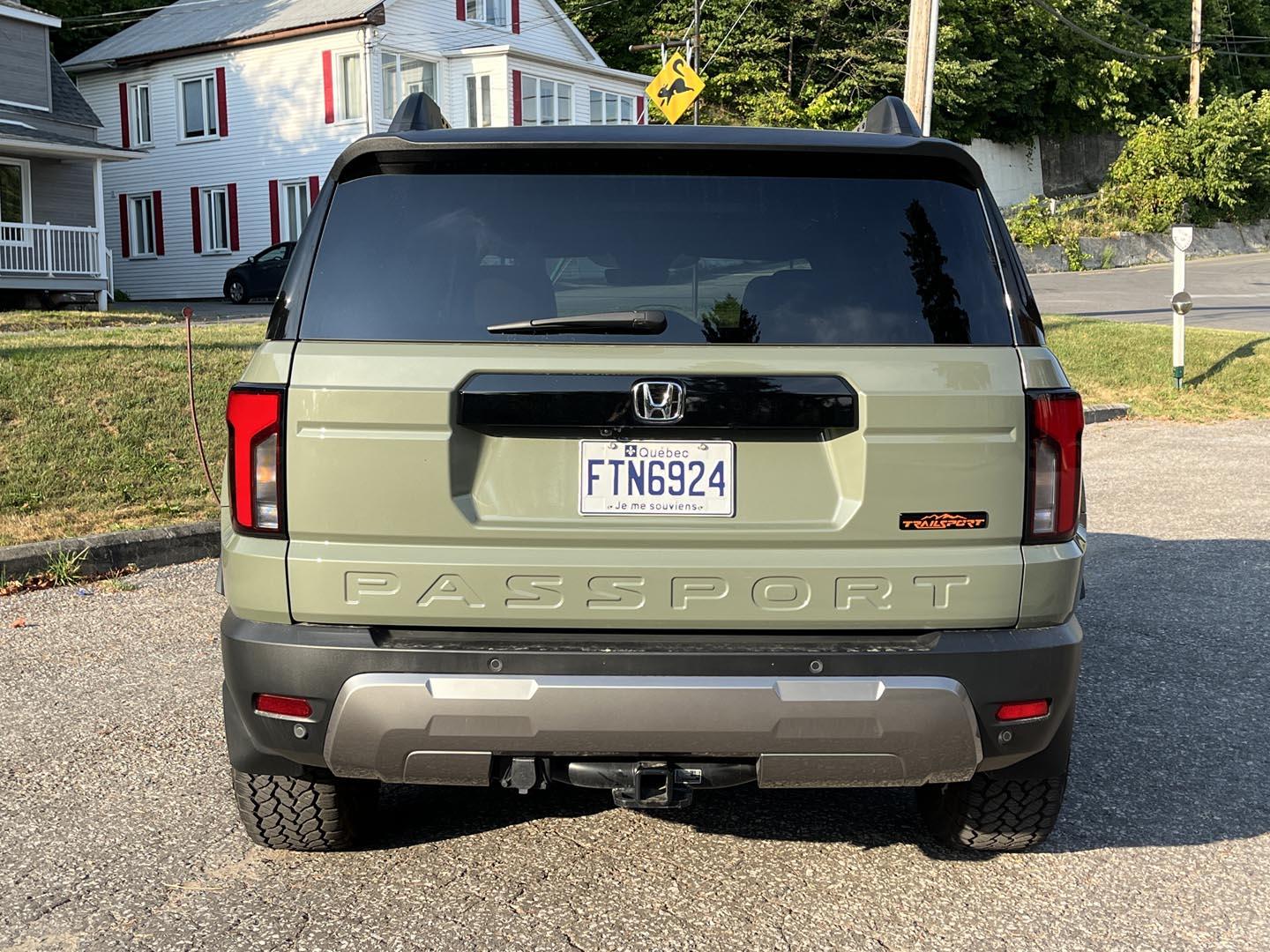
The second-generation Passport has been on the road since summer 2025 as a 2026 model. This time, it clearly stands out from the Pilot with its boxy shape, prominent bumpers, increased height and ground clearance, as well as improved approach and departure angles for off-road driving.
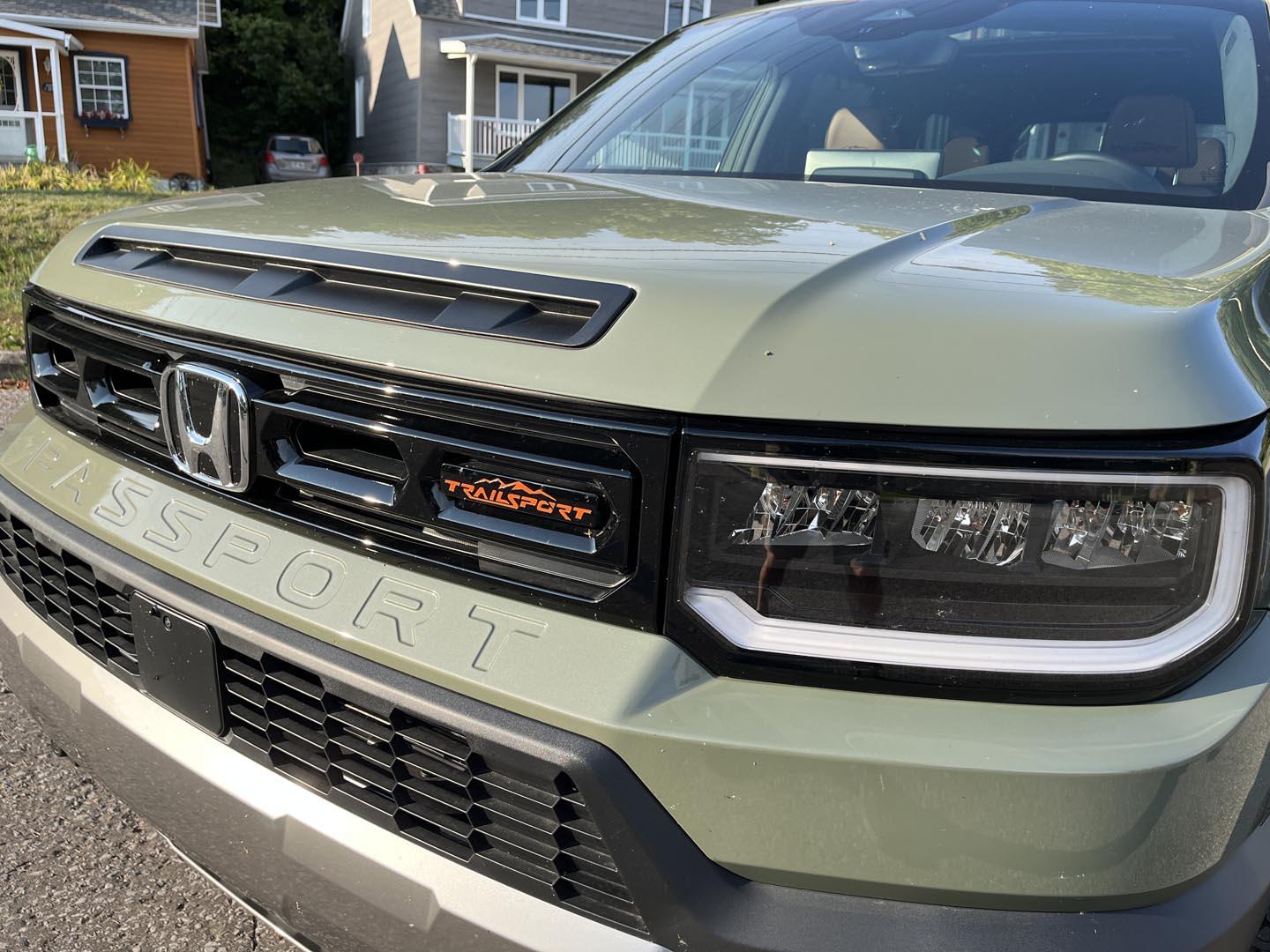
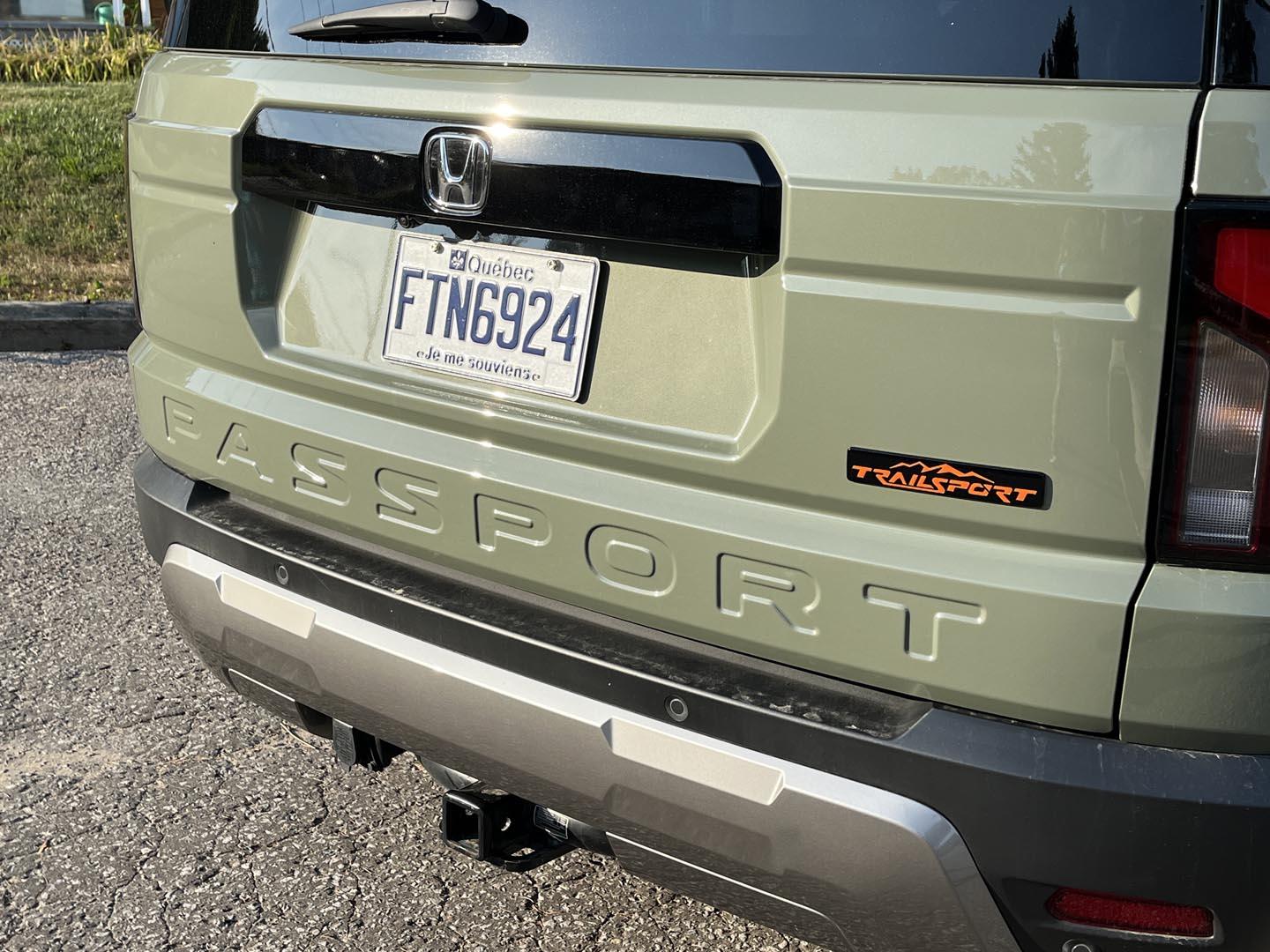
All versions now bear the TrailSport badge, identified by orange accents on both the exterior and interior. They also feature all-terrain tires with a more pronounced tread pattern than those of the previous generation.
Still Not a True 4x4
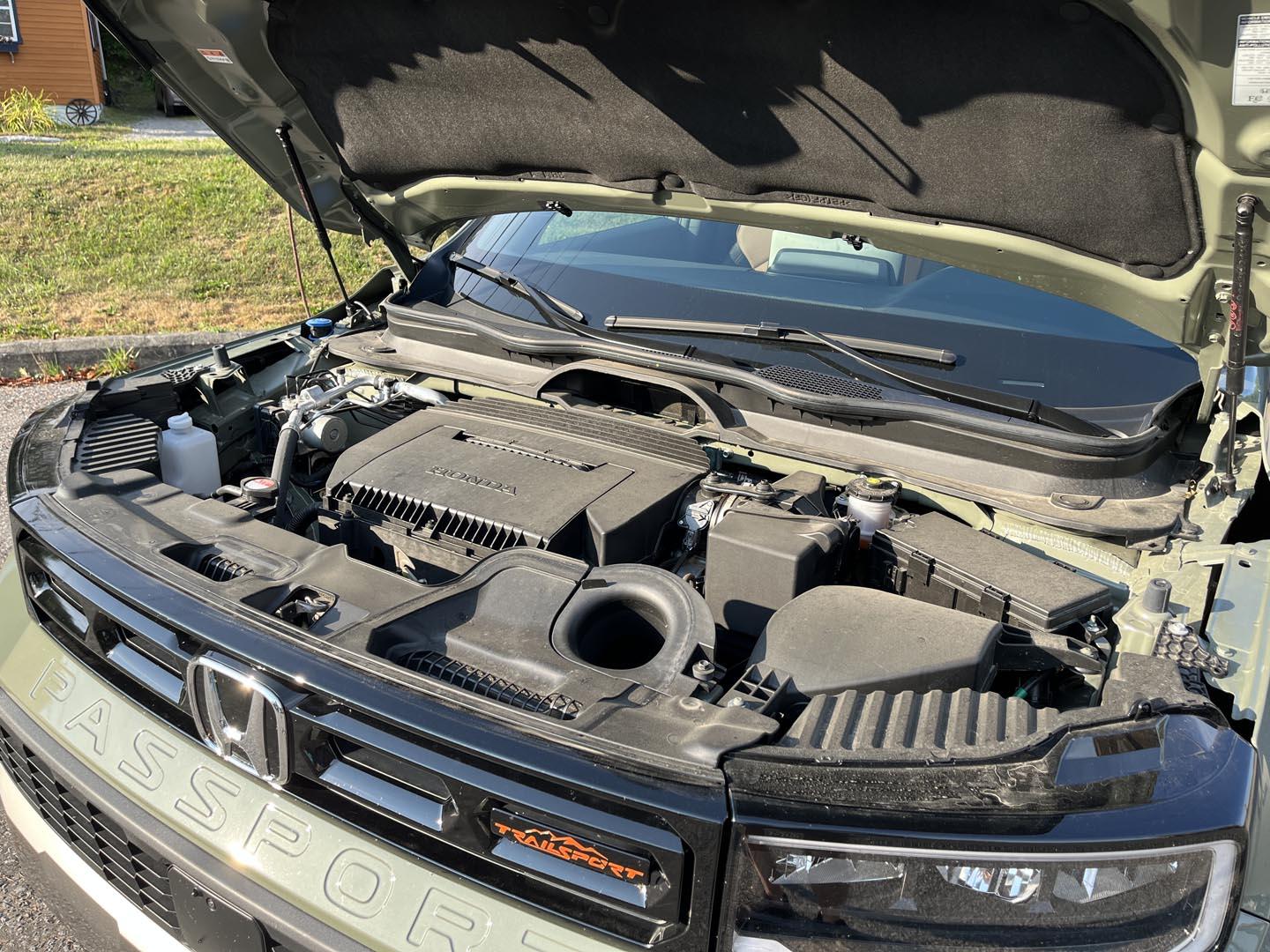
The unibody platform, V6 engine, and four-wheel independent suspension are almost directly inherited from the first-generation Passport. Same for the automatic all-wheel-drive system, which prioritizes the front wheels under normal driving conditions. This system can send up to 70% of the torque to the rear wheels, in addition to distributing it between them as needed.
The Passport, however, lacks the dual-range transfer case—high (4 High) and low (4 Low)—that would make it a true off-roader, like the Ford Bronco, Jeep Wrangler, and Toyota 4Runner. These latter vehicles also offer additional features to enhance their off-road capabilities, such as stabilizer bar decoupling.
The adventurous look is all well and good, but in everyday driving, does the updated Passport stand out more than before from the Honda Pilot, which we also evaluated following its redesign?
Scroll down to the Review section for our automotive experts' opinion, in five key points.
Verdict
You should have seen—and especially heard—the uncles, aunts, cousins, and other relatives raving about the boxy silhouette of the 2026 Passport at a family gathering in the Beauce region at the end of summer 2025. “Your Jeep looks so nice! And with the brown interior, it looks classy!”
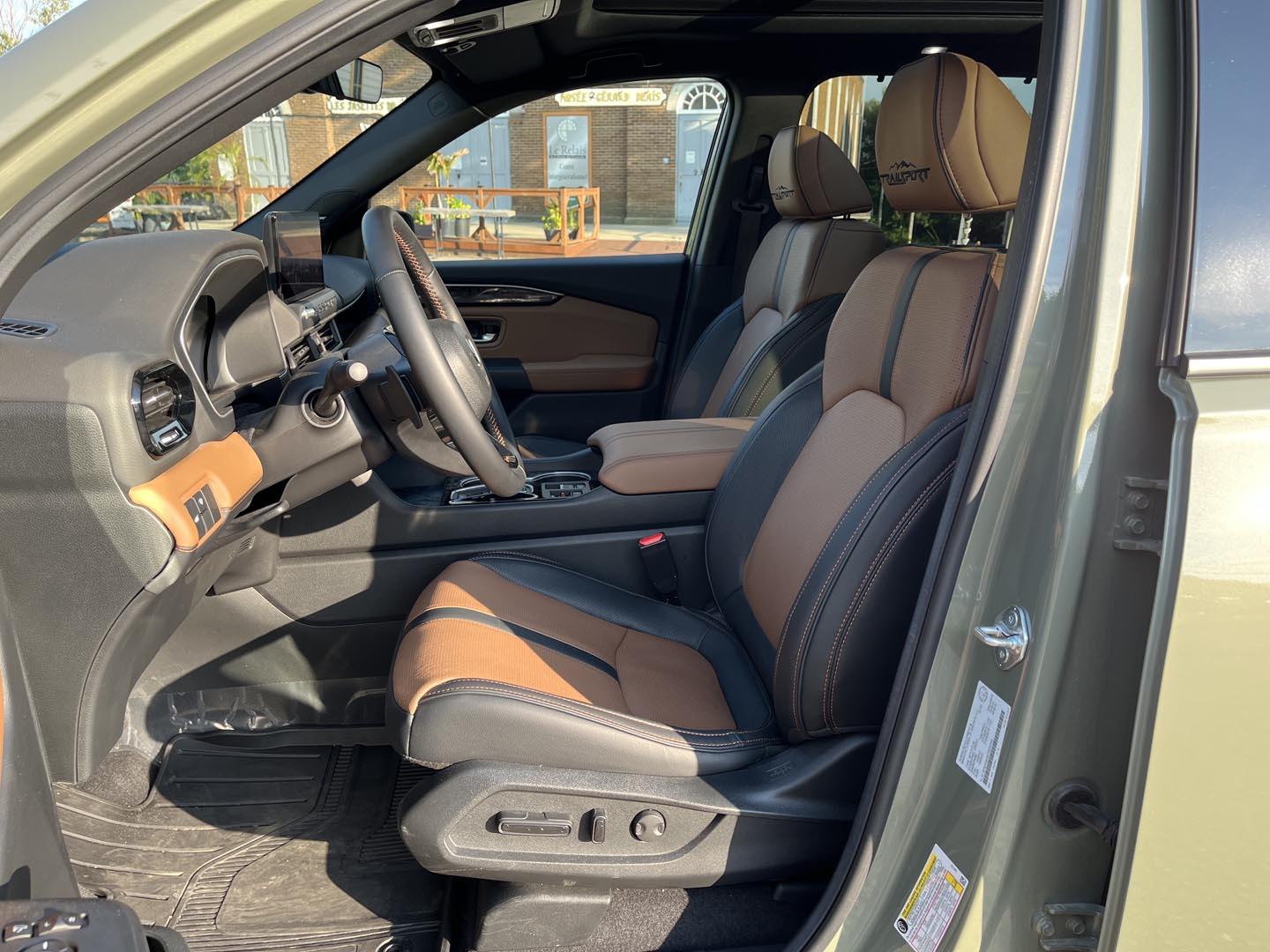
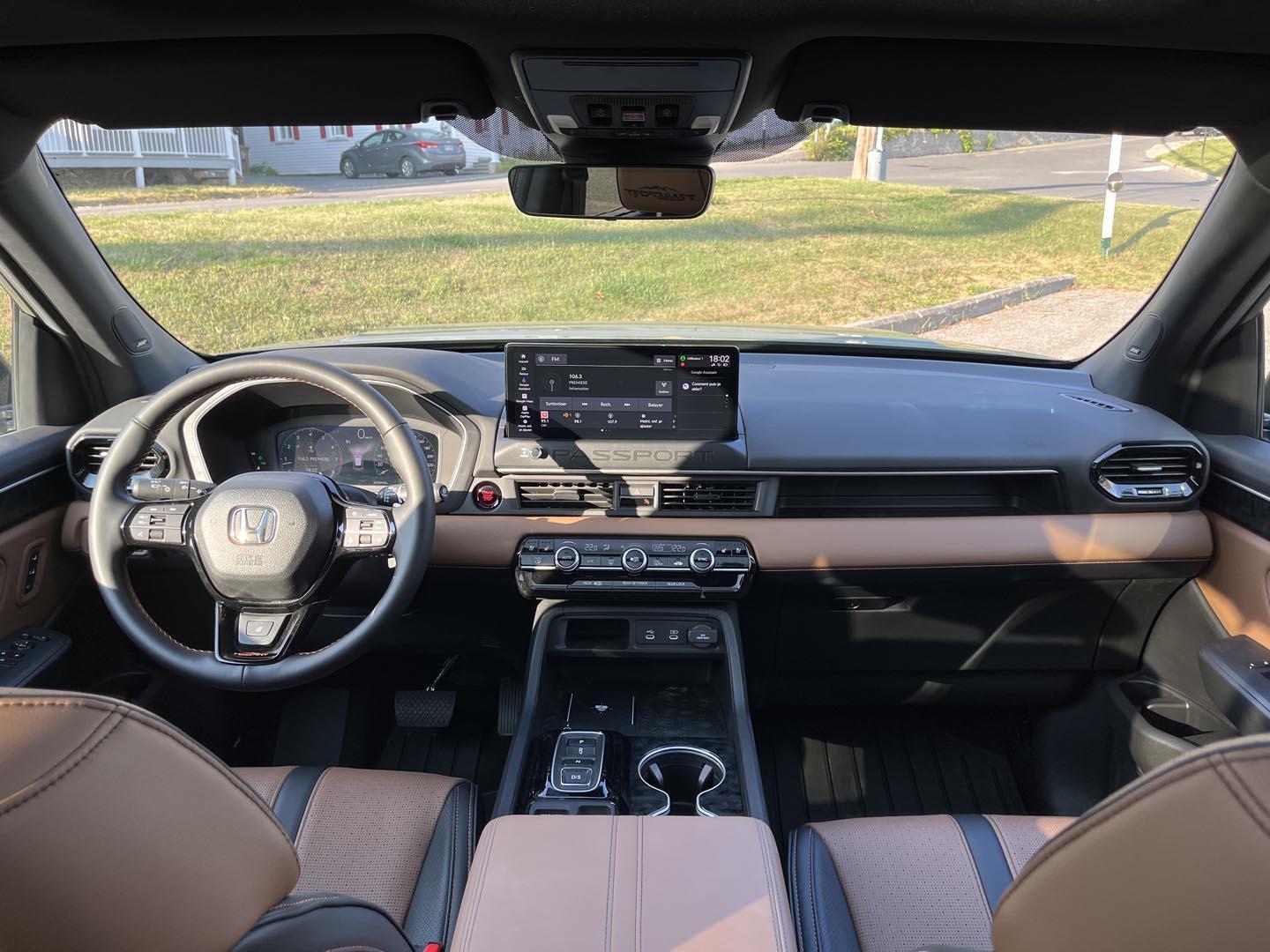
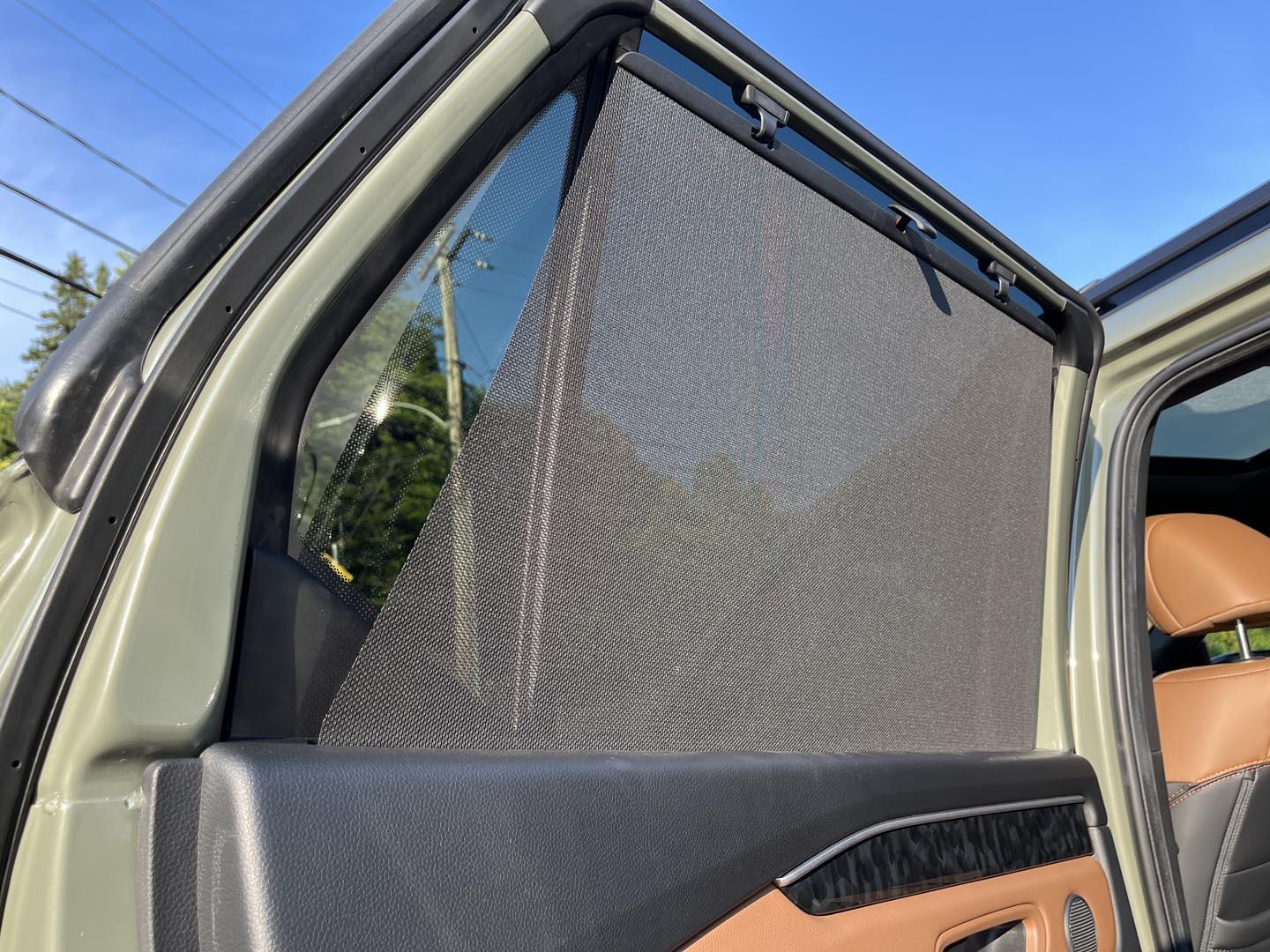
Such positive comments were repeated throughout our test drive. Even without the brown interior trim, exclusive to the Touring version in Ash Green, Honda has clearly succeeded in strengthening the identity of its five-seater midsize SUV.
Does this more assertive personality also translate behind the wheel of the Passport?
Certainly not in such a striking way. Daily use is still very much like driving a Honda Pilot TrailSport: comfort is paramount, thanks to the generous air cushion provided by the high-profile tires. These tires are audible at cruising speed and soften the handling in corners, but the experience remains significantly more stable and civilized than in a true four-wheel drive body-on-frame SUV.
A well-considered compromise
The typical customer for a five-seater midsize SUV will never need to cross a stone wall or a stream, but they often want to look like they can. The redesigned Passport ticks this box while offering a more practical cabin than average, a respectable towing capacity, and the road manners of a large family car rather than a truck.
At around $60,000, the starting price is higher than that of a Toyota 4Runner or even a Pilot, which offers two more seats than the Passport and even more cargo space. However, the Passport comes significantly better equipped than the 4Runner, and even a bit more so than its larger sibling.
Competitors like the Jeep Grand Cherokee, Chevrolet Blazer, Mazda CX-70, and Nissan Murano are all available for less at the entry level. However, the Grand Cherokee suffers from a less-than-stellar reliability record, while the other three lack the adventurous spirit of the Passport.
That leaves the Ford Bronco and Jeep Wrangler, which have all the necessary features to back up their off-road claims… but with a trade-off in everyday driving.
Evaluation
A good old V6 feels good
For several years now, turbocharged or hybrid four-cylinder engines have dominated the industry. That said, a surprising number of five-seater midsize SUVs still use a six-cylinder, including the Passport.
This is an excellent decision. It's not the most fuel-efficient engine in the segment, although it performs better than the Toyota 4Runner's turbocharged four-cylinder in terms of fuel consumption. Our test model, for example, consumed 10.7 L/100km, mostly on the highway, compared to 11.8 L/100km for its Toyota rival. However, the latter has a slightly lower official rating than the Passport; proof, once again, that the number of cylinders isn't everything.
In that case, why go without the smoothness and linear acceleration of Honda's six-cylinder?
The 4Runner's engine, like other turbocharged four-cylinders, is more responsive at low revs than the Passport's naturally aspirated V6. However, the latter more than makes up for it in terms of smoothness, quietness, and overall refinement.
Thanks to its well-spaced 10 gears, the transmission makes it easy to exploit the generous power at mid and high revs. Quick to downshift, its only drawback is the sometimes abrupt transition between the very short first and second gears.
Comfort, stability… and some road noise
Each Passport comes equipped with all-terrain tires that contribute to its rugged image. Their large treads will certainly prove useful on the forest road leading to the fishing spot. The 21-cm ground clearance, greater than that of the Pilot (except for the TrailSport version), also helps when tackling uneven trails.
On paved roads, these soft-compound, high-profile tires create more body roll than the previous generation or a non-TrailSport Pilot. Nevertheless, the Passport remains much more stable and controlled than a 4Runner on the highway. It's also smoother than a CX-70. The steering and front end aren't as sharp as the latter, but Honda's adventurer still holds its line solidly.
Despite the lack of dynamic flair, we appreciated this well-judged balance. The only downside is the relatively high interior noise level at cruising speed, which is due to these same all-terrain tires. If you're determined to maintain the Passport's muscular appearance, put up with them for three or four years, then replace them with touring tires. Unless, of course, you frequently venture off-road.
A capable towing platform
Honda advertises a towing capacity of 2268kg (5000lb) for the Passport, while the 4Runner and Grand Cherokee can tow 2722kg (6000lb) and 2812kg (6200lb), respectively.
However, the numbers don't tell the whole story. For one thing, the Passport's capacity is sufficient for towing most "lightweight" travel trailers, beyond which a full-size pickup truck with a long wheelbase becomes a more sensible choice.
For another, Honda's SUV arrives ready for the job, or almost. A trailer hitch and a seven-pin wiring harness are standard; the only thing missing is a trailer brake controller. The manufacturer doesn't offer this accessory as a factory option, but a connector under the dashboard and a wiring harness make installing an aftermarket unit easy.
We jumped at the chance to tow our small, approximately 907kg (2000lb) travel trailer in the Passport. Our round trip of about 300km was three-quarters highway, the rest secondary roads of the Beauce region – a fairly hilly area.
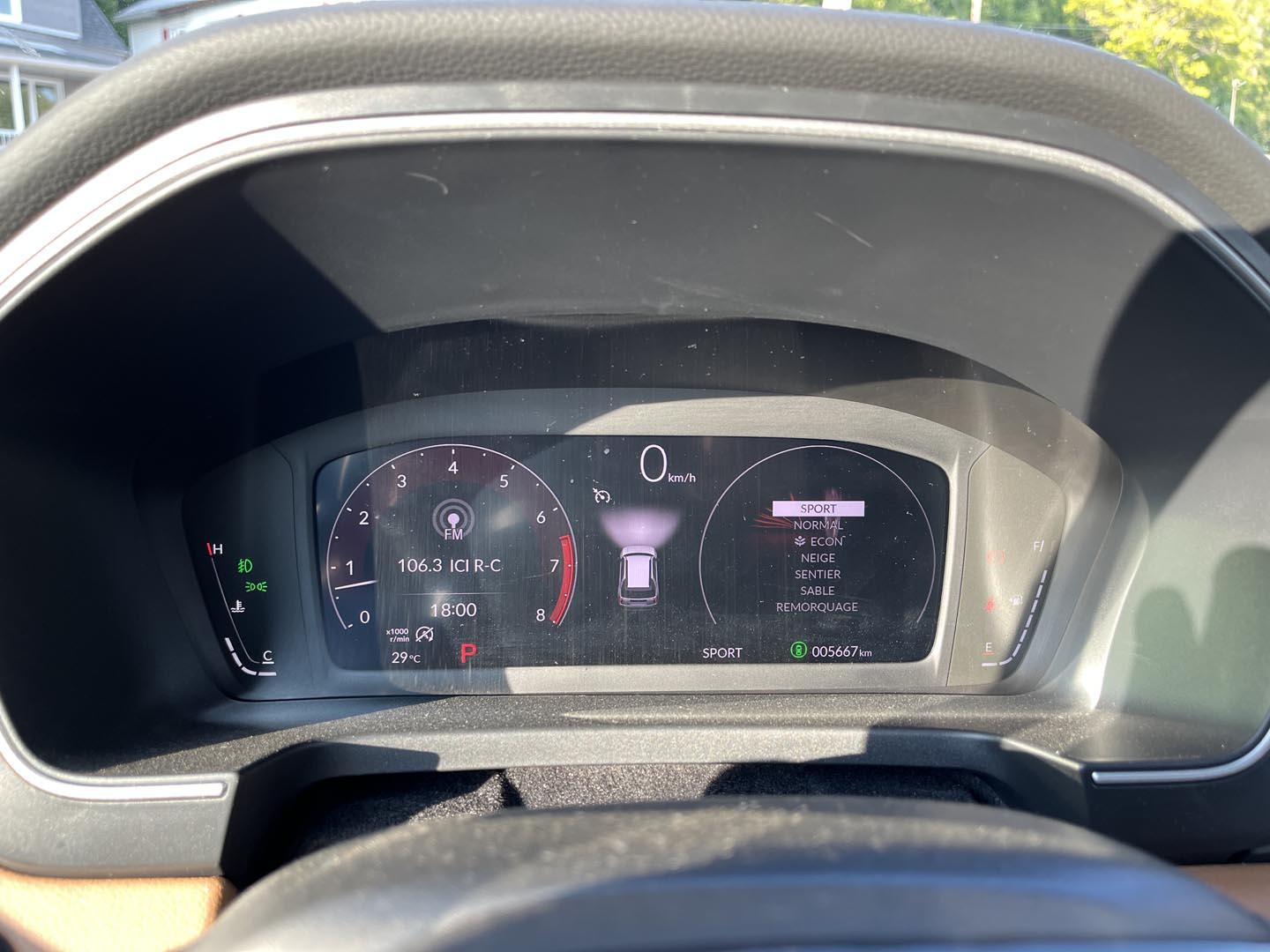
We found the towing platform to be stable, predictable, and more than powerful enough for the task. When the Tow mode is selected, the transmission delays gear changes and cancels 10th gear (sometimes even 9th) to keep the engine in its ideal power range. This masks the low-end torque so effectively that we didn't feel the need to use the paddle shifters, except to increase engine braking on downhill slopes.
The icing on the cake? Our trip resulted in a fuel consumption of only 14.6 L/100km. That's barely 36% more than the 10.7L/100km consumed without the caravan! For reference, the Ford Flex which is usually used for the same towing trip rarely gets below 18L/100km.
Practicality reigns supreme in the cabin
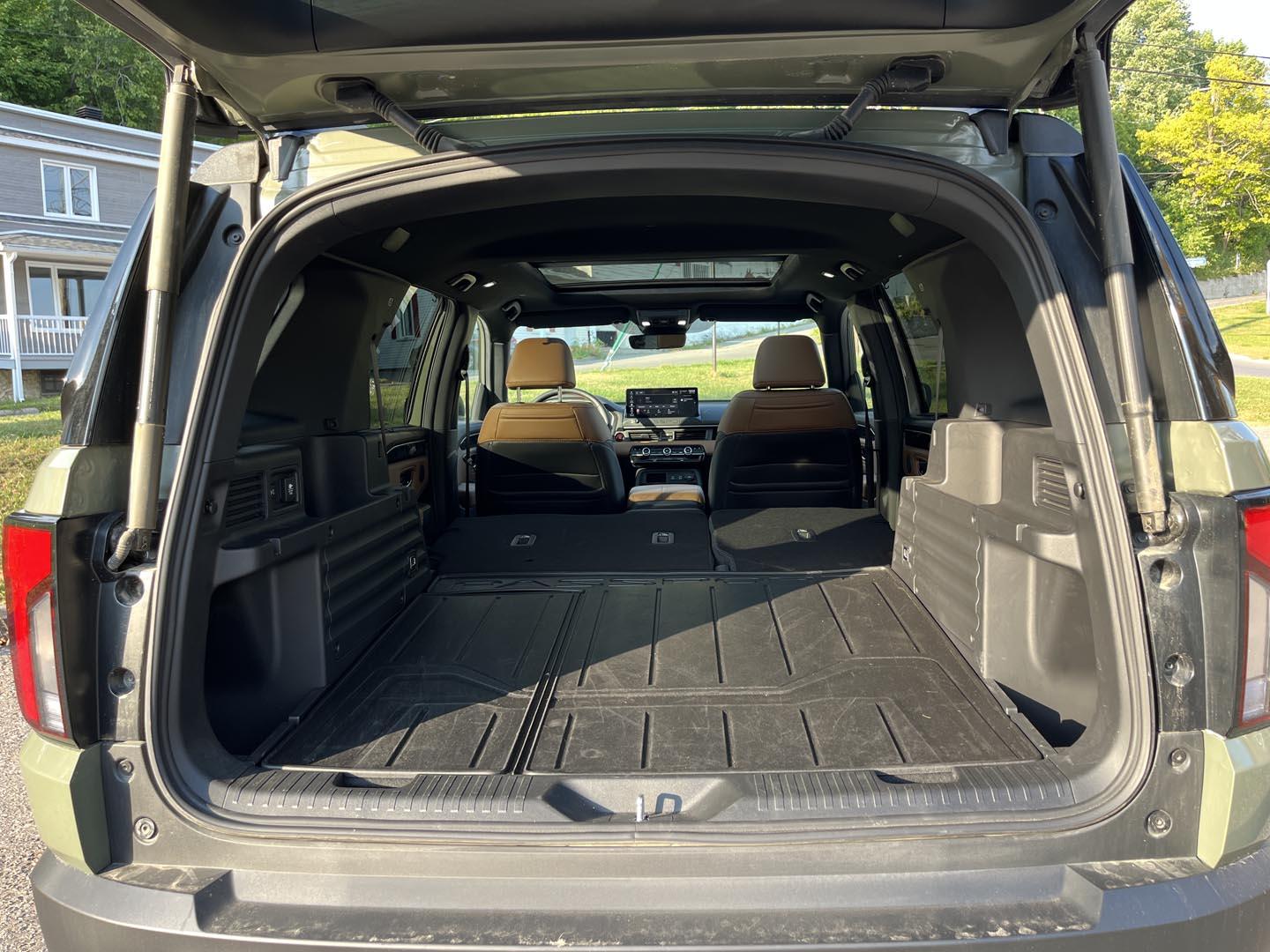
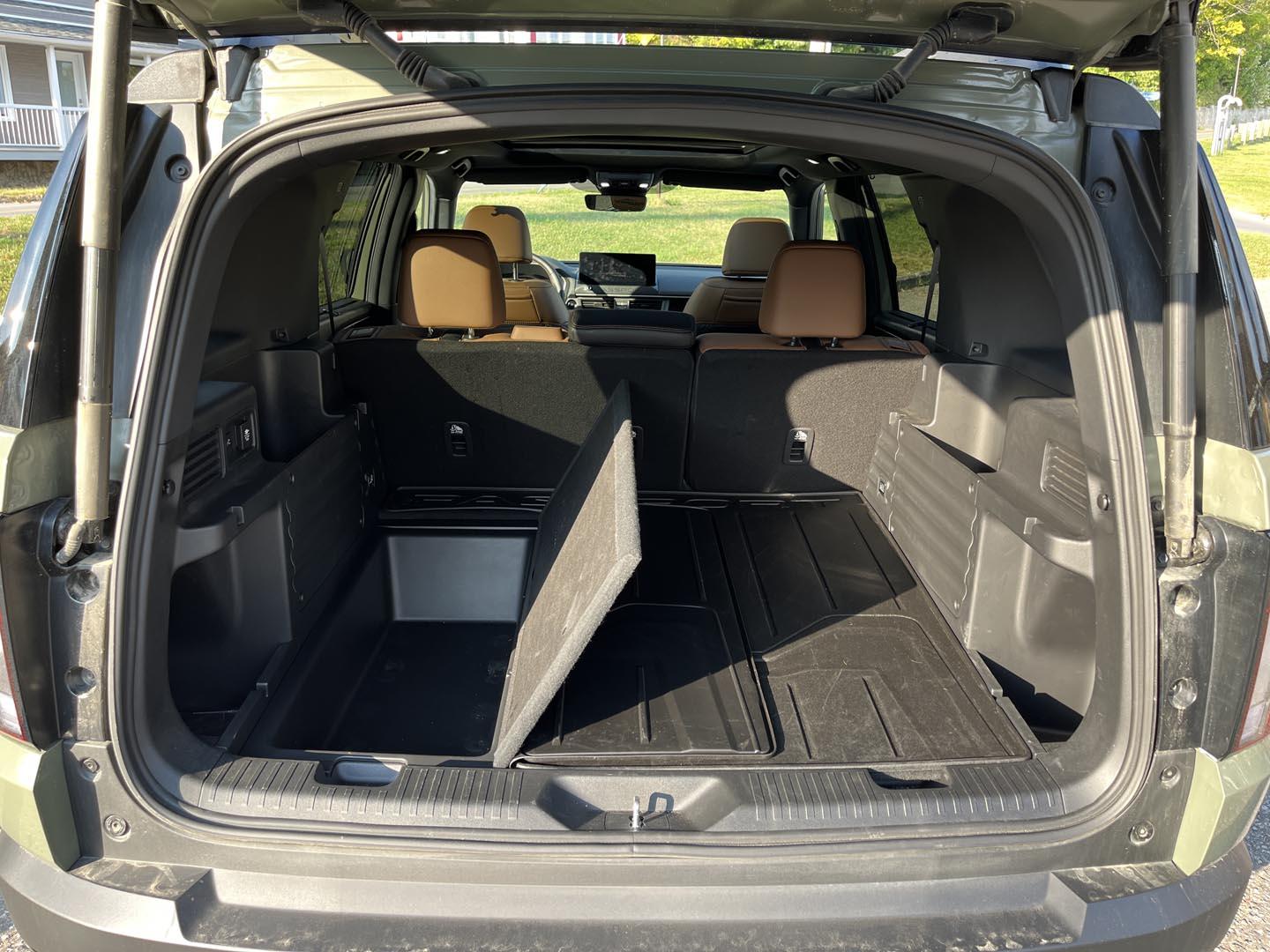
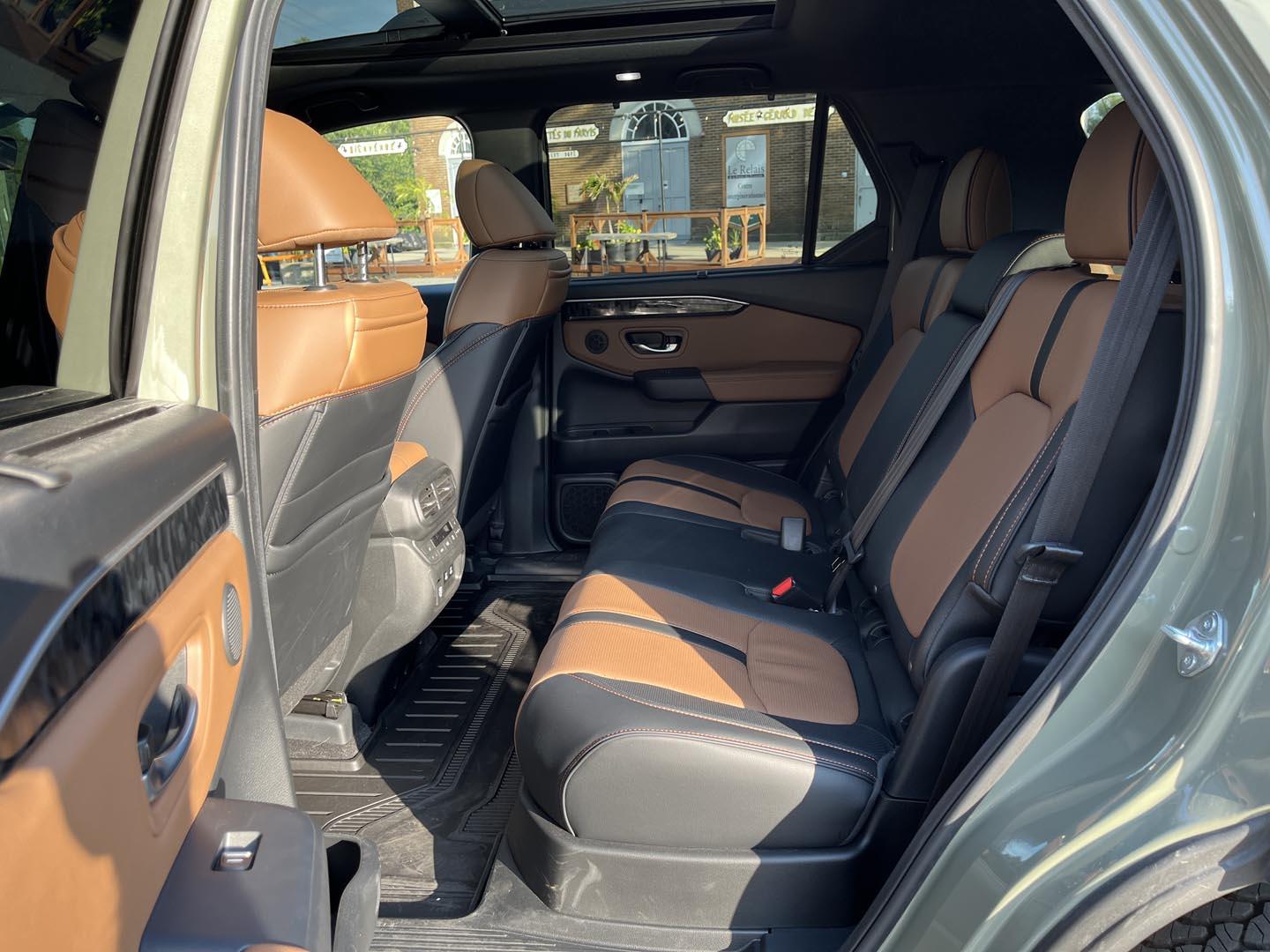
Honda has repeatedly demonstrated its genius for maximizing space in its vehicles. The Passport provides further proof, with a cabin that's as spacious for five people as it is for their luggage. The flat floor in the rear seats and the long, wide cargo area, whose nearly vertical tailgate provides ample usable space, are particularly noteworthy.
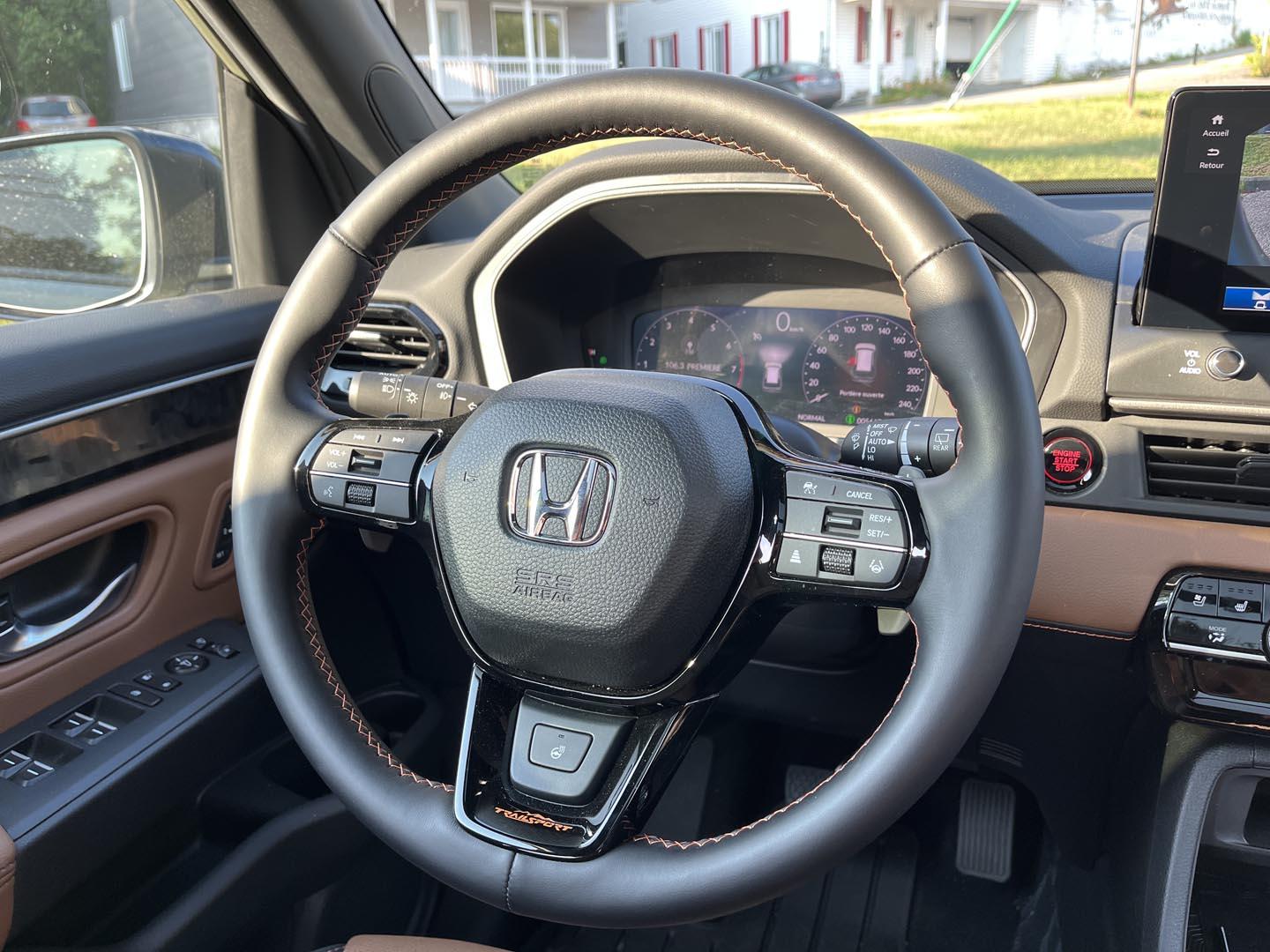
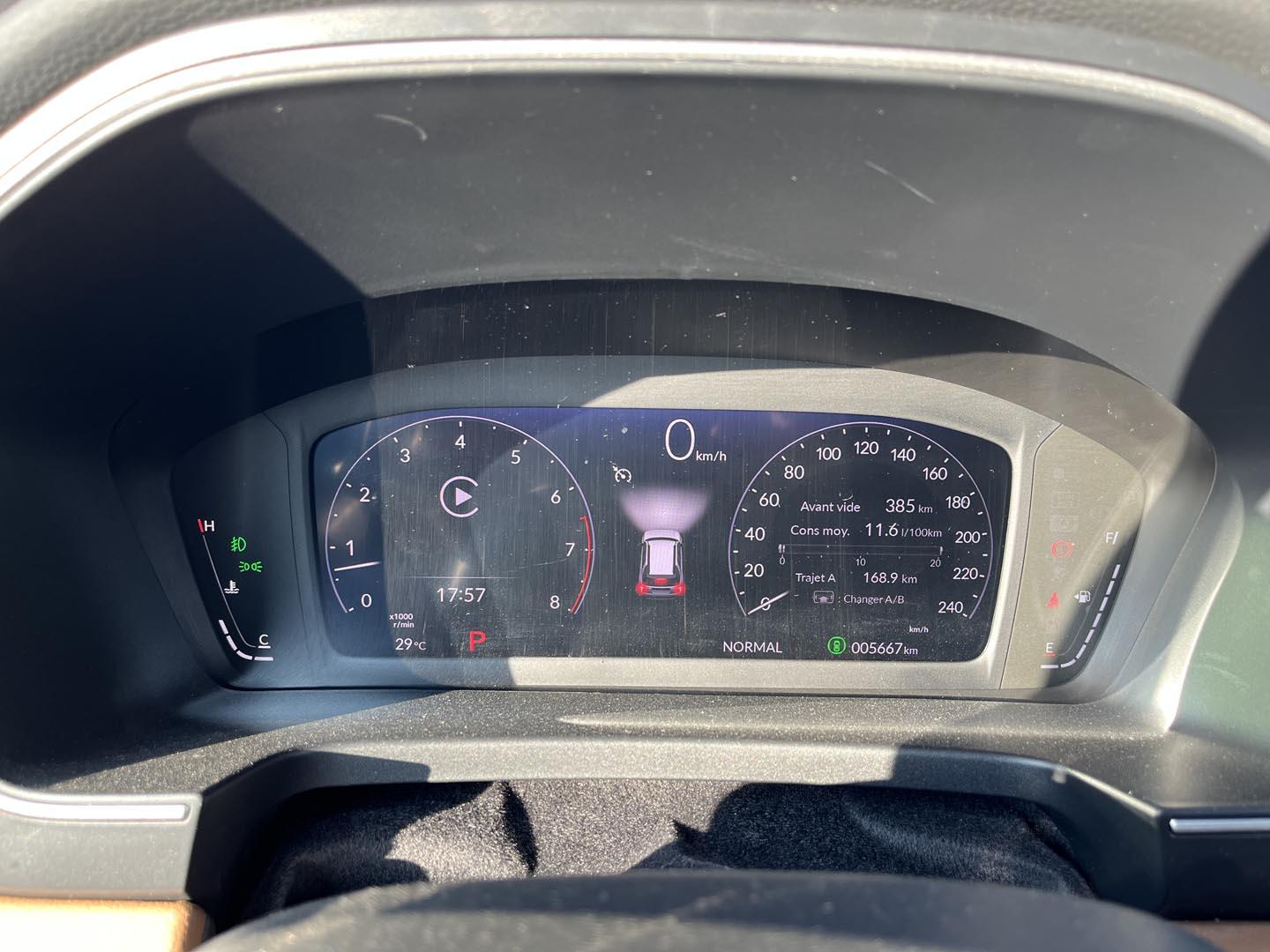
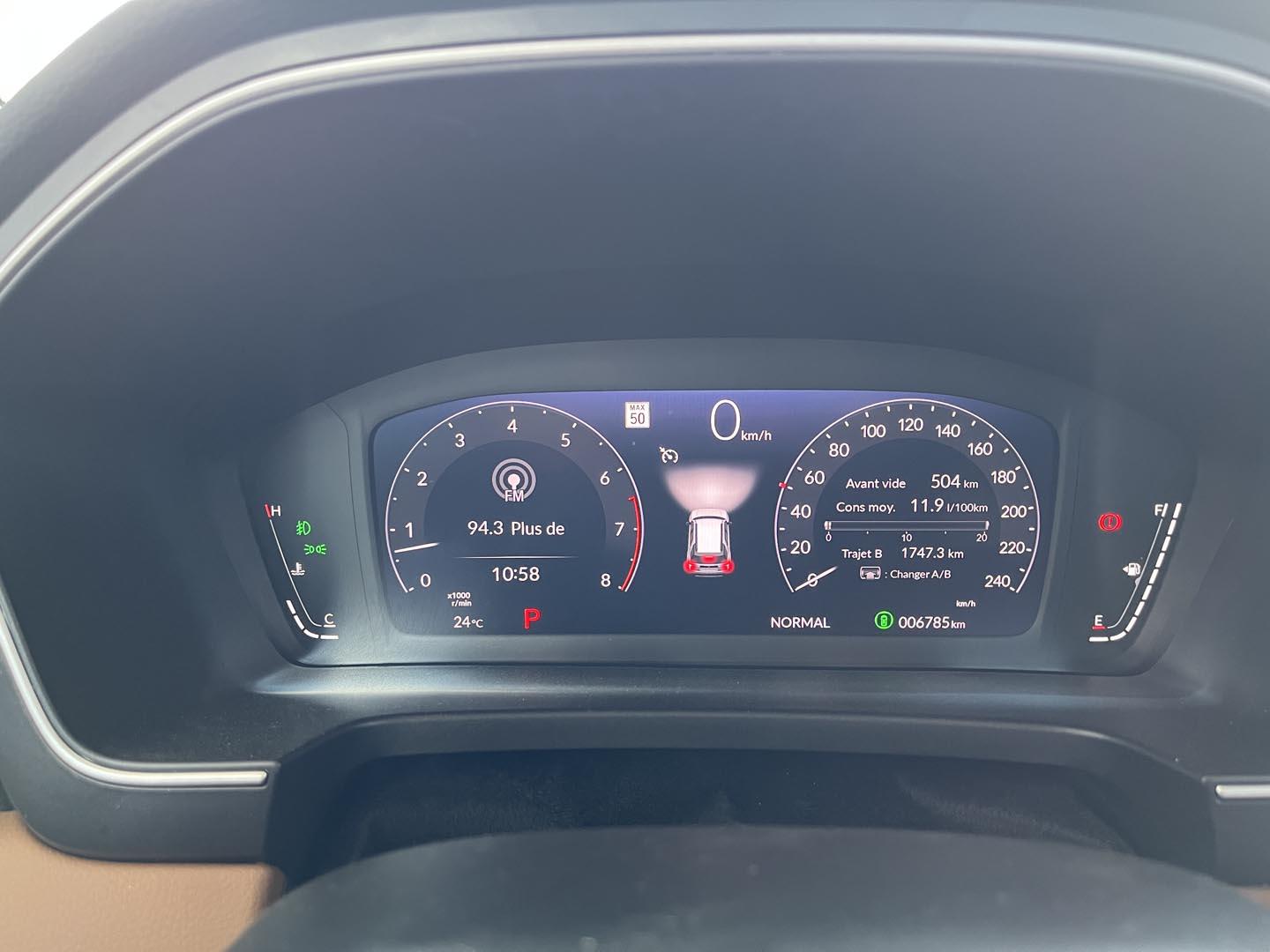
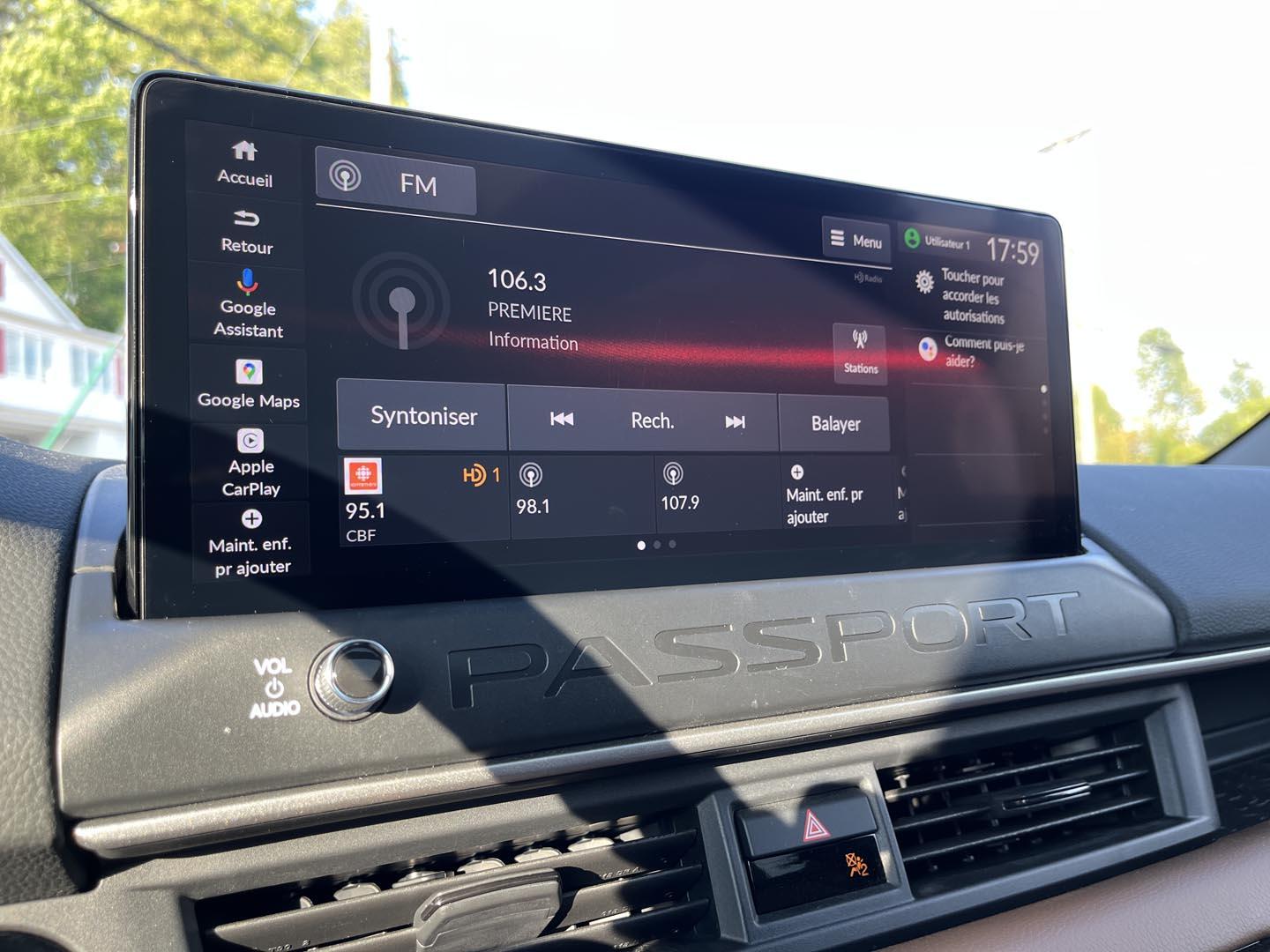
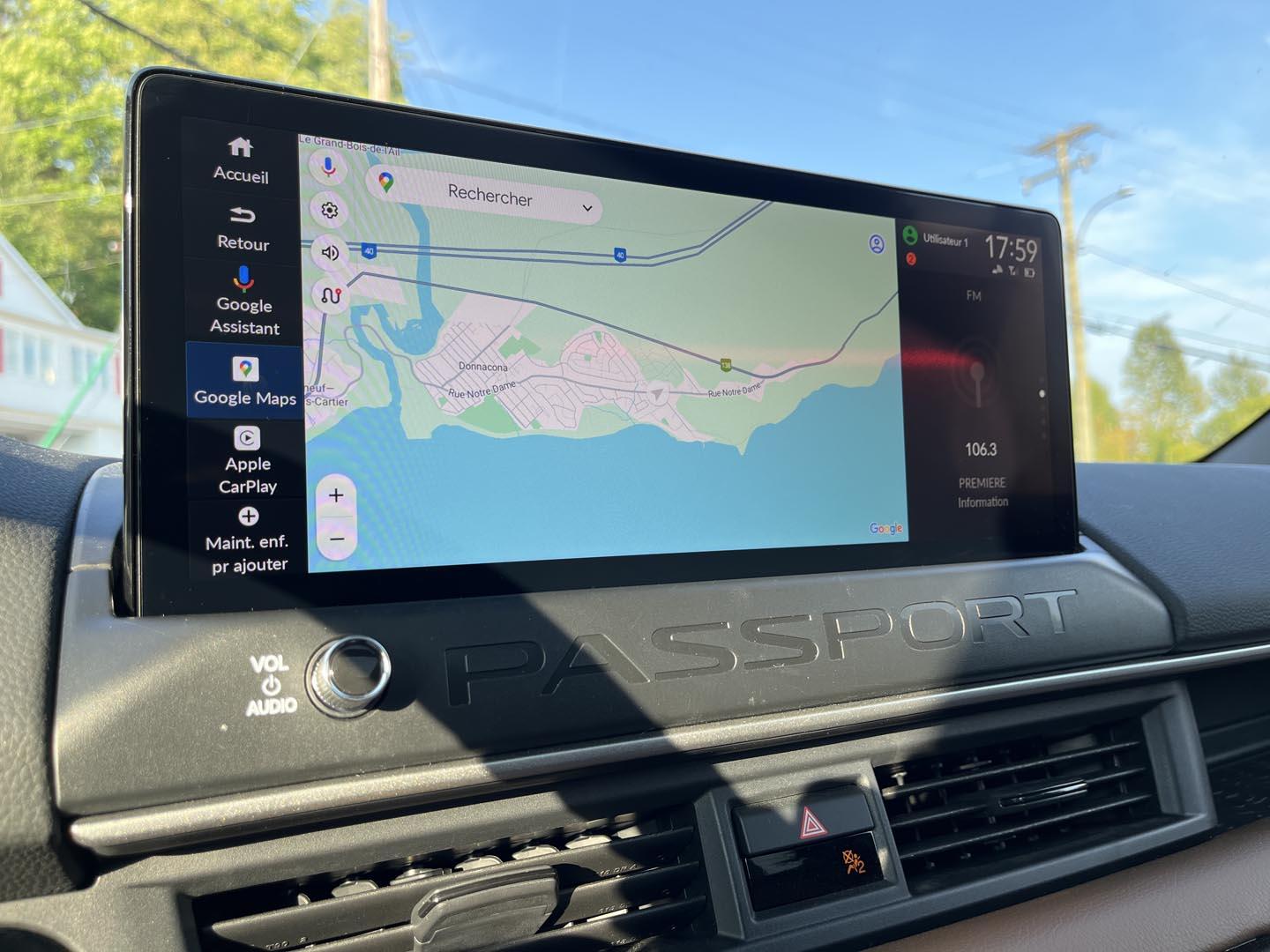
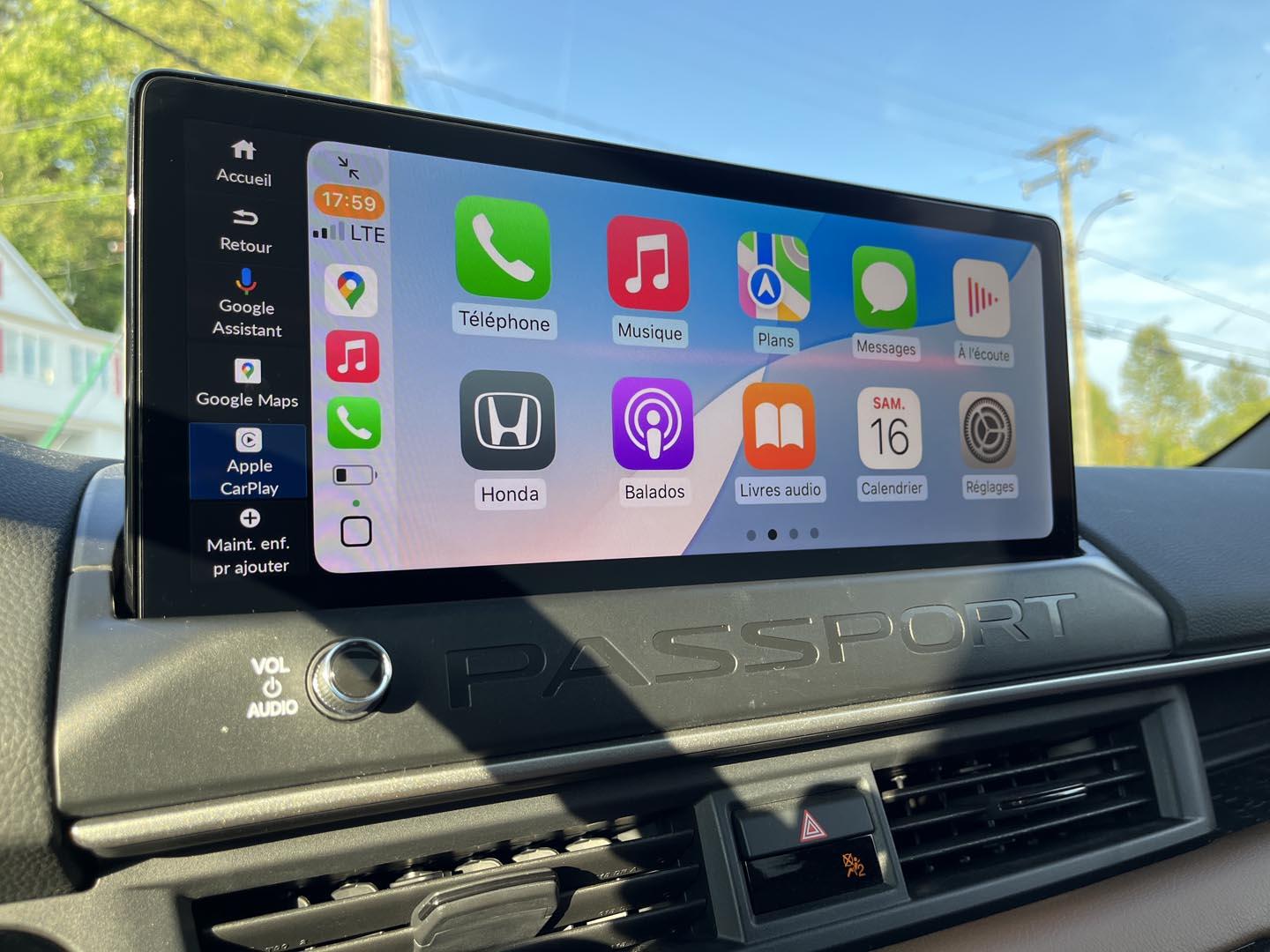
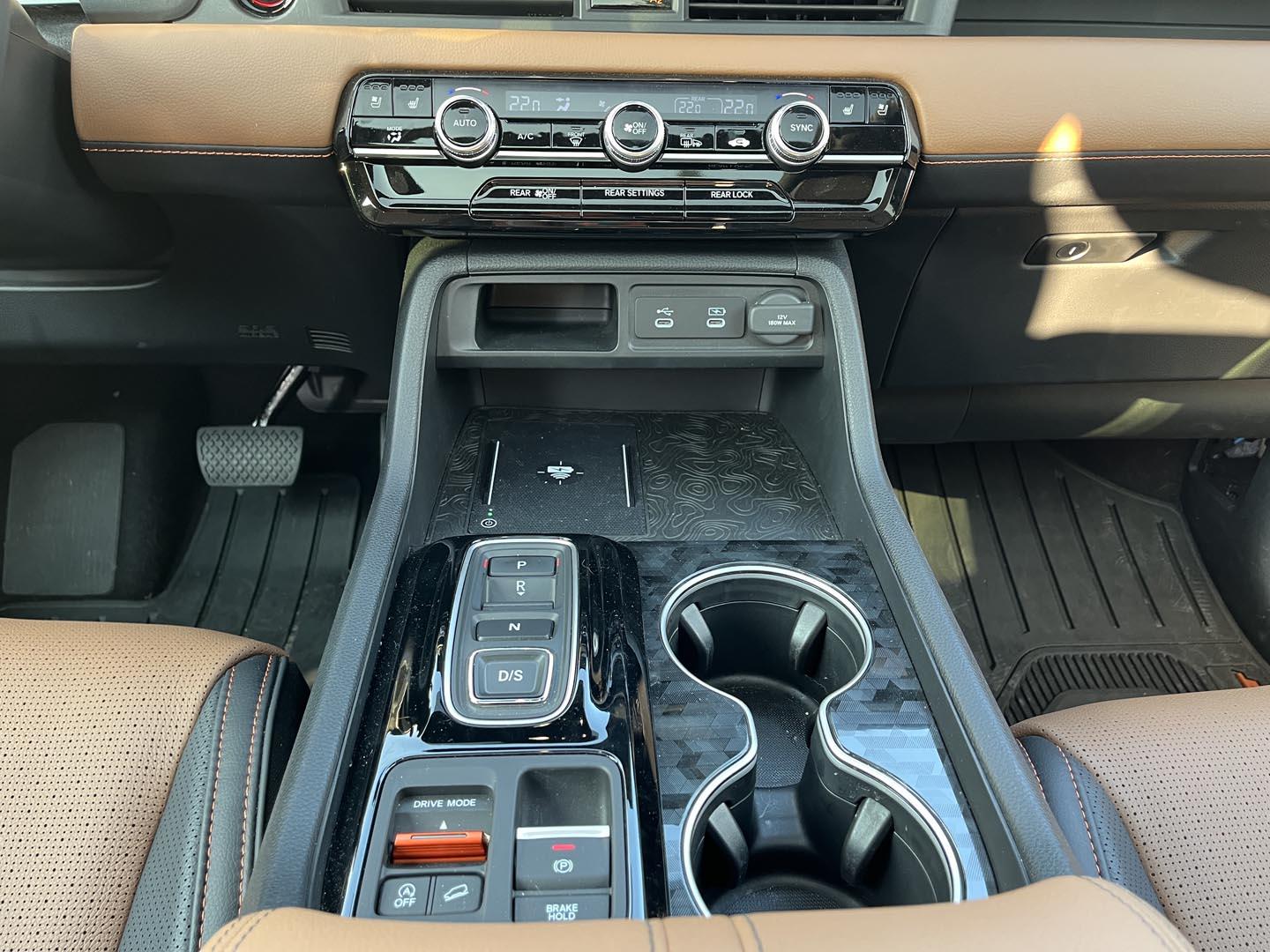
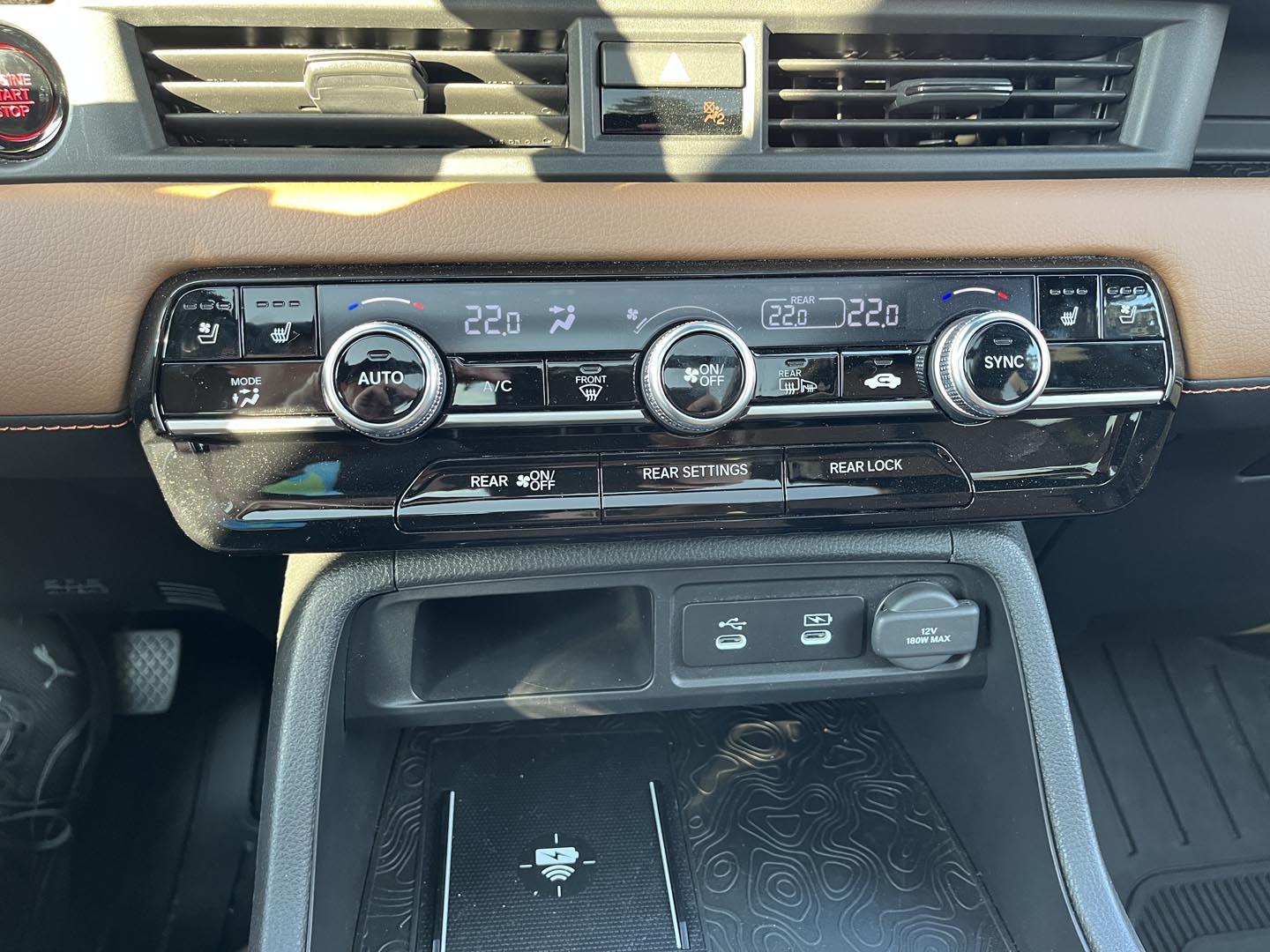
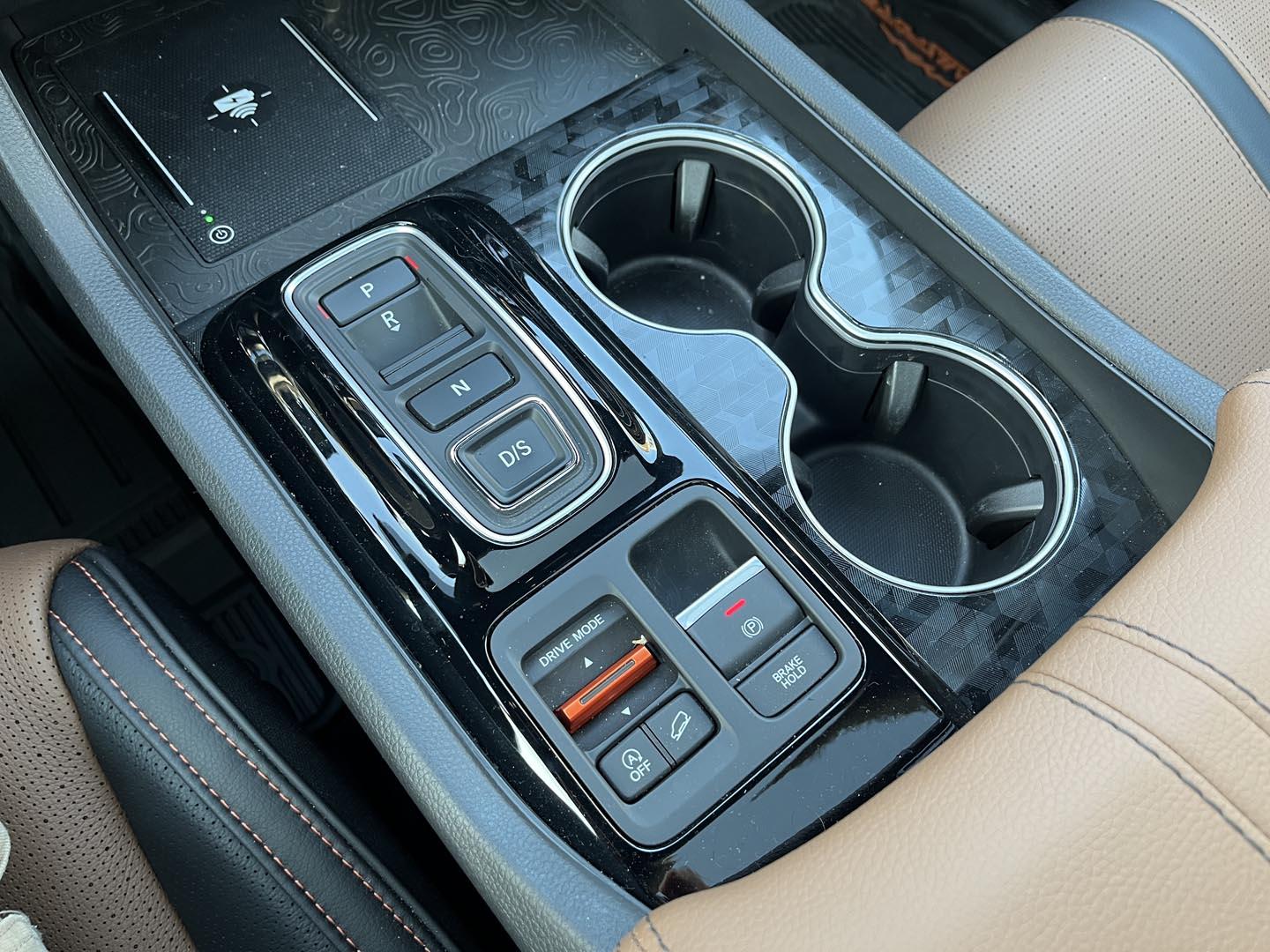
The digital instrument panel, the numerous physical controls—many of which are dedicated to climate control—and the central touchscreen are all remarkably user-friendly and easy to access. However, the push-button gear selector seems unnecessary, as it takes up as much space as a traditional lever, which is always easier to operate. A dedicated dial for tuning the radio and a larger volume control would also be welcome additions.
On the other hand, the excellent driving position should appeal to those who like to command the road without feeling like they're driving a semi-truck. It boasts excellent visibility, thanks to its flat sides and generous glass area. The mirrors, however, could be larger.
And while the wide front seats can accommodate most body types, their lateral support falls short in corners.
Passport or Pilot, that is the question
Besides its many practical qualities, the Passport will undoubtedly win over many with its imposing presence and muscular style. Since its price range overlaps with the Pilot's, which of the two should you choose?
If you need more than four or five seats, the Pilot is the obvious choice. Being 22cm (8in) longer, it allows for a reasonably spacious third row, in addition to providing exceptional cargo space.
That's not all. Only the Pilot TrailSport features all-terrain tires similar to those of the Passport. The other versions have quieter and stiffer touring tires, which enhances stability in everyday driving. In the EX-L trim, they come with 18-inch wheels instead of the 20-inch wheels found on the Sport, Touring, and Black Edition trims. This should result in fuel savings and a smoother ride.
An entry-level Pilot Sport is priced $1,440 lower than a base Passport TrailSport, while the Pilot EX-L and Passport TrailSport Blackout are almost a wash. However, at these two trim levels, the Passport offers the added benefits of a panoramic sunroof, a trailer hitch with wiring, and climate controls in the second row of seats.
At the higher trim levels, the situation is reversed: the Passport costs less than the Pilot, but the latter offers more equipment.
The bottom line? The Passport seems particularly advantageous if you're looking for a high-end version, if you plan to tow, if you frequently venture off-road, or simply if you appreciate its striking appearance!
Safety features
- Antilock brakes with electronic brakeforce distribution and brake assist
- Stability and traction control
- Hill-start assist
- Hill-descent control
- Front airbags
- Front and rear side airbags
- Side curtain airbags
- Front seatbelt pretensioners
- Five adjustable head restraints
- Rear occupant alert
- Rearview camera
- Tire pressure monitor
- Forward collision alert
- Forward automatic emergency braking
- Lane departure alert with steering assist
- Lane centering assist
- Automatic high-beams
- Blind-spot monitoring with automatic steering assist
- Rear cross-traffic alert
- Adaptive cruise control
- Front and rear parking sensors
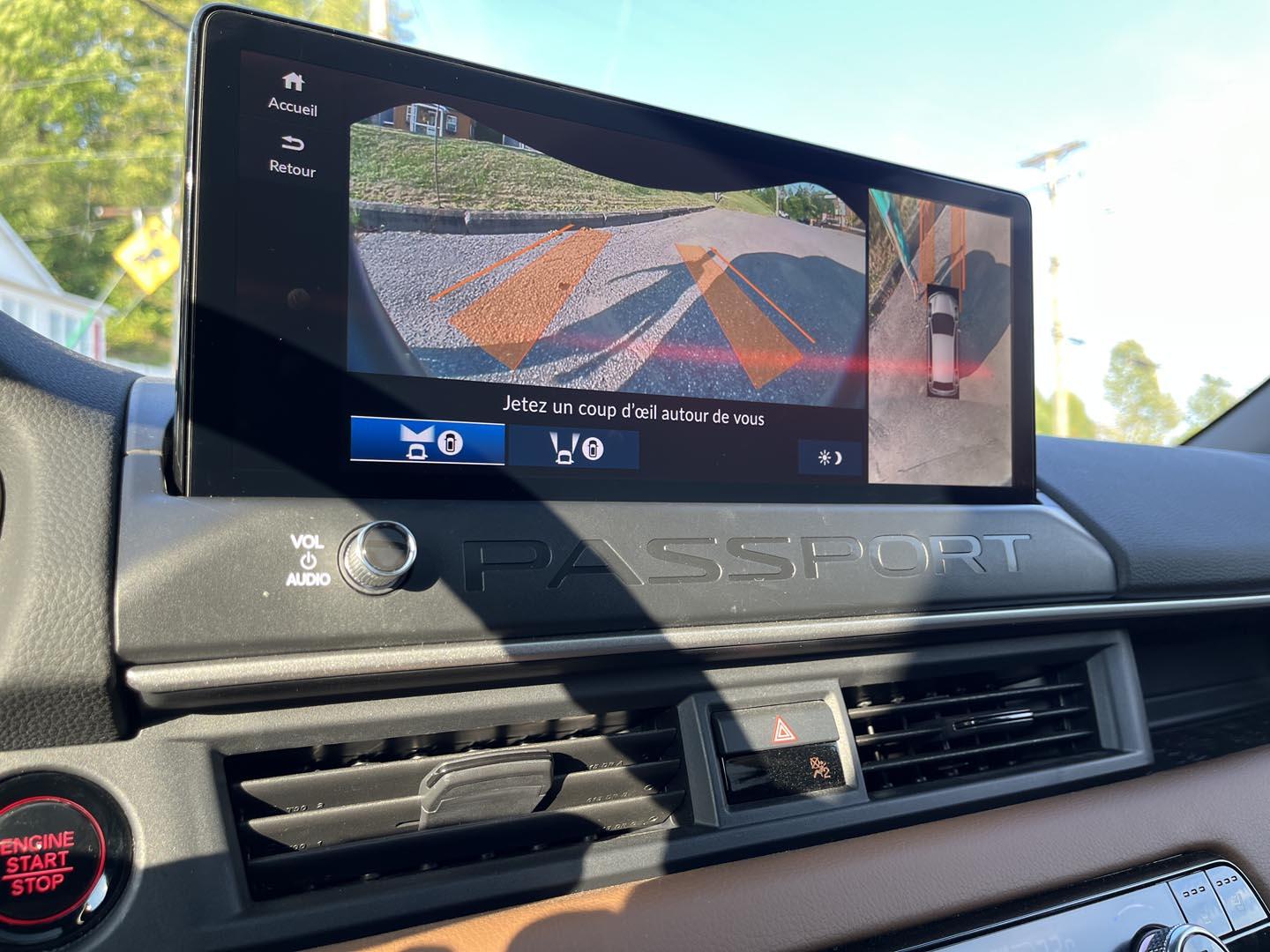
- Surround-view monitor (standard, Touring and Touring Blackout, unvailable, other trim levels)
Crash test results
National Highway Traffic Safety Administration (NHTSA)
Overall score: not tested
Frontal impact: 4 / 5
Side impact: not tested
Rollover resistance: 4 / 5
Insurance Institute For Highway Safety (IIHS)
Moderate overlap frontal impact: 4 / 4
Small overlap frontal impact:
- driver side: 4 / 4
- passenger side: 4 / 4
Side impact: 4 / 4
Among the best vehicles in its segment (Top Safety Pick+ award)
Features and specs
Price range (including shipping and preparation) | ||
| Minimum price | $59,990 | |
|---|---|---|
| Maximum price | $65,140 | |
| Price as tested | $63,940 | |
| Trim levels | TrailSport
TrailSport Blackout
TrailSport Touring
TrailSport Touring Blackout | |
Chevrolet Blazer | ||
Ford Bronco | ||
Hyundai Santa Fe | ||
Kia Sorento | ||
Jeep Grand Cherokee | ||
Jeep Wrangler | ||
Mazda CX-70 | ||
Subaru Outback | ||
Toyota 4Runner | ||
Volkswagen Atlas Cross Sport |
| Engine, horsepower and torque | 3.5L V6; 285hp at 6100rpm; 262lb-ft at 5000rpm |
|---|---|
| Transmission | 10-speed automatic with manual mode |
| Front suspension | Independent with MacPherson struts |
| Rear suspension | Independent multilink |
| Front brakes | Ventilated disc |
| Rear brakes | Disc |
| Tires | 275/60R18 |
| Wheelbase | 288.5cm | ||
|---|---|---|---|
| Length | 486.4cm | ||
| Width | 201.9cm | ||
| Height | 185.7cm | ||
| Curb weight | 2120-2135kg | ||
| Towing capacity | 2268kg (5000lb) | ||
According to Natural Resources Canada | ||
| City | 12.6L/100km | |
|---|---|---|
| Highway | 9.9L/100km | |
As measured by CAA-Québec | ||
| City | 10.7L/100 (without towing) | |
| Highway | 14,6L/100km (towing a 907kg [2000lb] travel trailer) | |
| CO2 emissions | 5380kg/20,000km | |
| Fuel tank | 70 litres | |
| Recommended fuel | Regular-grade gasoline | |