How to decode Quebec road and highway numbers

Updated on May 1, 2026
3 mins reading time
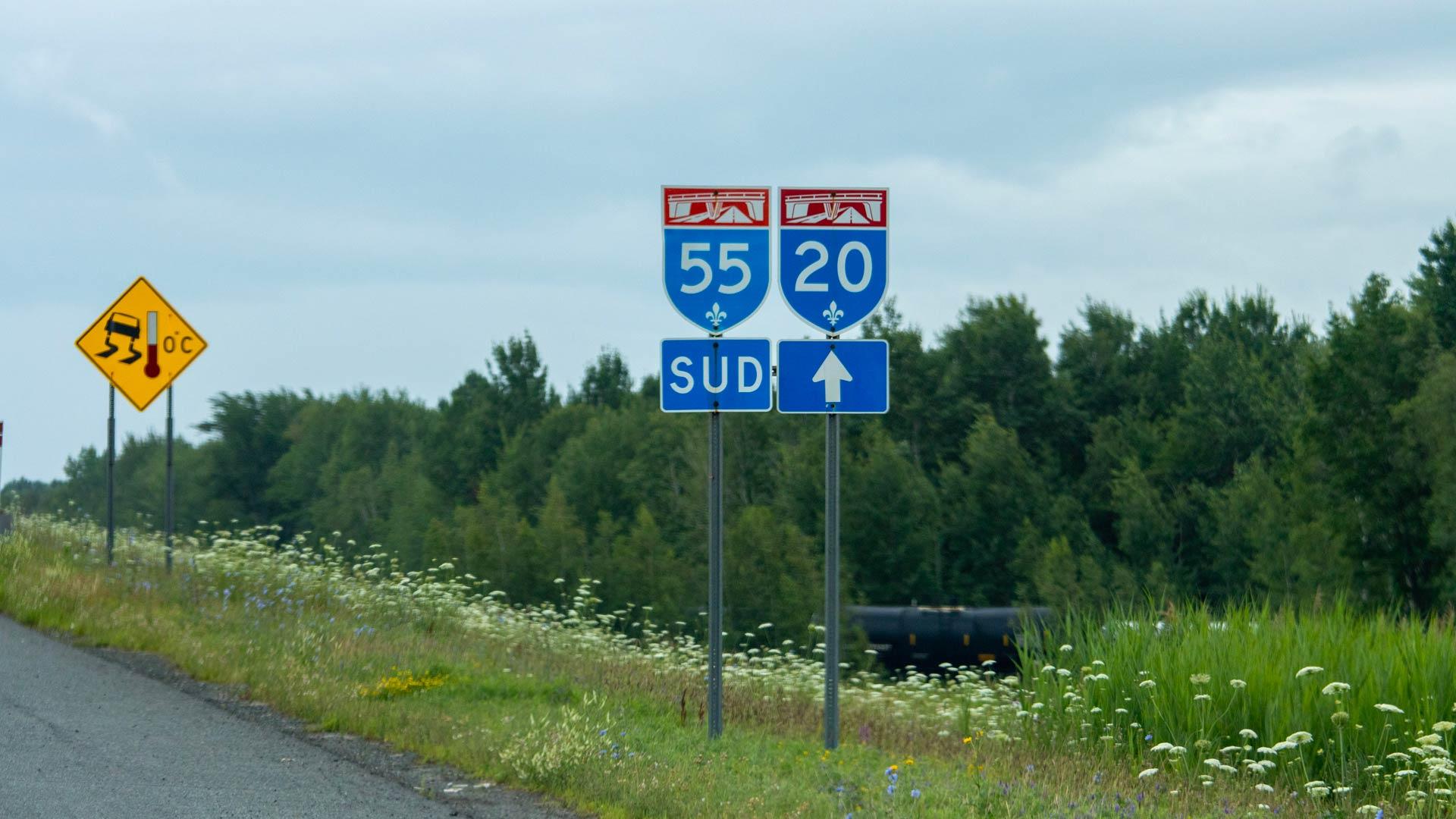
Signs for Highway 55 South and Highway 20 are coming soon.

Do you travel on Quebec’s road network without always understanding the logic behind highway and road numbers? These numbers aren’t chosen at random. By learning how to decode them, you can navigate more confidently, plan your trips better, and read road signs more effectively. Here are the essential rules for understanding Quebec’s road numbering system.

At a glance

Before diving into the details, here are the key points to keep in mind:

  • Even number = Runs parallel to the river
  • Odd number = Runs perpendicular
  • 3 digits = Specific function (bypass or collector)
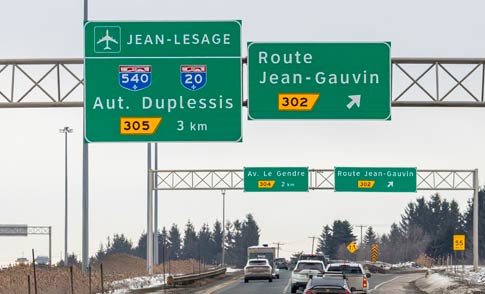
  • Exit number = Distance in kilometres

How are highways numbered in Quebec?

Even or odd highway numbers: what’s the difference?

Highway numbering is based primarily on a route’s orientation relative to the St. Lawrence River:

  • Highways running parallel to the river have an even number (e.g., 20, 40);
  • Highways running perpendicular to the river have an odd number (e.g., 15, 55).

Good to know: Highway numbers generally increase from south to north and from west to east.

Primary and secondary roads: How to tell them apart

  • Primary roads or national routes are numbered from 100 to 199, from west to east and from south to north.
  • Secondary roads are numbered from 300 to 399 on the north shore of the St. Lawrence River and from 200 to 299 on the south shore.

This simple reference point lets you quickly locate a road on the map.

What do 3-digit highway numbers mean?

The first digit gives a key clue about the highway’s function:

  • A leading digit of 4, 6, or 8 indicates a bypass highway that connects to the main highway at both ends.
  • A leading digit of 5, 7, or 9 indicates a collector highway connected to the main highway at one end only.

How does highway exit numbering work?

Highway exit numbers aren’t random—they indicate an actual distance in kilometres.

The starting point is generally at the western or southern end of the highway, and the numbers increase with the kilometre marker.

Concrete examples:

  • The Mont-Saint-Hilaire exit is number 113, meaning it is located 113km from the western end of Highway 20.
  • The Drummondville exit is 64km further east and carries the number 177.

This makes it easy to estimate the distance between two highway exits and plan your trips more effectively.

Why is there no Route 1 in Quebec?

Route 1 no longer exists. It once connected Longueuil to Québec City, but was renumbered during the modernization of the road network. Part of its original route now corresponds to Route 112.

Why understanding road numbering can help you

Knowing how Quebec road numbers work allows you to:

  • Navigate the road network more confidently
  • Quickly understand the direction of travel
  • Estimate distances between two points
  • Plan your routes without relying solely on GPS

Why do some roads have both a name and a number?

The number helps you find your way easily on the road network. The official name honours notable figures or commemorates historical events. Here are a few examples:

  • Highway 20, also known as the autoroute Jean-Lesage, pays tribute to Jean Lesage, Premier of Quebec from 1960 to 1966 and a key figure of the Quiet Revolution.
  • Highway 40, named the autoroute Félix-Leclerc, highlights the cultural legacy of Félix Leclerc, singer-songwriter and poet.
  • Highway 85, the autoroute Claude-Béchard, bears the name of the former Liberal minister who advocated for the widening of Route 185 into a full highway.

485X400-Conseils-Numeros-routes-540-Autoroute-Duplessis-.jpg
Other routes carry the designation of scenic or tourist roads and are destinations in their own right—such as Route 138, known as the Chemin du Roy, one of the oldest roads in Quebec, built in the 18th century to connect Repentigny and Quebec City.
These names add a cultural and heritage dimension to Quebec’s road network. You can follow a number to find your way—while discovering a piece of history or a cultural aspect of Quebec along the way.

Where to find more information about Quebec’s road network

To learn more about Quebec’s road network and traffic regulations, visit the website of the Ministère des Transports du Québec.

Do you have questions about gas-powered or electric vehicles, driving, or need recommendations to find an Approved Auto Repair Service?

To contact our Mobility Advisory Services:
1-888-471-2424