Suspecting water infiltration problems in your basement? Pinpoint clues, identify problems and apply solutions. When in doubt, don’t hesitate to call in the professionals.
Indoor signs of excess humidity or water infiltration
A persistent musty or earthy odour that you notice whenever you go down into the basement.
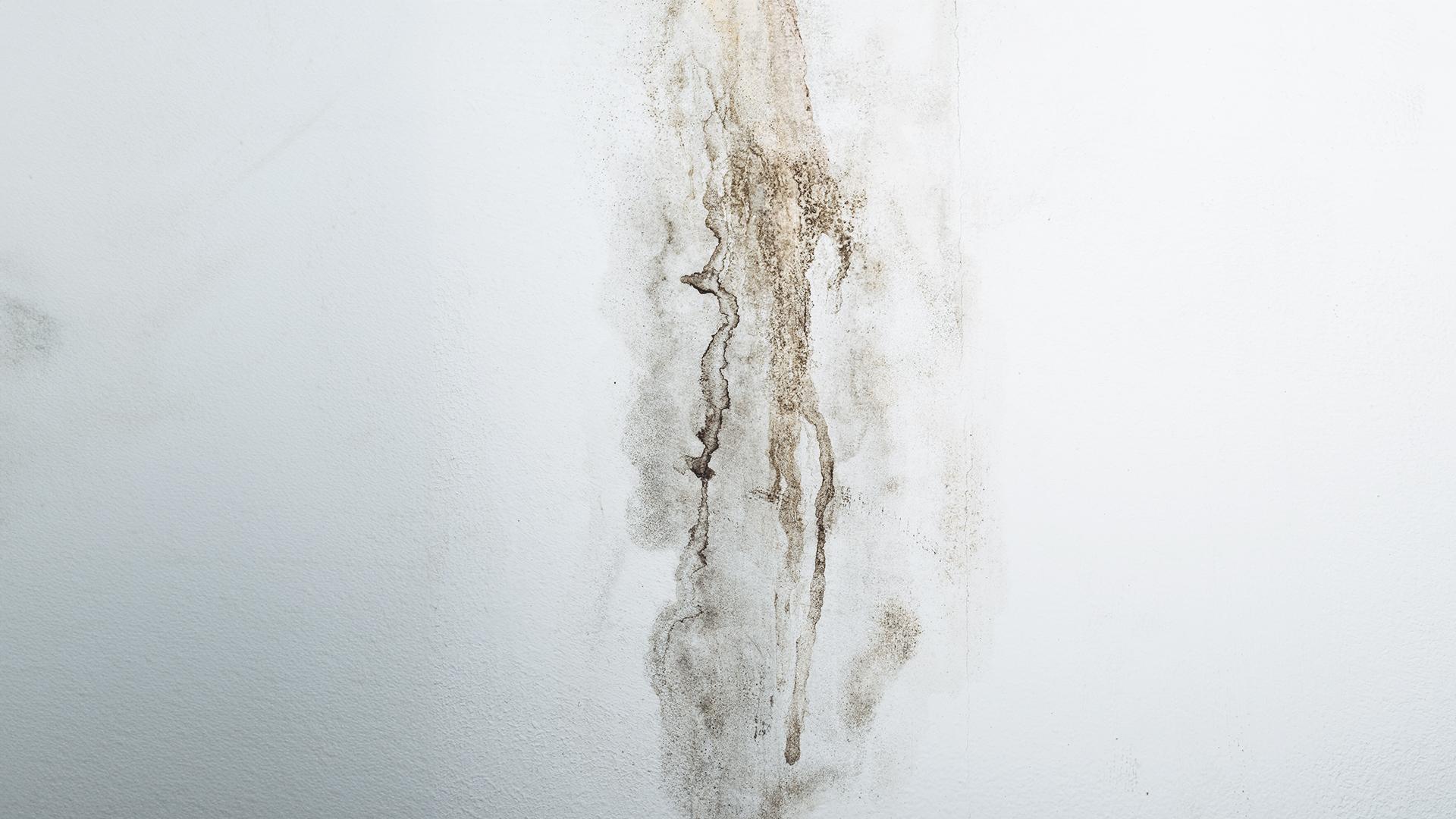
Mould: “furry” or powdery deposits that have recently appeared, ranging in colour from pale green to brown or black. Careful: some may be hidden underneath a covering such as a floor or wall.
Whitish crystalline deposits on concrete surfaces, Known as efflorescence, they are a sign that moisture is seeping into the concrete, dissolving the salts that it contains, and causing them to leach through to the surface on the basement side.
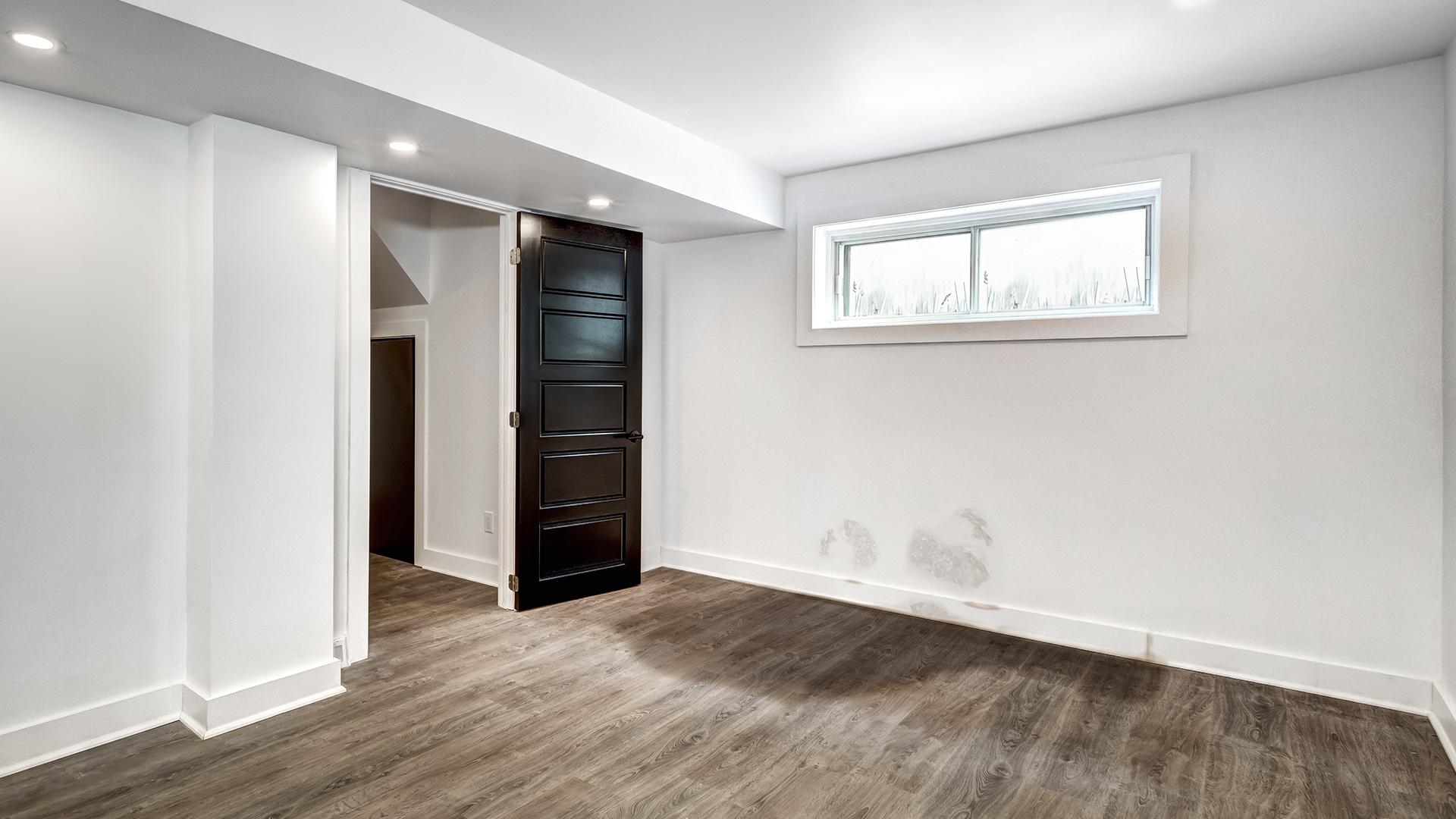
Stains that have recently appeared on finished surfaces.
“Sweating” on concrete walls or the concrete slab.
Cracks appearing in the foundation.
Water pooling on the floor.
Orange-ish water seeping in.
Ochre-coloured deposits along the bottom of the foundation walls or on the slab.
Ochre-coloured water in the floor drain (sump pit).
Mould? Beware the health effects!
Be very careful of mould, the microscopic fungi that grow on humid materials. To develop, mould requires only moisture and organic material to “feed” on: wood, paper, carpet, etc. It releases spores, which are particles that can induce symptoms such as:
irritation of the eyes;
coughing and runny nose;
wheezing;
shortness of breath; or
asthma and allergic reactions.
This means you need to take action quickly!
Outdoor signs of poor foundation drainage
Frequent and constant accumulation of water near the house.
Water infiltration: What if your drain or foundation weren’t to blame?
They may instead point to one or more of the following problems. Read on to learn more about each one.
Problem:
The backfilled earth around a house becomes compacted over time. If there is a negative slope, water flows toward the house.
Solution:
Backfill the lot to restore the slope toward its outer boundaries. A slope of one inch per foot is recommended for a distance of six feet all around the house and a quarter of an inch per foot for the rest of the lot. If the new backfill soil will extend above the waterproofed part of the foundation, that part of the concrete surface will also need to be waterproofed first.
Correct any other negative slope that is directing water toward the house: path, patio, driveway, etc.
Good to know: a slope of one inch per foot is equivalent to an 8% grade, while that of a quarter of an inch is equivalent to 2%.
Warning:
Be careful that you don’t shift the problem to a neighbour’s property!
Problem:
Gutters that are the wrong size, improperly positioned, or broken can cause runoff water to pool around the foundation. The quantity of water coming off your roof during a storm is impressive.
Solution:
Repair, reposition or replace defective gutters.
No downspout should be connected to the foundation drain! If it is, disconnect it to prevent overloading.
Add downspout extenders to direct water at least six feet (2 m) away from the house.
Connect the downspouts to a drainage pit.
Warning:
Always disconnect downspout extenders before the onset of freezing temperatures in the fall.
What’s a drainage pit, exactly?
Also known as a dry well or soakaway pit, it’s a hole dug in the yard and filled with ¾ in. crushed stone. It’s connected to the downspout by a length of non-perforated underground pipe. The entire assembly is covered by geotextile membrane before soil and grass are replaced on top.
Problem:
Some trees, if located too close to the house, can lead to formation of cracks in the foundation. In dry periods, especially if the soil around the house is clayey, the roots can retain water, which can then put pressure on the foundation.
Solution:
Cut down potentially harmful trees.
Avoid planting similar trees too close to the house.
Warning:
Poplar, willow, elm, red maple, Manitoba maple, silver maple and bur oak trees near the house are to be avoided at all costs.
Problem:
Windows that are too close to the ground tend to develop leaks.
Solution:
First check for cracks around the window frames and apply sealant as needed.
Install a window well around every window that is less than eight inches (20 cm) above the ground.
Warning: If the window can be used as an emergency exit, then the window well must not prevent a person from exiting.
Window wells: good to know
The bottom of the window well must be filled with gravel, and there must be a vertical drain pipe to direct water to just above the foundation drain, without being directly connected to it. Protective mesh to keep out debris is advisable, and all window wells must be cleaned regularly to ensure they work effectively.
Problem:
In iron-rich soil that is in contact with water and air, deposits of iron ochre (also called ferrous ochre) can form. They are recognizable by their rust colour. These deposits can end up blocking the foundation drain.
Solution:
Inspect the drain using a video camera.
Take a water sample and have it analyzed.
Warning:
This is a job for an expert. There are several possible remedies: add an indoor drain, lower the water table, or (the most frequent solution) replace the flexible corrugated fondation drain pipe with one made of smooth-walled PVC pipe with large circular openings.
You’ve reviewed the problems listed above and fixed what could be fixed, but nothing’s changed? Now, you need to turn your attention to the foundations of your home.