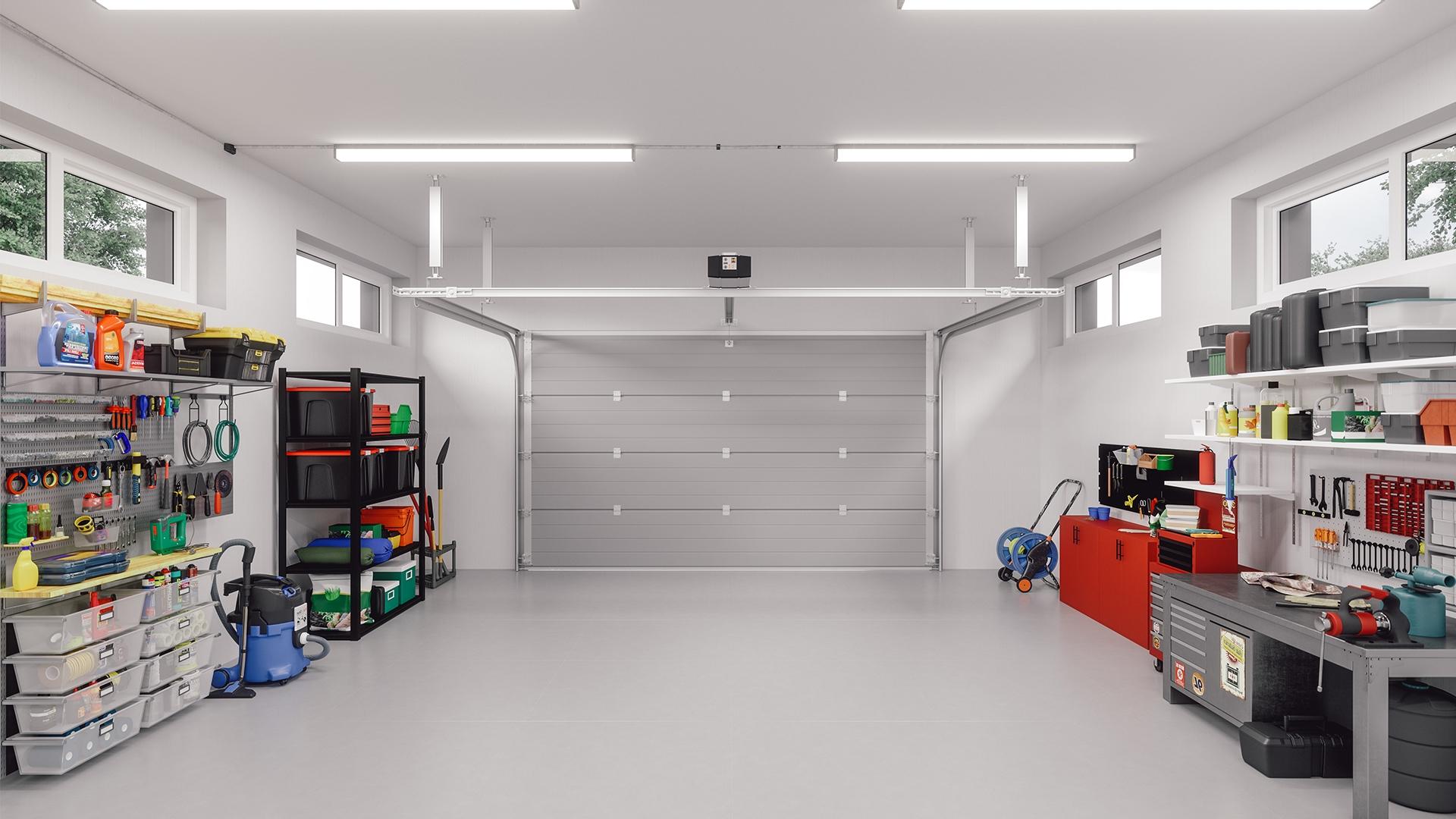
Looking for an attractive, heavy-duty, and easy-to-maintain resin garage floor? Polyaspartic and epoxy floor coatings offer long-lasting solutions to protect your concrete garage floor. Discover their advantages, disadvantages, as well as our garage floor installation and maintenance tips.
What is resin?
Pure resins originate from the industrial sector. When mixed with hardeners, they create a paint-like film that delivers an attractive, durable, and waterproof finish. Garage floor coating specialists use them to protect concrete floors against water, wear, impacts, and more.
Epoxy garage floor or polyaspartic coating: Which one should you choose?
The two main types of resin commonly applied to garage concrete surfaces are epoxy and polyaspartic coatings. Certain properties distinguish these two product families.
Comparison table of garage floor coatings
Comparison criteria
Epoxy garage floor
Polyaspartic coating
Drying time
Requires patience: 3 to 5 days before using the garage again
Ultra-fast curing: Park your car the next day
Cost
Affordable and economical solution: Between $4 and $7/sq. ft. installed
Higher investment for enhanced performance: Between $7 and $12/sq. ft. installed
Installation
Can be applied starting at 10°C (not in winter)
Tight application window. Can be applied in cold weather, down to −7°C
Resistance to chemicals
Ideal for workshops: Resists battery acids and solvents well
Excellent overall resistance (stains and chemicals), but more vulnerable to battery acid
UV resistance
May turn yellow over time; better suited for indoor use
Remains stable and vibrant; also ideal for outdoor surfaces (balconies, terraces)
Flexibility
More rigid: Less suitable for cracked concrete
More flexible: Tolerates minor movement and cracks
Slip resistance
Naturally less slippery
Requires the addition of flakes or anti-slip particles
Pro tip
“If your slab has minor cracks, I recommend polyaspartic flooring. Its flexibility absorbs concrete movement better than epoxy, making it an excellent option. For best results, apply it on a dry, thoroughly cleaned concrete slab.”
What moisture conditions are required to install a resin floor on a concrete slab?
For a resin floor coating to adhere properly, the concrete slab must be dry and protected from moisture. A vapour barrier is essential; otherwise, water can rise through capillary action and cause the coating to lift over time.
Before installing a resin floor:
Measure the slab’s moisture level using a hygrometer.
Cut transparent polyethylene squares (61 × 61cm).
Place them in various areas of the slab and seal the edges with duct tape.
Wait 48 to 72 hours.
Observe the results: If water droplets appear under the plastic, moisture is present. In this case, resin flooring is not recommended without a vapour barrier.
What are the advantages and disadvantages of a resin garage floor?
Thermosetting resins offer many benefits. Here’s why more homeowners are choosing a resin garage floor coating:
Long-term durability: When properly applied, they can last around 30 years; warranties may reach up to 20 years.
No peeling or chipping: Excellent impact resistance.
Easy garage floor maintenance: Their density prevents dirt from penetrating the surface.
Resistance to hot tires and chemicals: Withstands high tire temperatures and resists wear, salt, and chemicals (oil, gasoline, antifreeze).
Low VOC emissions (volatile organic compounds): Modern resins are solvent-free and emit little to no harmful odours compared to other solutions.
What are the disadvantages of resin floor coatings?
Resin flooring offers many benefits, but some drawbacks should be considered:
Slippery surface: Smooth finishes can become very slippery when wet or exposed to melting snow.
UV discolouration/yellowing: Traditional epoxy can yellow when exposed to sunlight.
Adhesion depends on surface preparation: Poor cleaning or residual oil can cause peeling or delamination.
Drying time: Full curing can immobilize the garage for several days.
Odours and fumes during application: Some formulas emit strong fumes while curing.
Repair costs: Fixing cracks or impacts can be costly and often requires stripping or sanding before reapplication.
Sensitivity to concrete slab moisture: Excessive moisture can cause bubbling or premature failure.
Should you install a resin floor yourself or hire a professional?
These products are available from certain retailers, allowing you to save a few hundred dollars on installation. However, be cautious: If you choose to do it yourself, proper concrete floor preparation is critical. Without a professional installer, the manufacturer’s warranty is often limited to one year.
How to prepare a concrete slab before applying a resin coating?
Concrete slab preparation is crucial to the success of the project. Here are the steps every resin applicator (professional or not) should follow:
Check the slab’s moisture level and dry it if necessary.
Clean the floor with a degreaser to remove oil stains.
Grind the surface using a diamond grinder to ensure proper adhesion.
Fill and repair existing cracks.
Vacuum and clean the slab before proceeding.
At this stage, application methods may vary.
What are the application steps for a polyaspartic floor coating?
Ideally, two or more experienced workers are required to meet application timelines, as polyaspartic coatings cure in under 30 minutes. The steps are as follows:
Apply an epoxy primer if the slab is very porous or damaged.
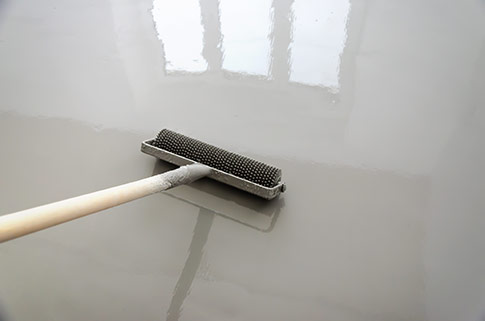
Apply a resin layer using a rubber squeegee, then back-roll for uniform coverage.
Broadcast vinyl flakes to hide slab imperfections and create a non-slip garage floor surface.
After one to two hours of drying, remove excess flakes using a blower-vacuum.
Apply a clear polyaspartic top coat to seal the flakes and create a washable, slip-resistant surface. Aluminum oxide powder may also be added if flakes were not previously applied.
Reorganize your garage after a few hours.
How to maintain a resin garage floor?
A resin garage floor requires minimal maintenance and is easy to clean. To keep it looking good and protected over time:
Sweep regularly to remove dust and sand.
Wipe up spills promptly.
Clean with water and mild soap; avoid abrasive products to preserve shine.
Over time, applying a new protective topcoat may be recommended to maintain gloss and extend the coating’s lifespan.
What is a more affordable alternative to resin for a garage?
If you’re looking for a less expensive and less permanent option than pure resin, garage floor paint remains an attractive alternative. Hardware stores offer concrete floor paints, often water-based epoxy or polyurethane blends.
Water-based products feature low VOC floor coatings and are more environmentally friendly.
Good to know: Once the solvent evaporates, the remaining coating is thinner and less durable than industrial-grade products.
Benefit from personalized advice
Do you have questions about your home, need specific information, or are you looking for referrals to find an Approved Supplier?