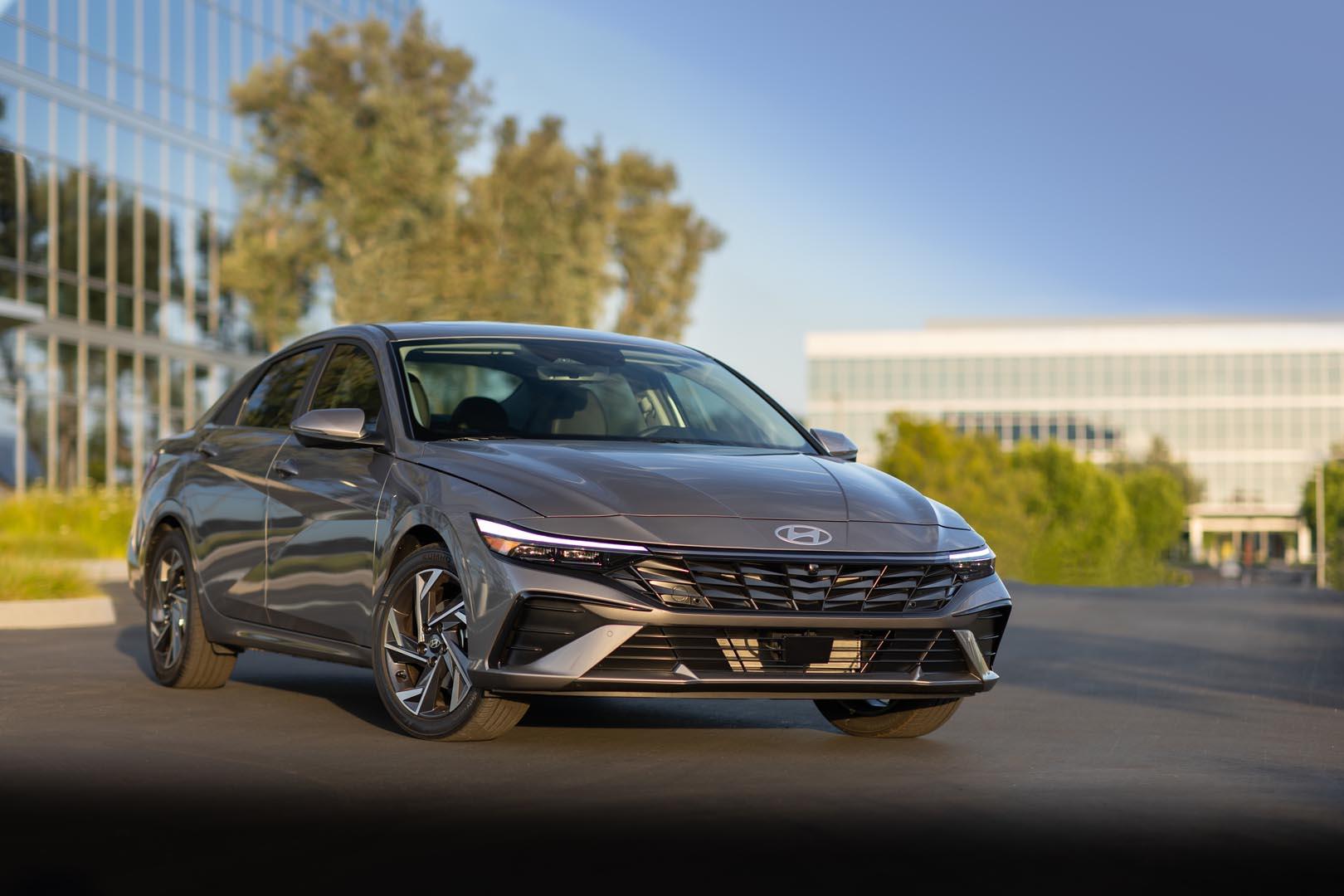
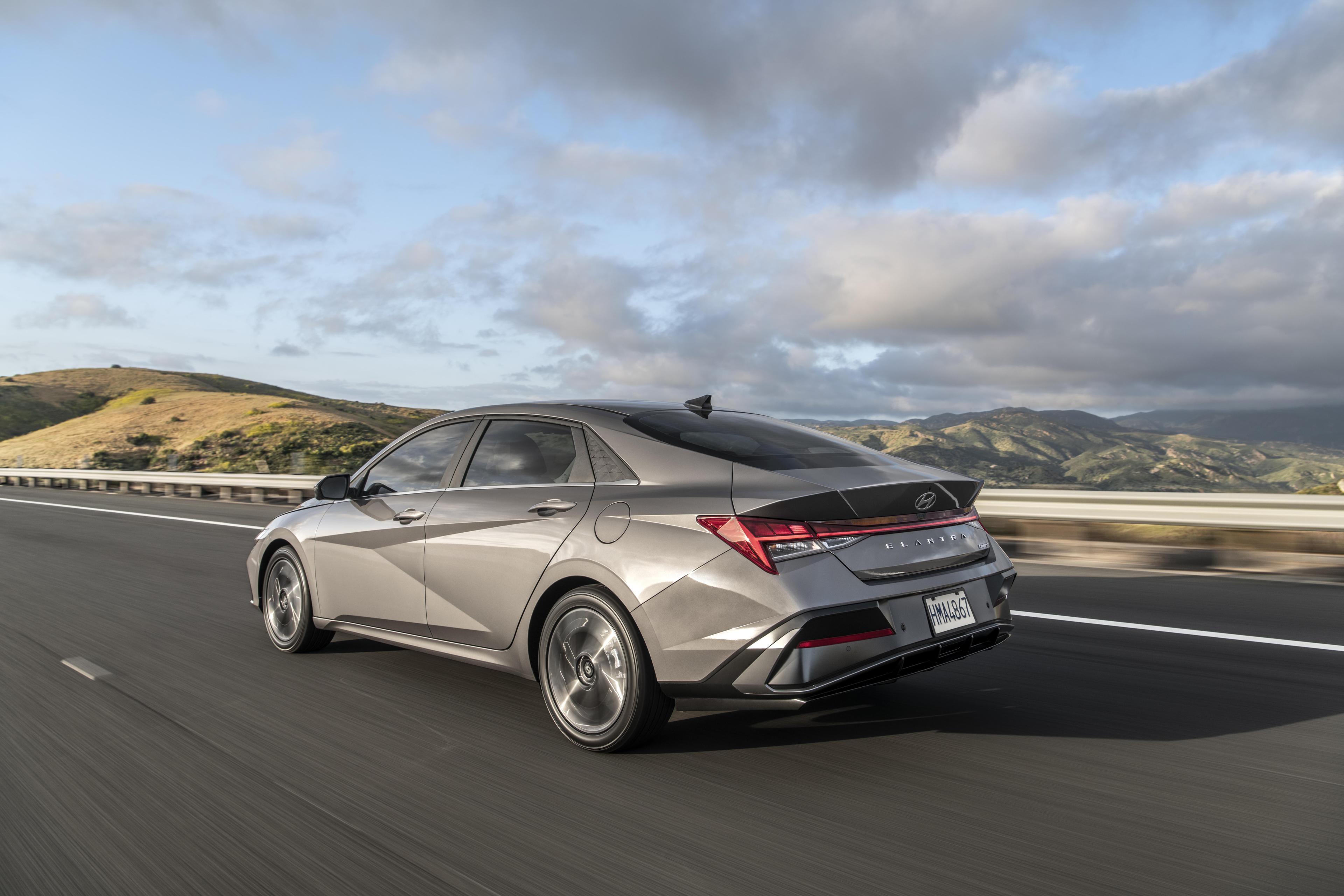
HYUNDAI Elantra 2024
Competitive and affordable
Pros and cons
Pros
- Excellent equipment/price ratio
- Well-balanced steering
- Stable handling
- Low fuel consumption
- Simple controls and multimedia system
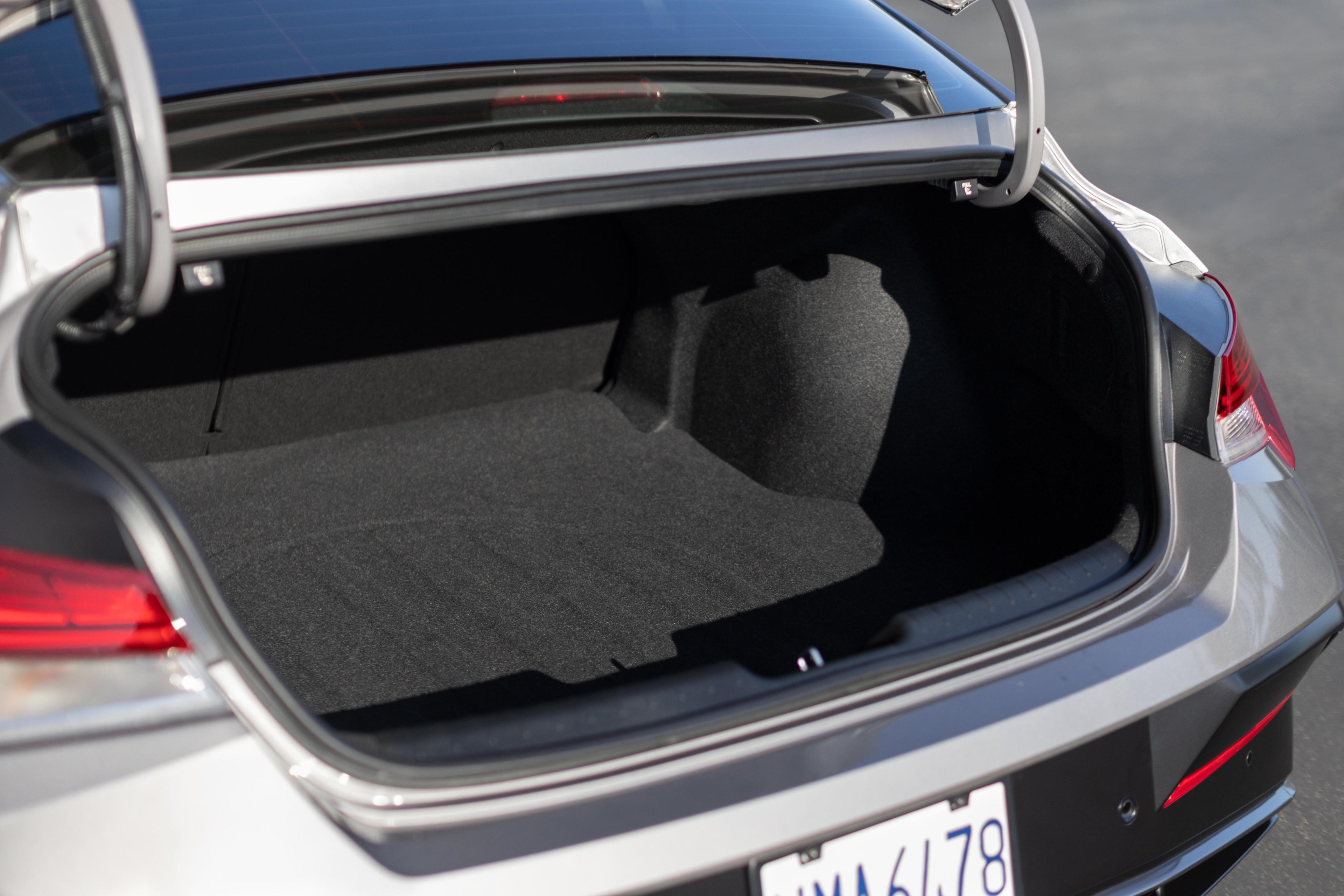
- Roomy trunk
Cons
- Noisy engine during acceleration
- Transmission sometimes jerky at low speeds
- Suspension still stiff at times
- Lack of support on front seats
- Low headroom at rear
- Dubious quality of certain materials
Overview
While several competitors have abandoned their compact sedans in North America, Hyundai is keeping its Elantra much alive. On sale for three years, the seventh generation is the subject of several changes this year, both to the body, in the cabin and in terms of safety. It offers no less than four engines, including a sporty one and a hybrid geared towards fuel economy. The most common pairs a four-cylinder with a continuously variable transmission, as in almost all of the Elantra's rivals.
The latter has long been one of the best-selling models in its category. The attractive pricing partly motivates this popularity: the 2024 Hyundai Elantra has a starting price of $24,373 (including freight, delivery and dealer fees). Only its mechanical cousin, the Kia Forte, beats it by around $800. All other compact sedans exceed $26,000 with an automatic transmission.
The picture is similar at the top of the range, where the N-Line version with turbo engine tops out at $33,723. This time, only the Nissan Sentra SR is a few hundred dollars less, without providing the same power as the Elantra.
Even the cutting-edge Elantra N (in short) represents a relative bargain given its equipment, its 276 horsepower and its track-ready gear. Please note, this is the very last Hyundai offered with a manual transmission in Canada. Three-pedal driving enthusiasts who want a “regular” compact with a manual transmission can still turn to the Sentra S or SR, the Mazda 3 GT hatchback and, for the last time in 2024, the Volkswagen Jetta Trendline, Comfortline or GLI.
All Hyundai Elantras sold here are assembled in South Korea.
Verdict
It goes without saying that a mid-range Hyundai Elantra, such as the one we tested, does not arouse the senses like the dazzling N version. Over time, however, it has achieved an acceptable degree of refinement, especially given its affordable price. Its Japanese competitors still offer more flattering materials and superior reliability after several years, but these attributes come at a much higher price. If you don’t need the versatility of a hatchback or all-wheel drive, choose the Elantra over the Kona and save money across the board while enjoying greater performance.
Evaluation
Body, cabin and cargo space
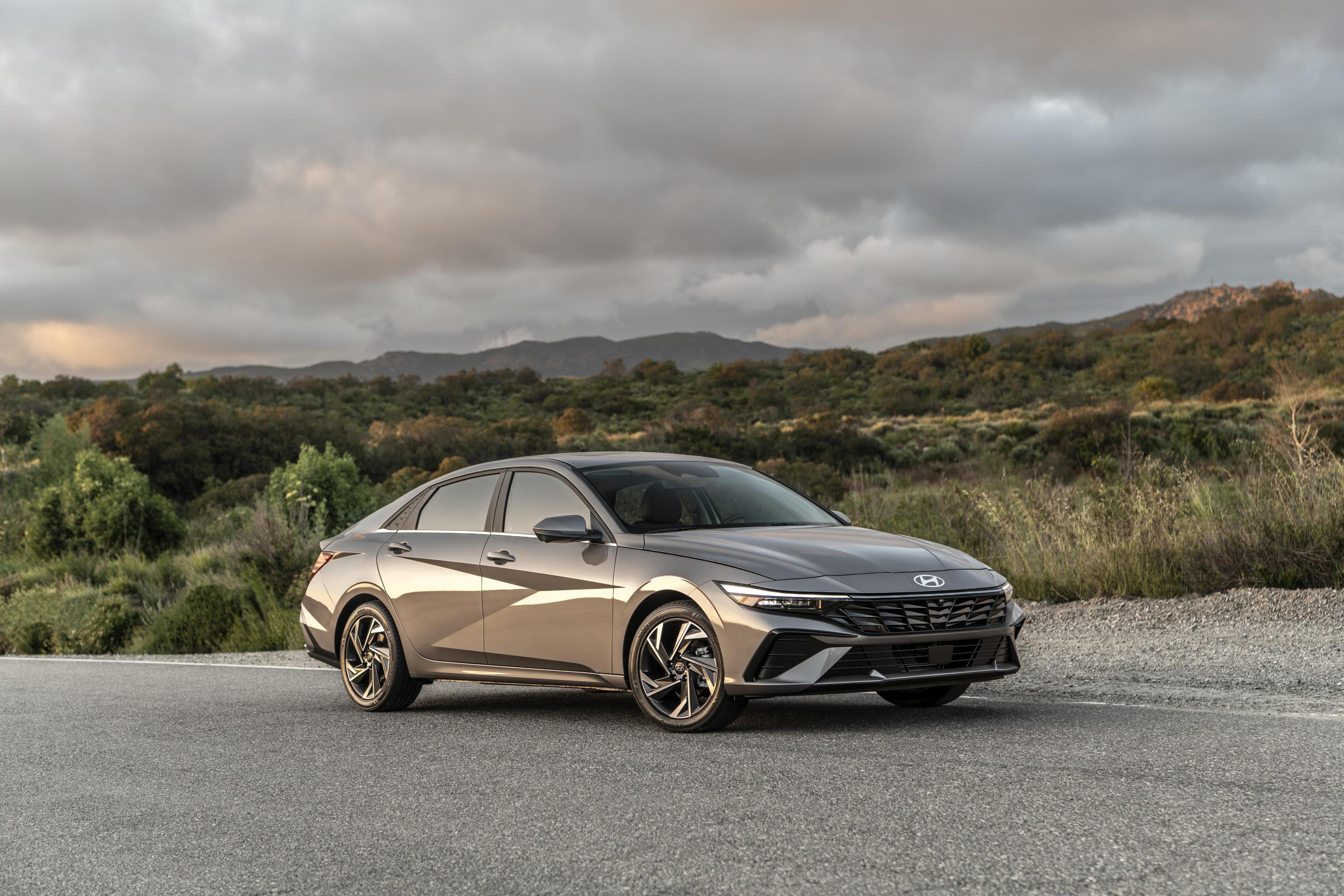
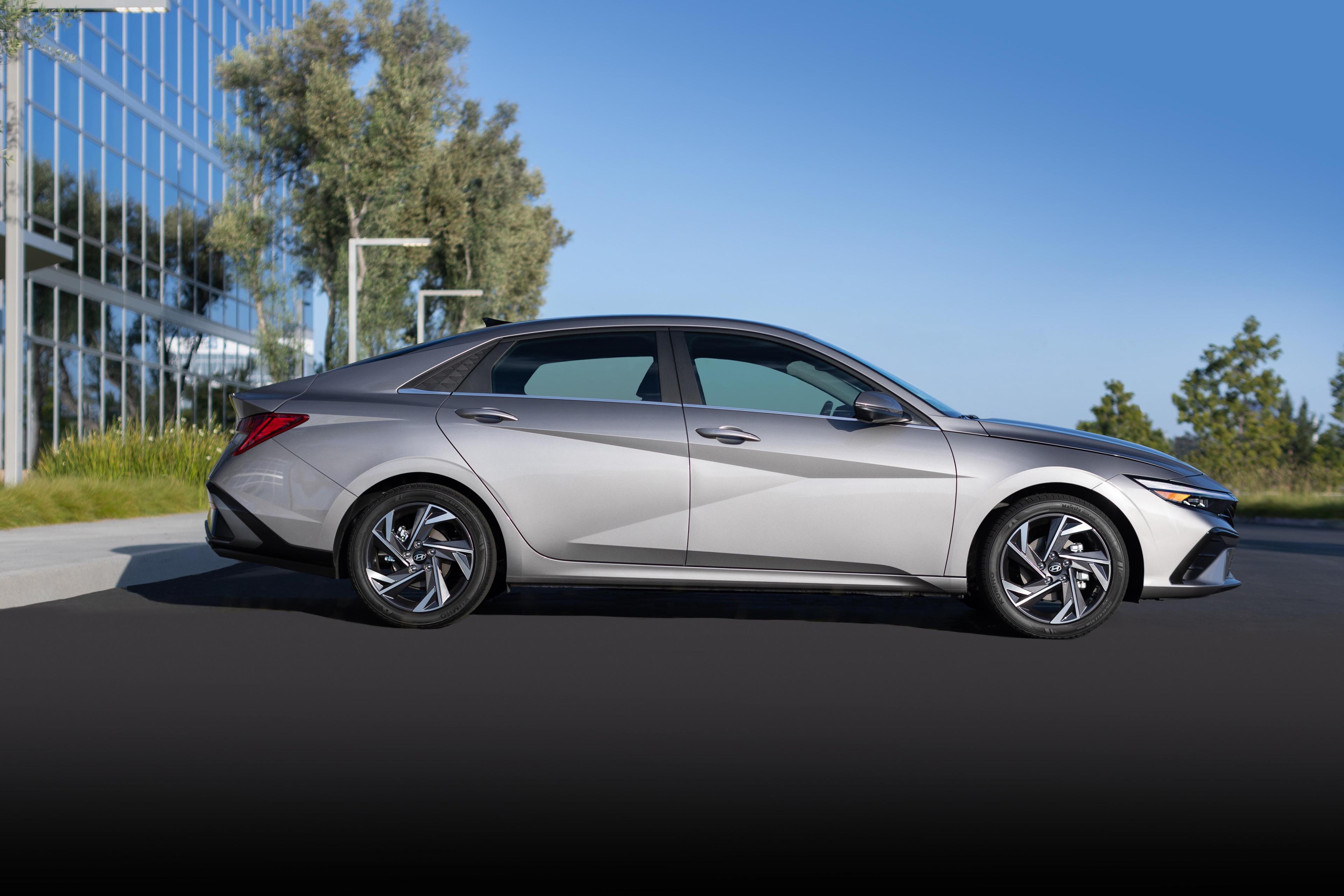
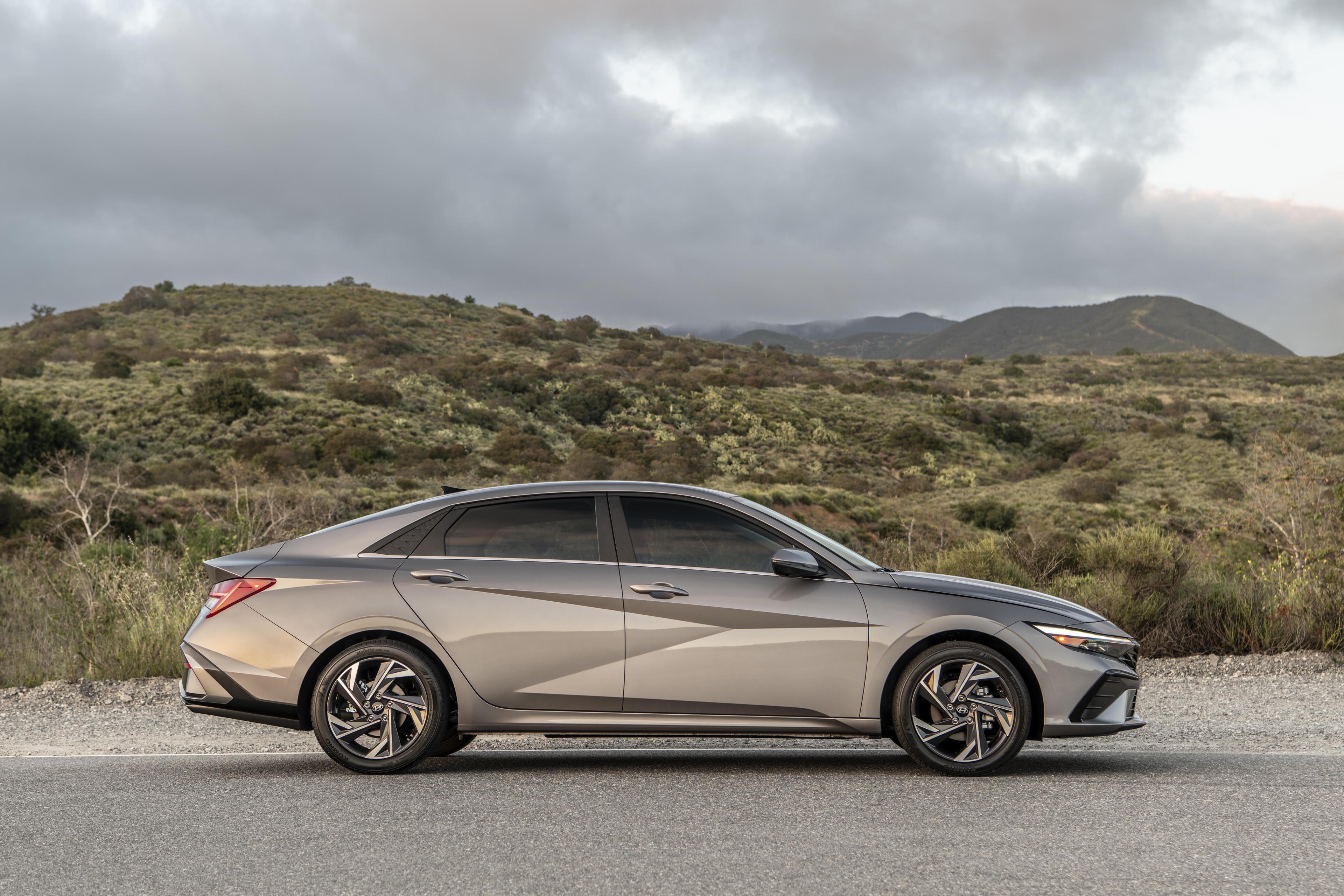
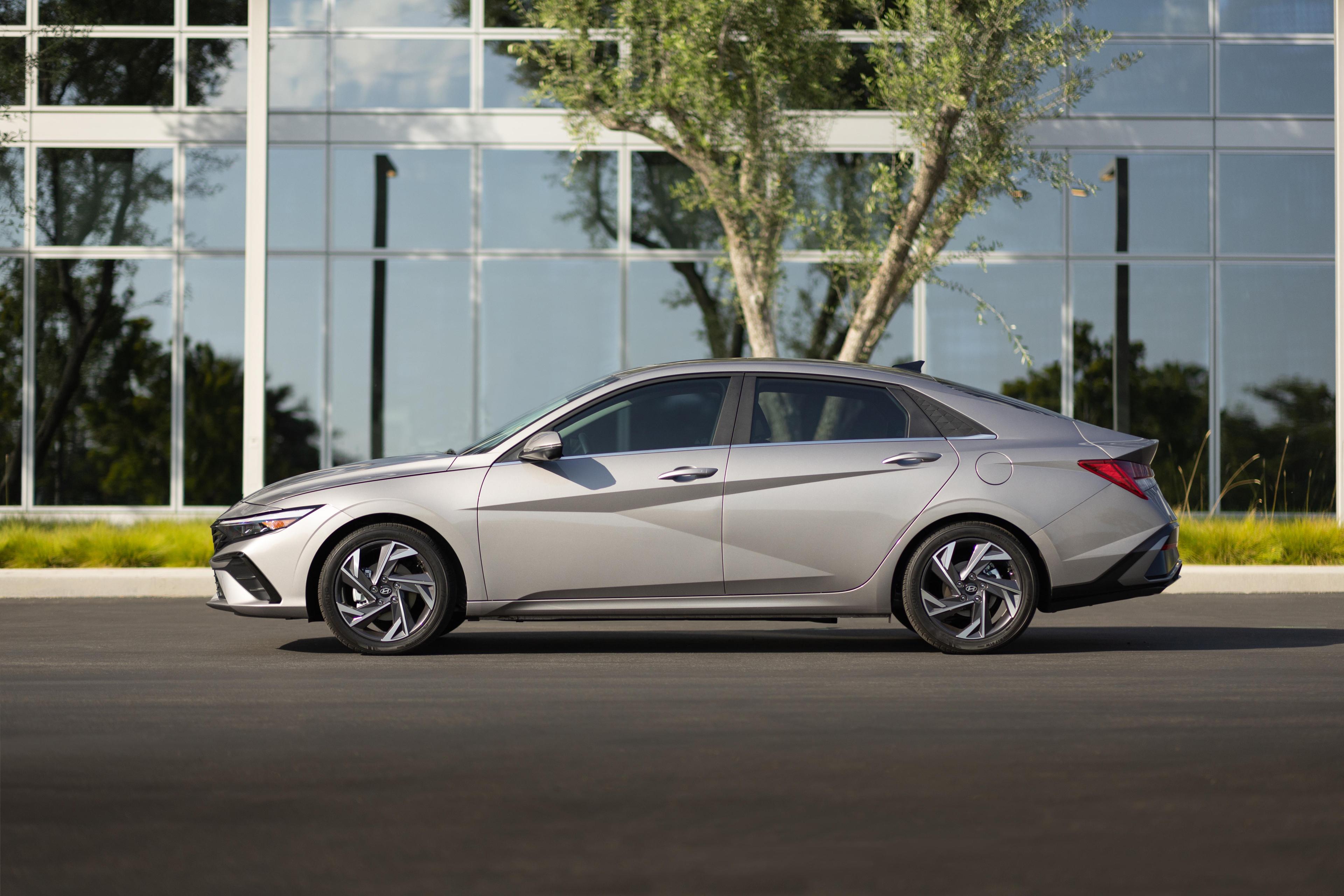
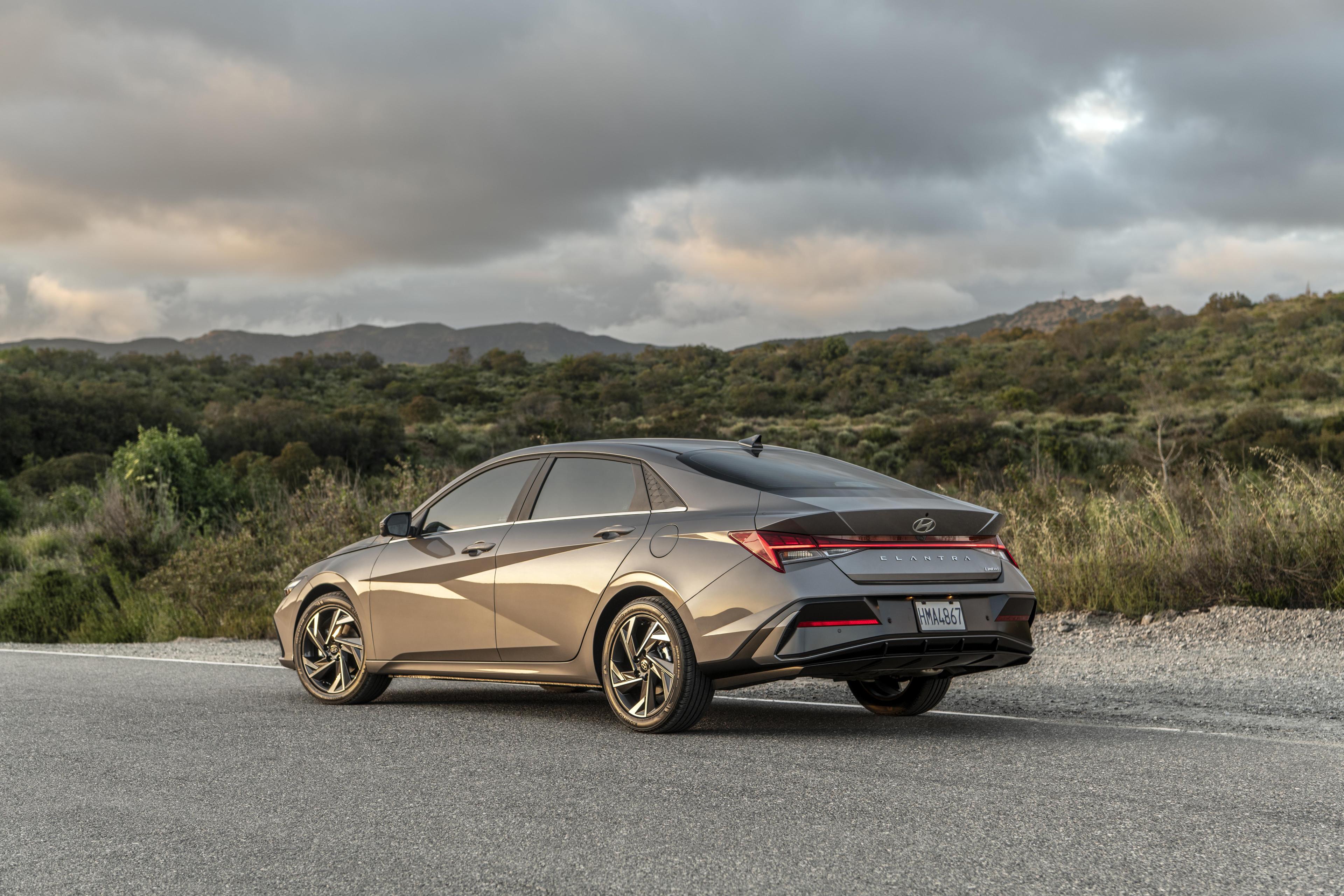
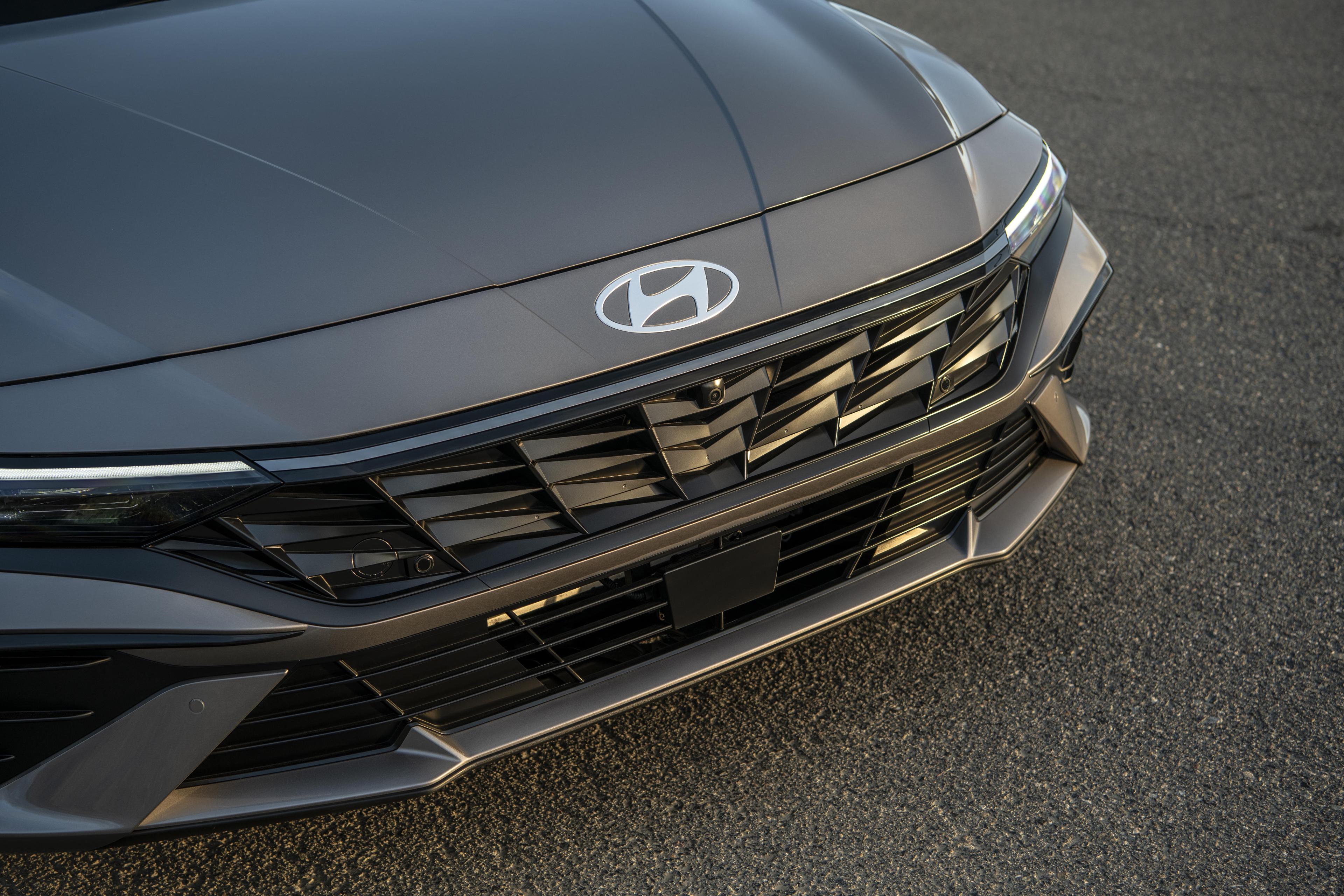
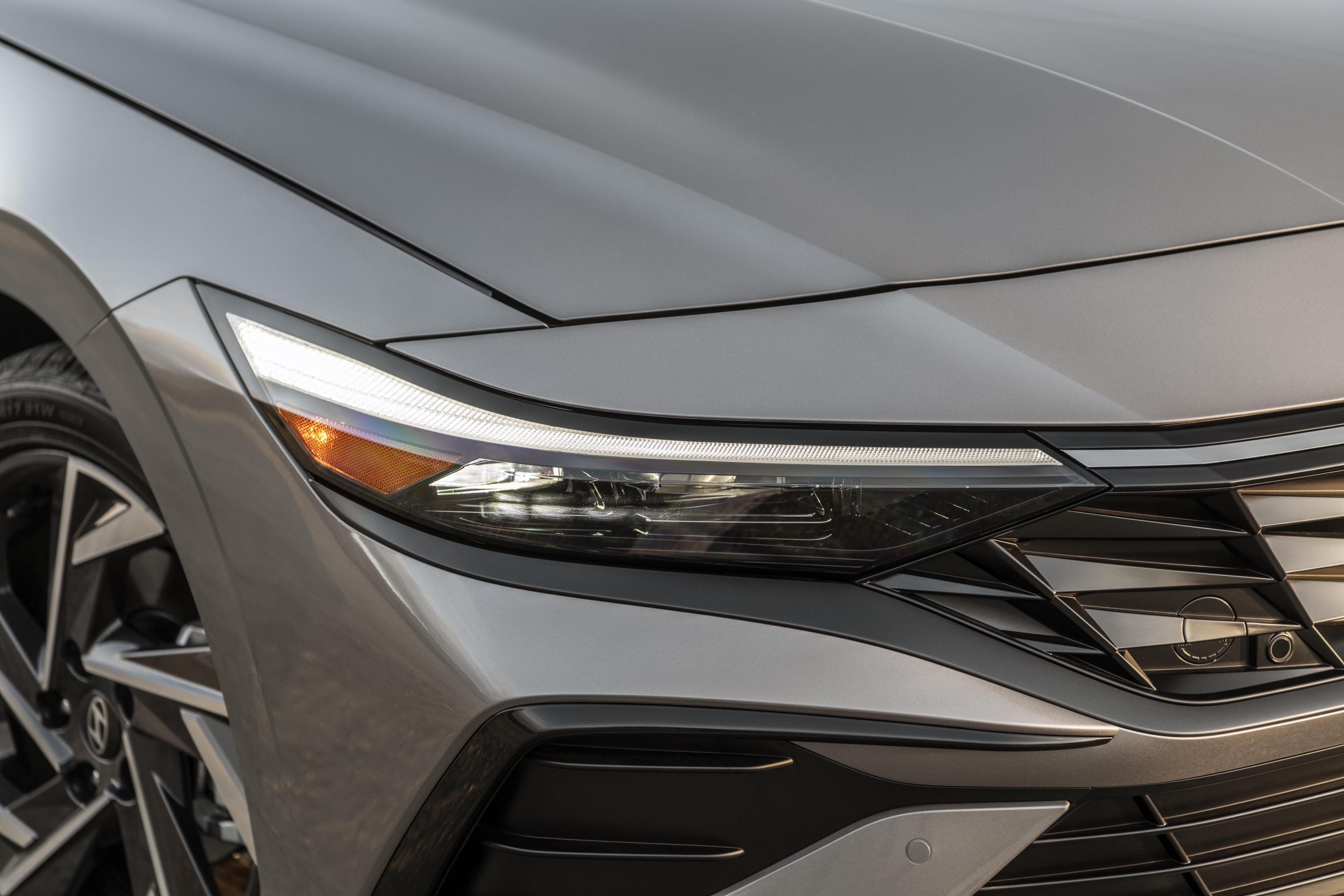
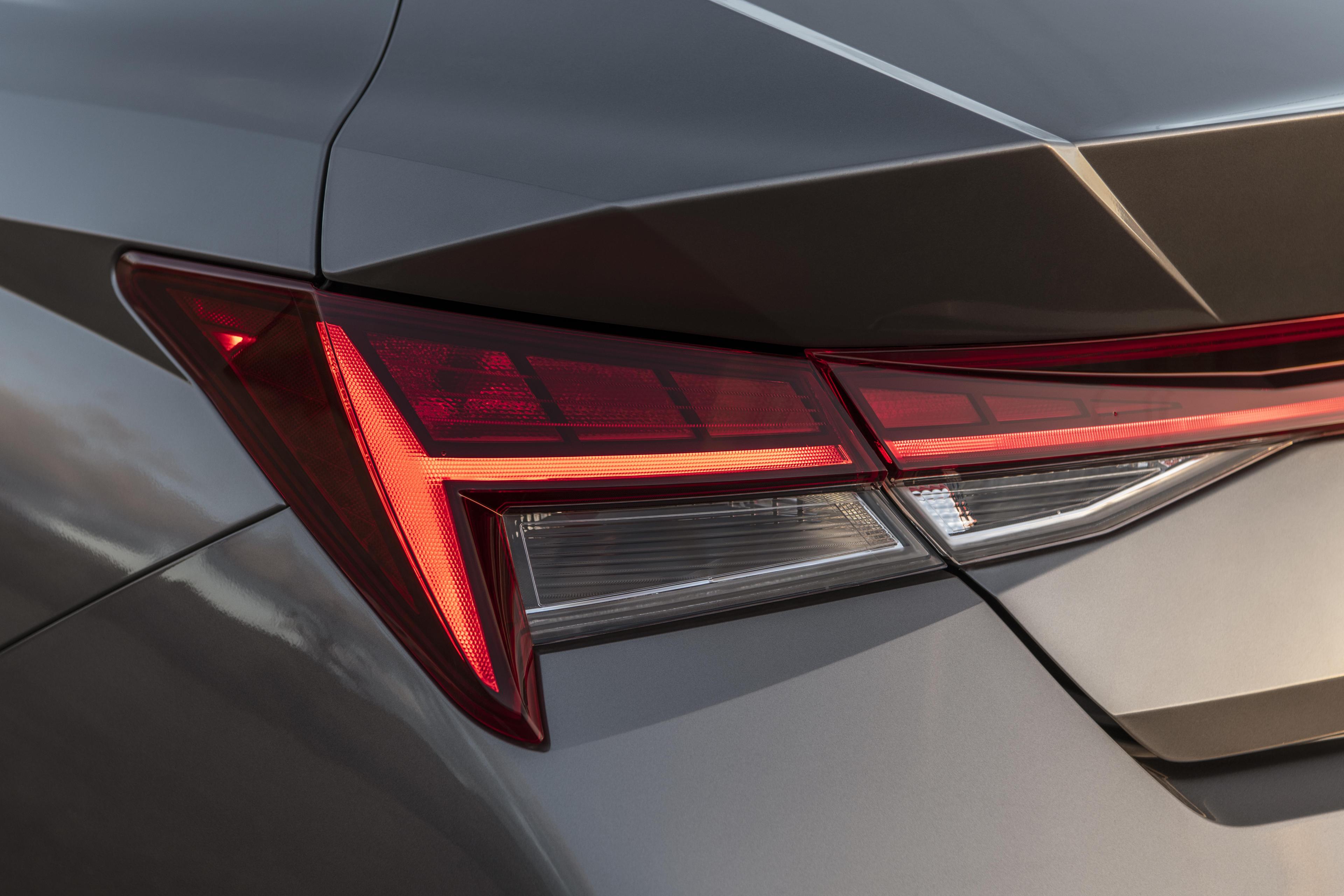
Boasting a daring style, the 2024 Hyundai Elantra now stretches over 4.7m. That’s almost as long as the Volkswagen Jetta, and some 10cm longer than the Toyota Corolla. Moreover, the Hyundai’s wheelbase exceeds that of its two counterparts.
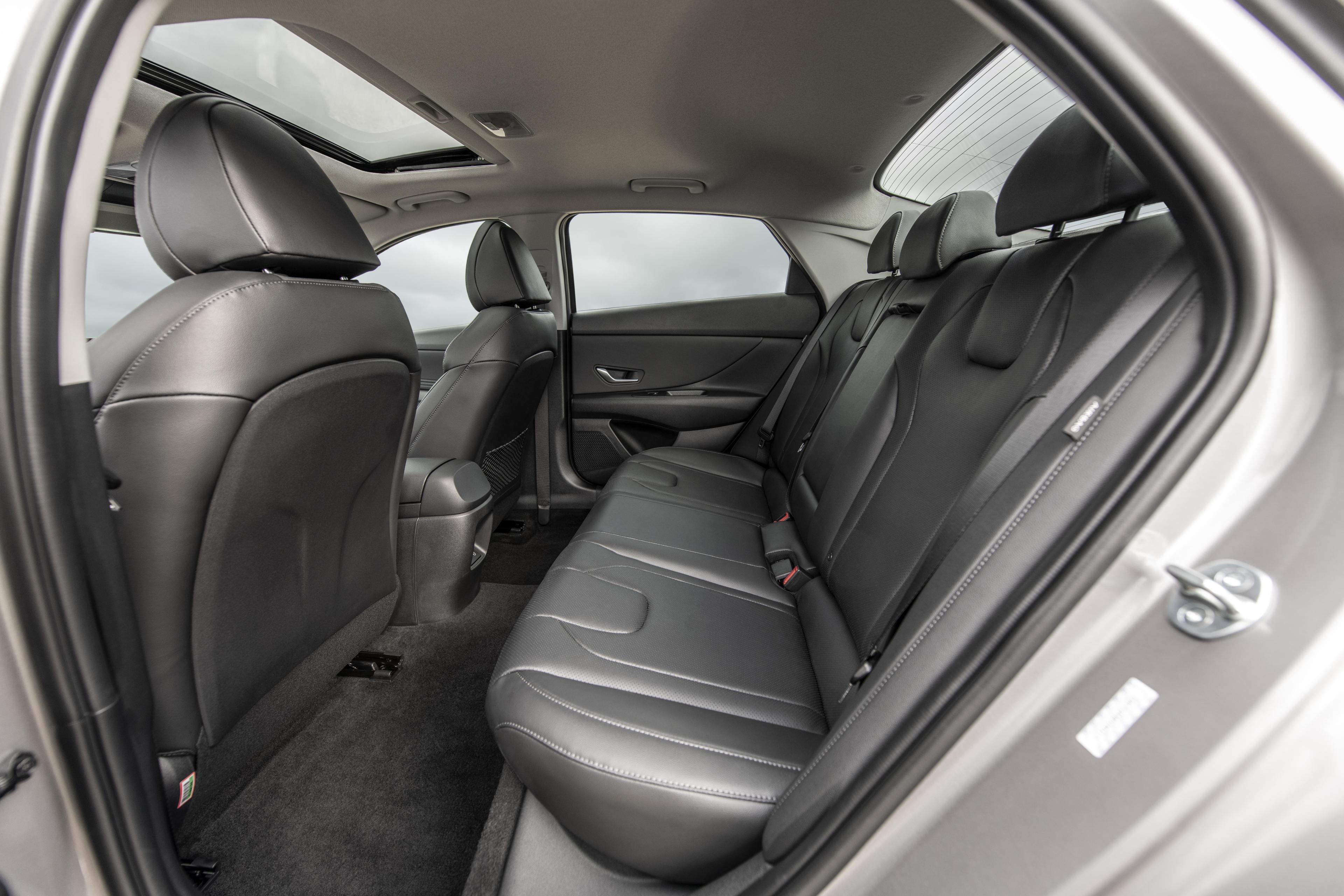
No doubt this explains the generous legroom enjoyed by rear-seat passengers. On the other hand, the receding roofline limits headroom for people taller than 1.8m (5ft 11in). The Elantra has also long suffered from a lack of foot space under the front seats and still does.
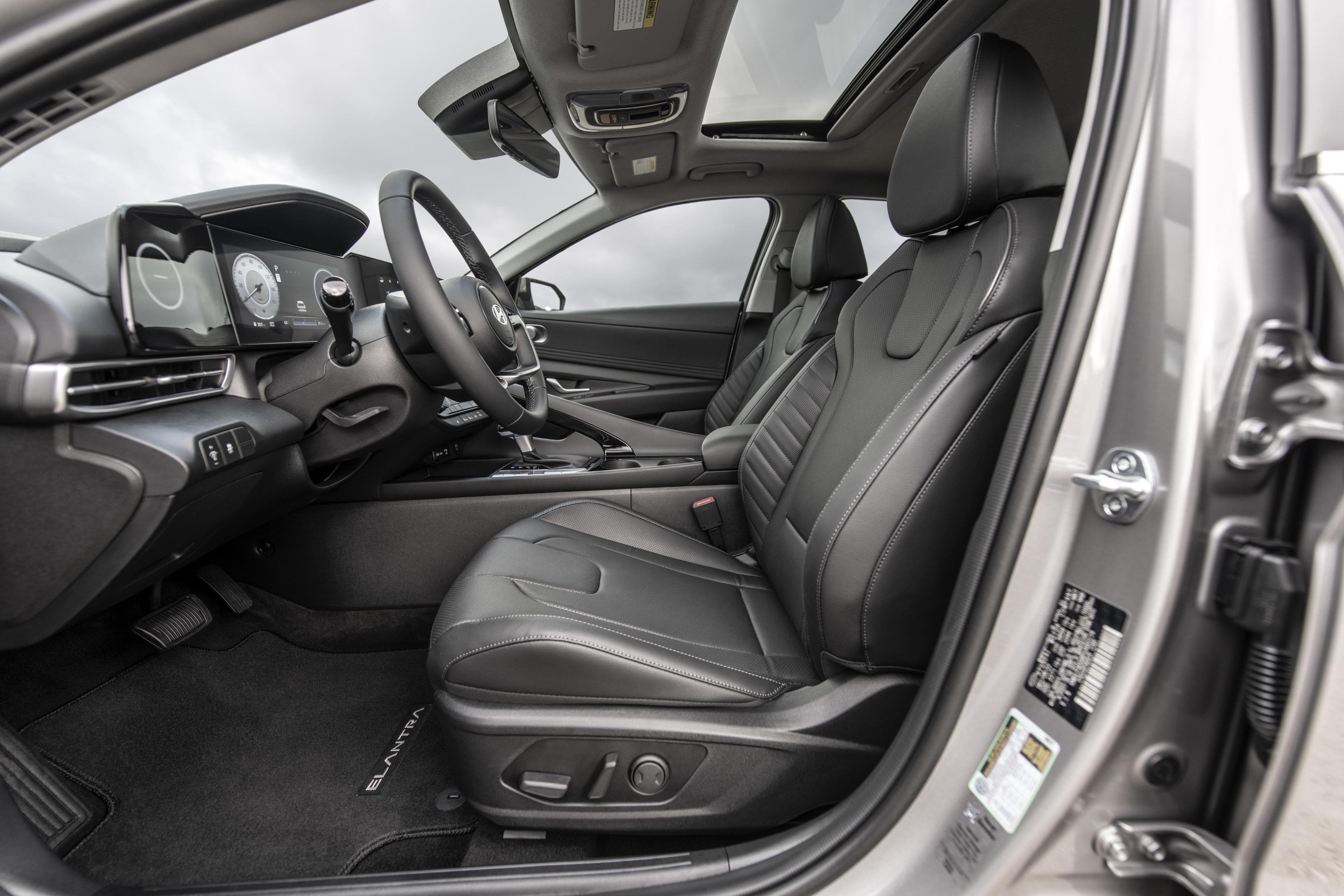
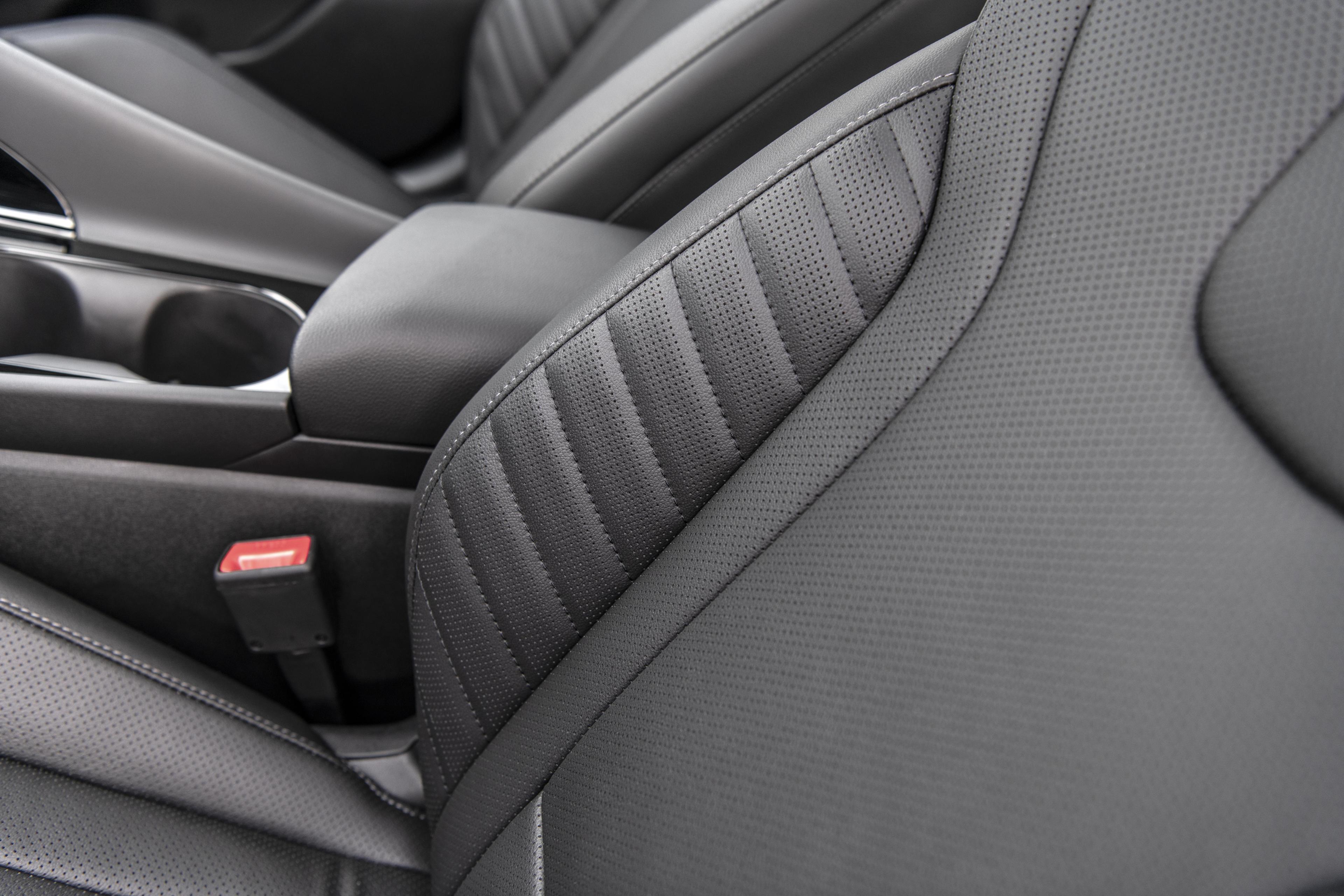
At first glance, these seats appear cushy, but the soft cushioning betrays a lack of support. Their short leg cushion and insufficient lumbar support—adjustable only in the N Line Ultimate version—are also obvious. The driving position is well designed, but lower than in a Corolla, Jetta, or Sentra. What’s more, the wide central console encroaches on the space allotted to the right knee.
The large, regular-shaped trunk could easily accommodate a family on a hotel vacation. However, the rear seat folds down as a single unit in Essential and Preferred versions, which makes it impossible to accommodate both long objects and a rear occupant. Split seatbacks have long since become a standard feature, even in entry-level models.
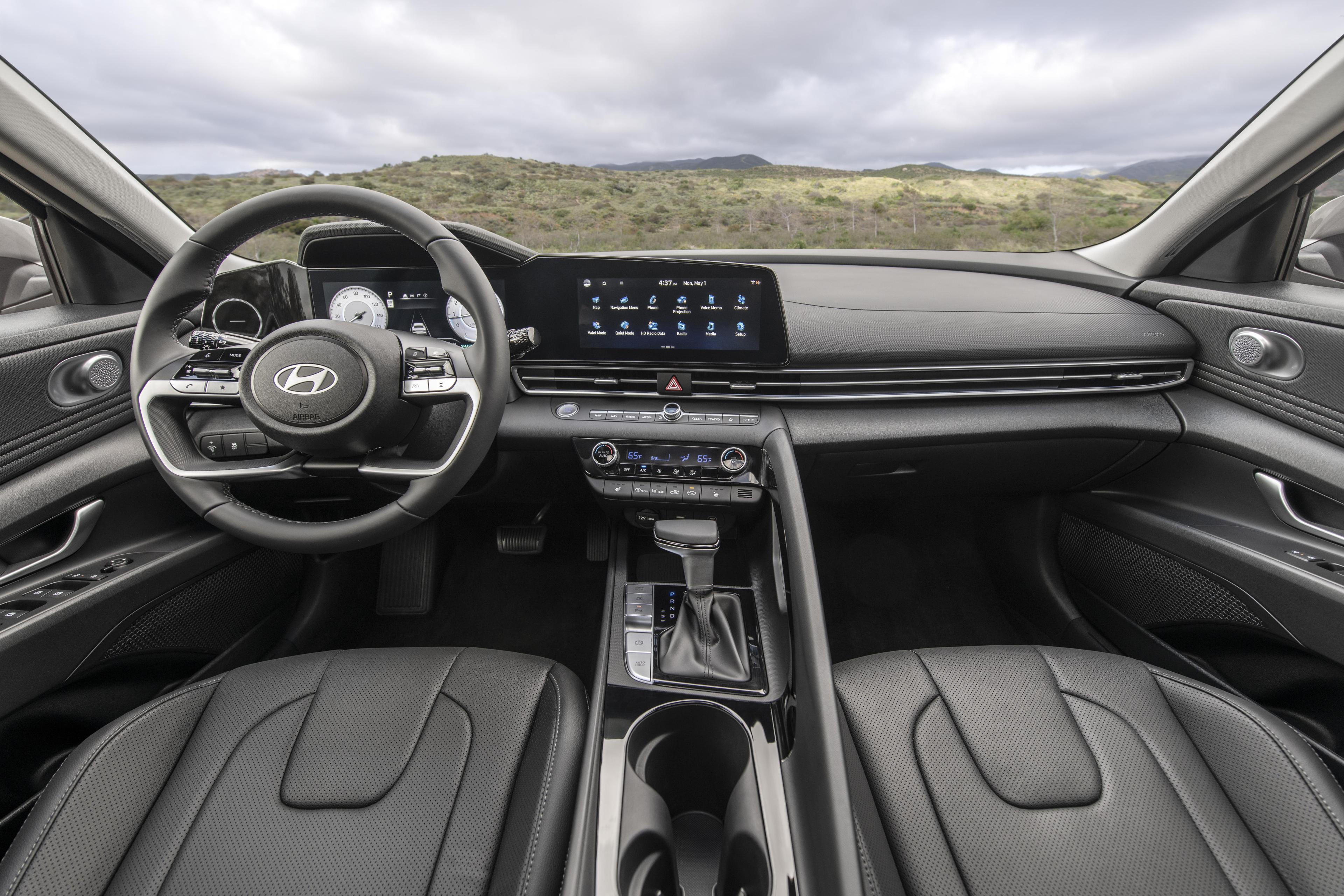
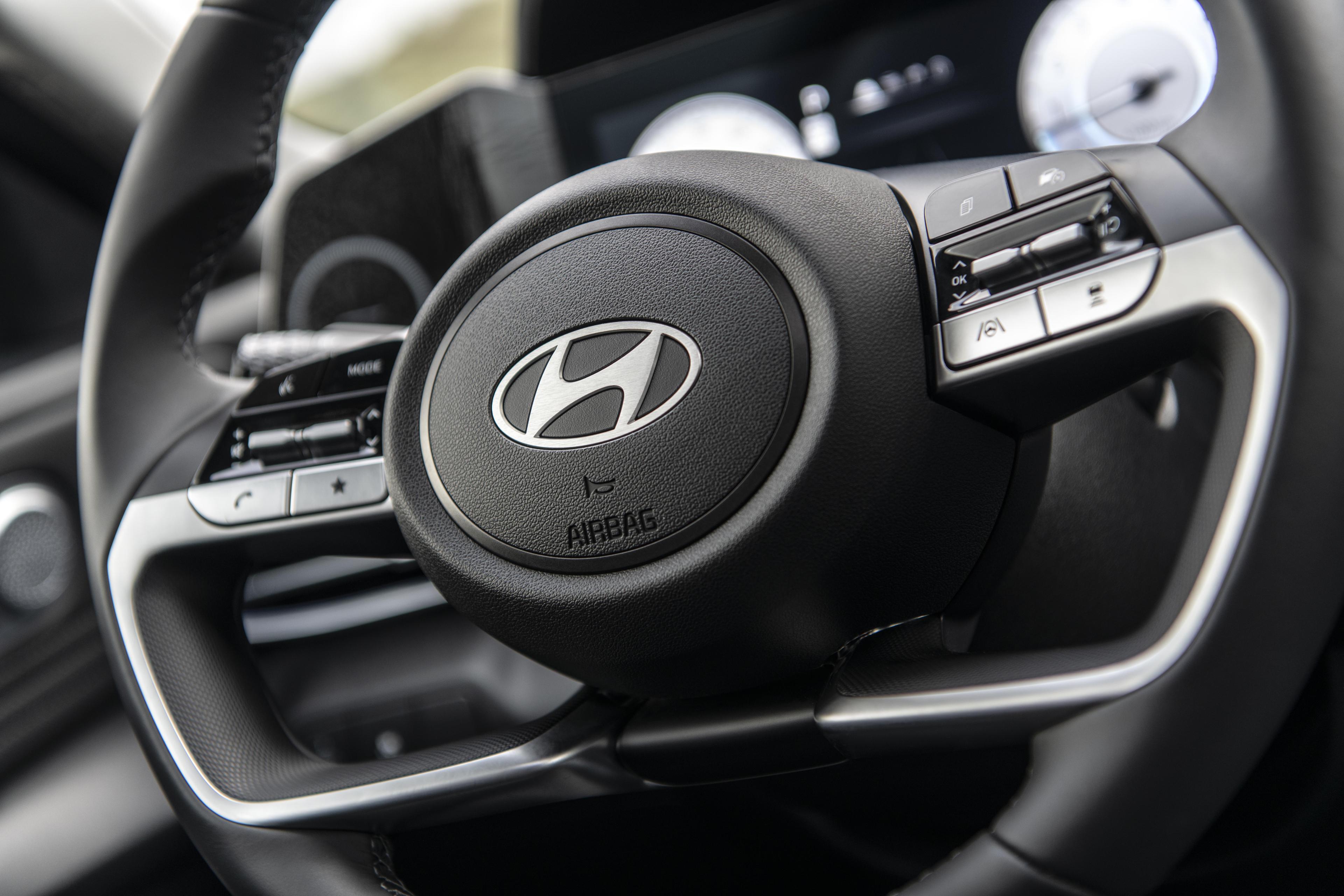
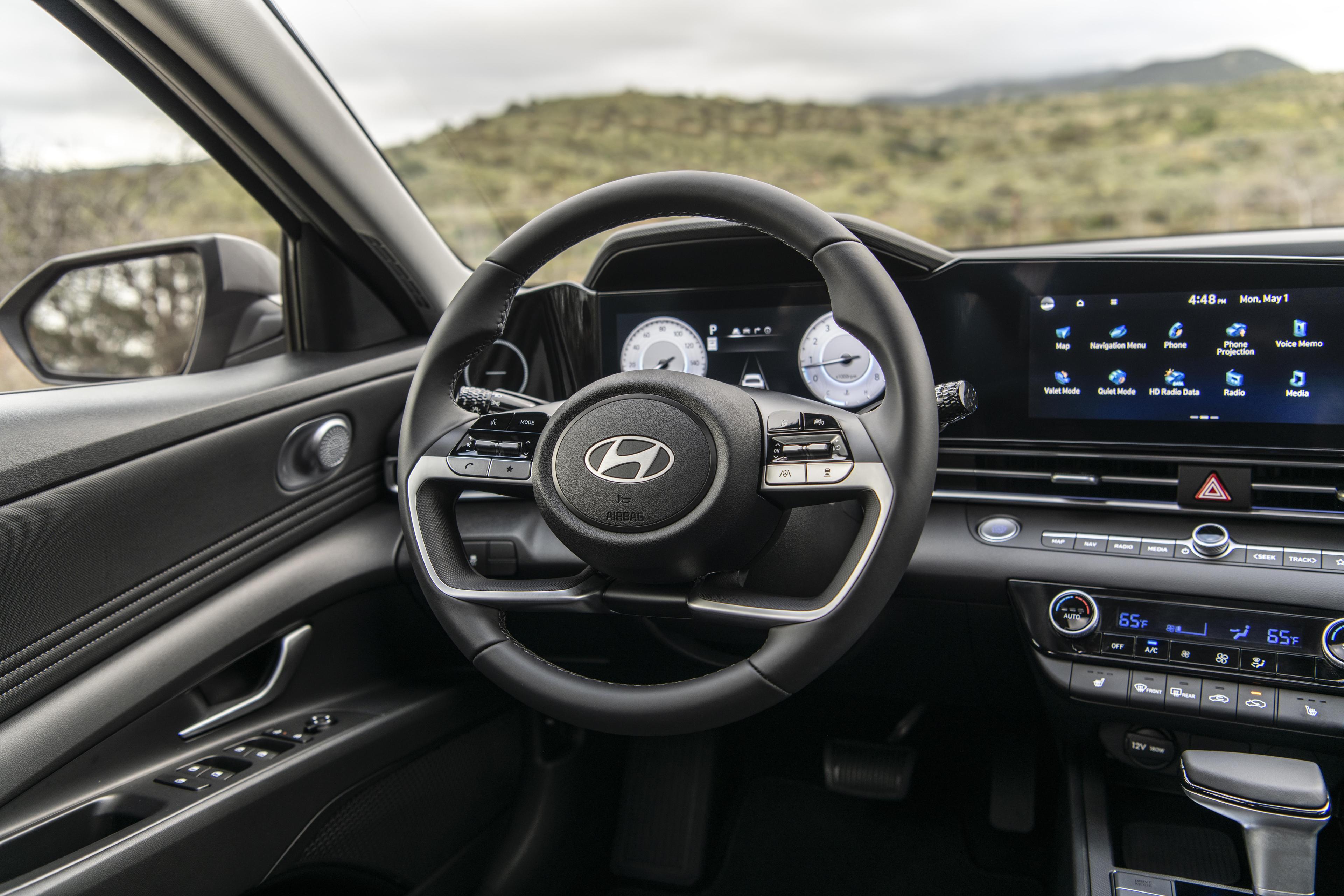
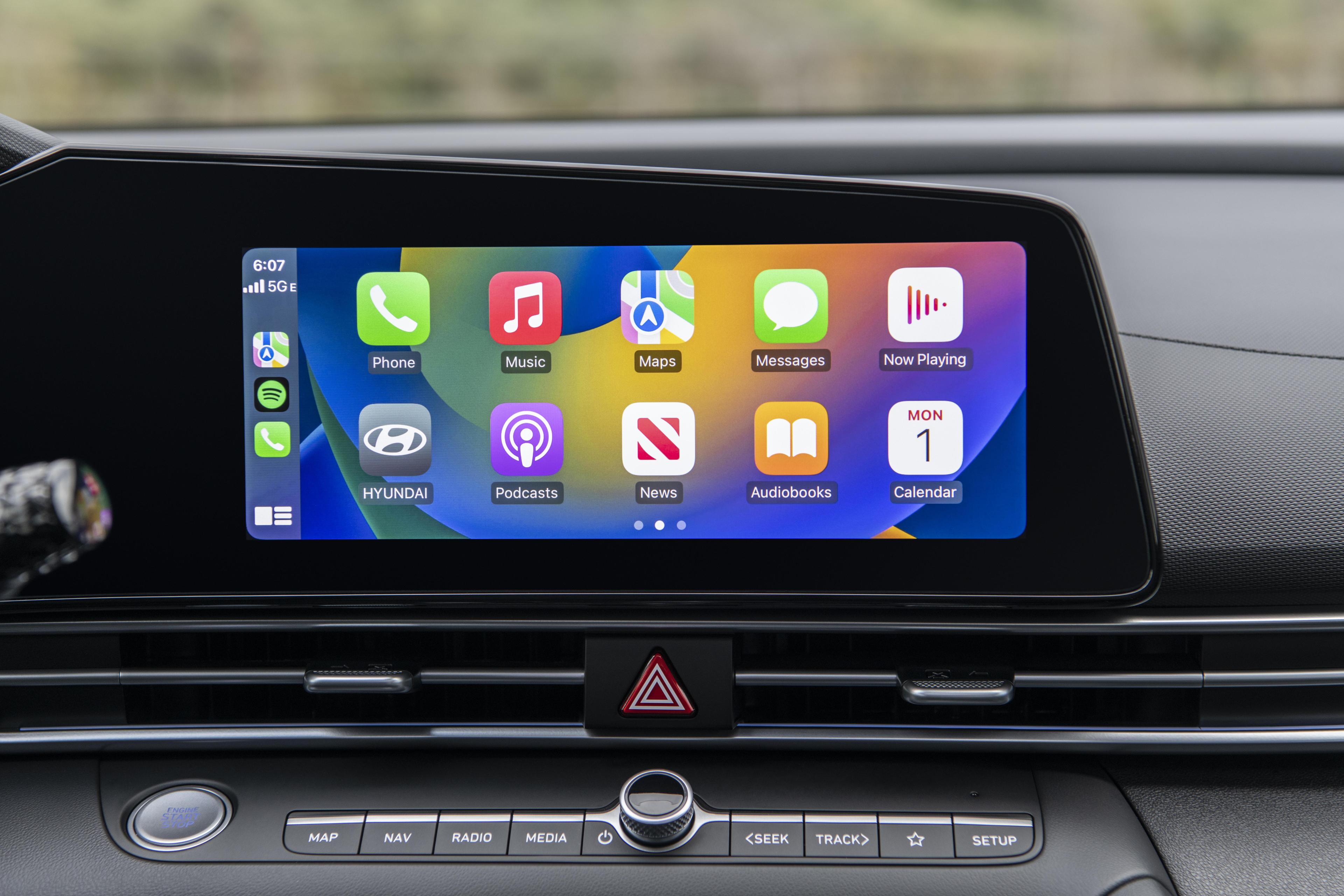
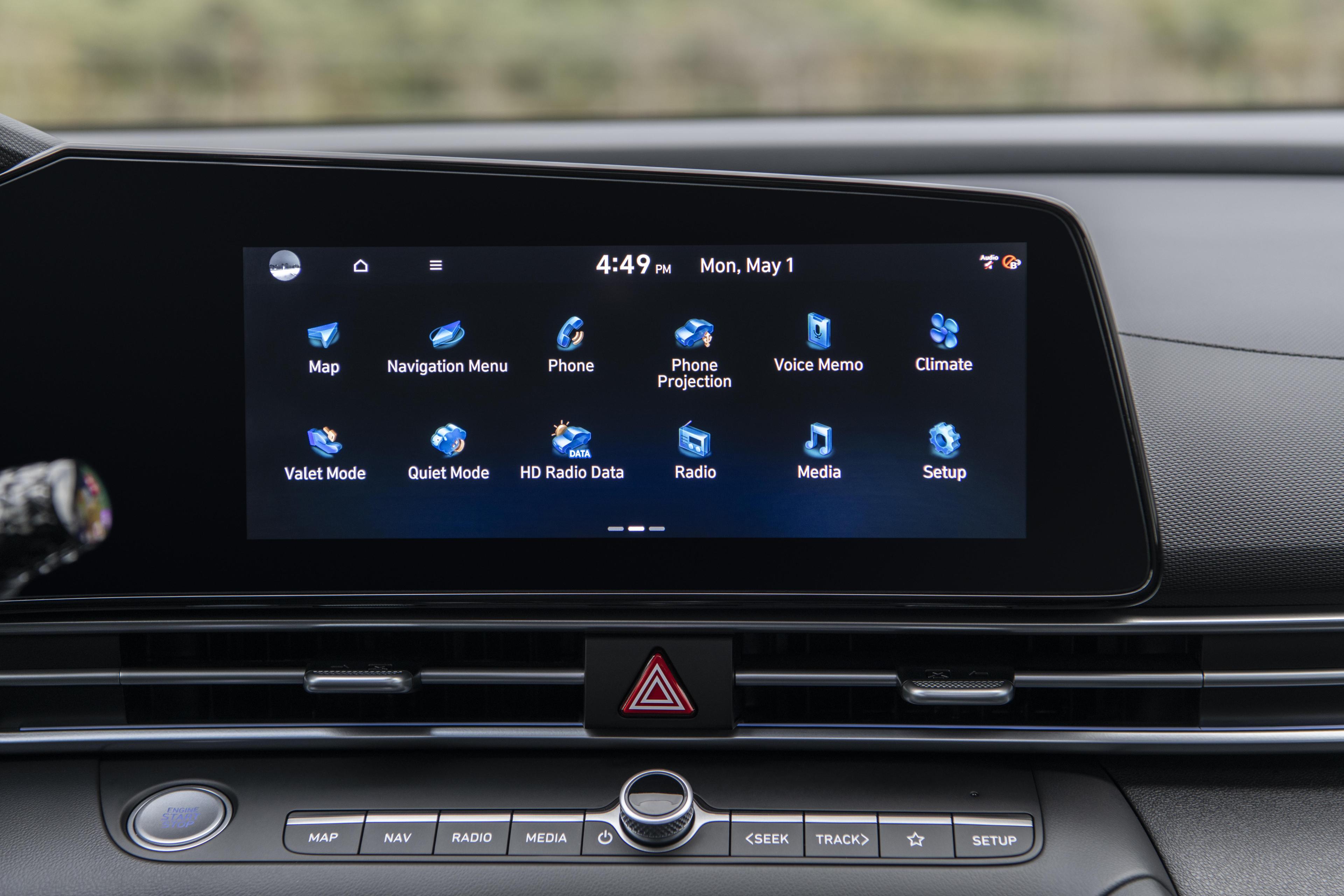
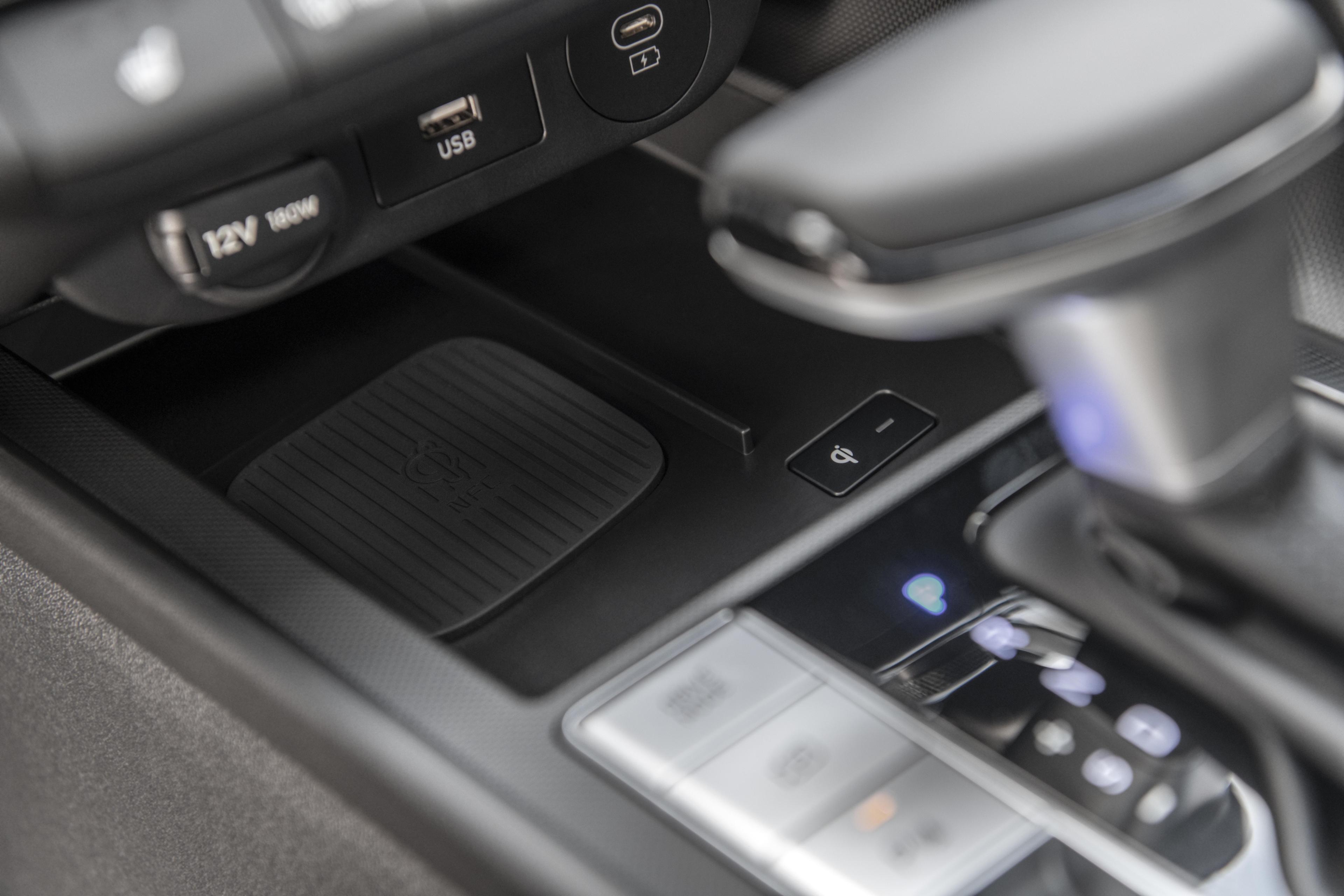
You can feel that Hyundai wanted to save money here to include more accessories in the cabin, which is particularly well equipped for the retail price. At around $28,500, the Preferred variant with Tech package we tested offered a very user-friendly 10.25-inch multimedia system with integrated navigation, a second similar-sized screen as an instrument cluster, dual-zone automatic climate control, a heated steering wheel, and a sunroof. All this was backed up by a range of simple, easily accessible physical controls, as well as spacious, well-designed storage compartments.
As for criticisms, we would point out the need to connect the mobile device with a cable in order to use Android Auto or Apple CarPlay, whereas models equipped with the standard 8-inch screen allow a wireless connection. Furthermore, the steering wheel hides the top of the dials from tall people, a common failing in vehicles with instrumentation located at the same height as the central screen.
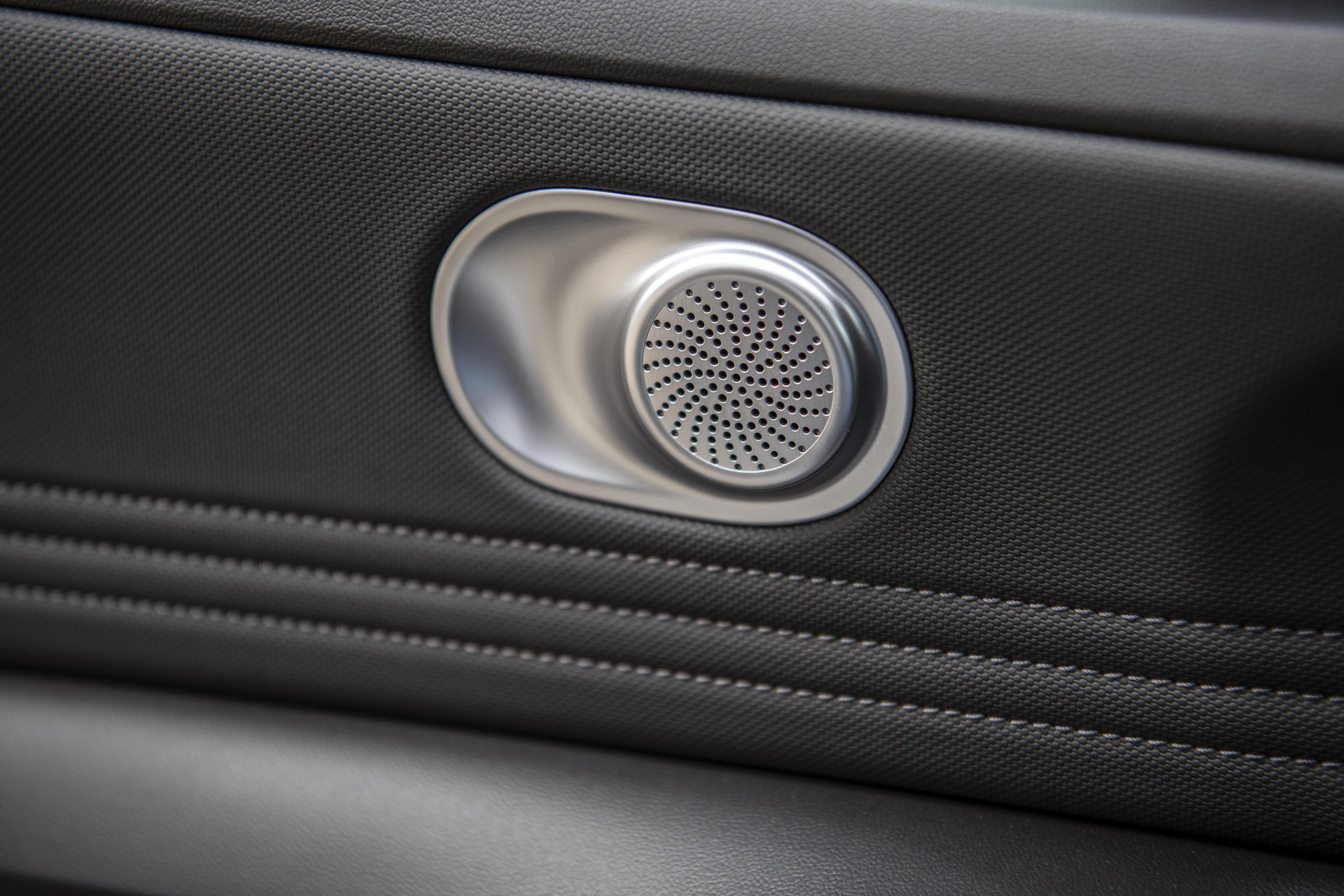
Finally, without being outright cheap, the texture and sense of durability of the fabrics and some bits or trim pale in comparison with the materials of a Honda Civic, a Toyota Corolla or, even better, a Mazda 3.
Safety features
- Antilock brakes with electronic brake-force distribution and brake assist
- Stability and traction control
- Hill-start assist
- Front airbags
- Front and rear side airbags
- Side curtain airbags
- Front seat belts with pretensioners
- Five adjustable headrests (fixed at the rear in Essential and Preferred models)
- Backup camera
- Tire pressure monitor
- Forward collision warning
- Front automatic emergency braking with detection of pedestrians and cyclists (detection of vehicles approaching from the opposite direction at an intersection included in Luxury and N Line)
- Lane departure alert with automatic steering assist
- Active lane control
- Auto high beam
- Blind-spot monitoring system with automatic steering assist, rear cross-traffic alert with automatic braking and rear safe exit alert (standard on Preferred, Luxury, N Line and N, not available on Essential)
- Adaptive cruise control (standard on Luxury and N Line Ultimate, not available on Essential, Preferred, and N)
- Front and rear parking sensors (standard on N, not available on other versions)
Crash test results
National Highway Traffic Safety Administration (NHTSA)
Overall score: 4 / 5Frontal impact: 4 / 5
Side impact: 5 / 5
Rollover resistance: 5 / 5
Insurance Institute For Highway Safety (IIHS)
Moderate overlap frontal impact (new test)Moderate overlap frontal impact (original test): 2 / 4
Small overlap frontal impact: 4 / 4
Side impact: 4 / 4
Rear impact: Not tested
Roof strength: Not tested
IIHS Top Safety Pick
Visibility
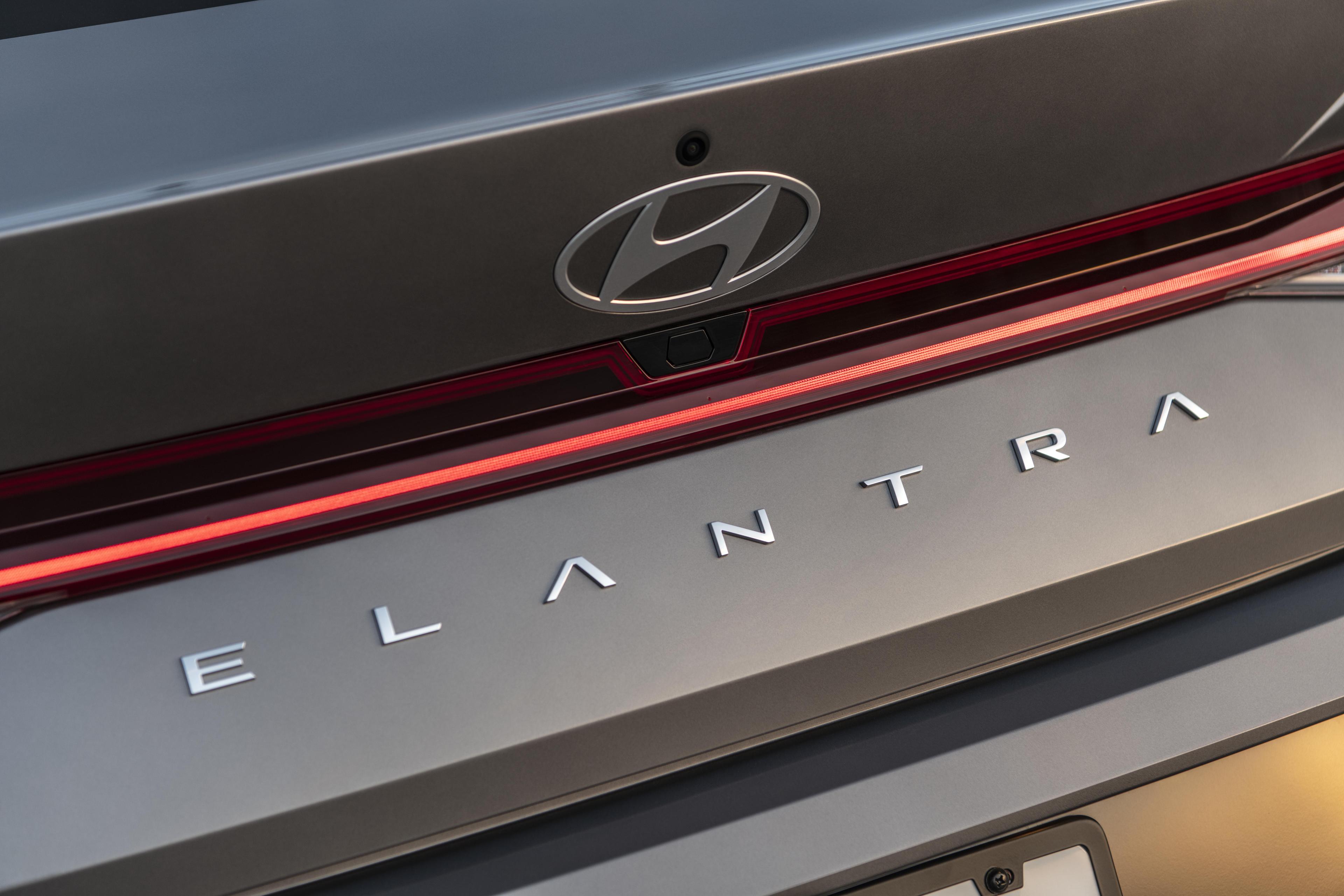
Visibility is good to the front and sides, although the wide B-pillars hamper lane changes. Unfortunately, the Essential base version comes without electronic blind-spot monitoring. The steep upward slope of the rear deck makes the rearview camera an absolute must; be sure to clean it often in winter.
Headlights: the LED headlights on N Line and N versions received top marks from the Insurance Institute for Highway Safety, despite a few shortcomings. The LED reflector headlights fitted on other versions, not offered in the United States, were not evaluated.
Mechanical overview
The Hyundai Elantra migrated to a new platform when it was renewed some three years ago. Both stiffer and lighter than its predecessor, this structure features a lower driving position and adjusted proportions for a sleeker stance and, in theory, a more dynamic feel than before.
This platform has also paved the way for a hybrid powertrain in Hyundai’s compact car. Similar to the Kia Niro Hybrid, this system combines a 1.6-litre four-cylinder with an electric motor and a 1.32kWh lithium-ion battery. The 139hp are channelled through a six-speed dual-clutch automatic gearbox. Available only on the Luxury model, this $2500 option also provides independent rear suspension.
Another engine of the same displacement, now turbocharged rather than electrified, propels the Elantra N Line. It delivers a maximum torque of 195lb-ft, which is identical to that of the hybrid version, but its 201hp result in a much more powerful engine. Still dual-clutch, the transmission now features seven gears.
For those who crave even more, the N version pushes power to 276hp and torque to no less than 289lb-ft, courtesy of a turbocharged 2.0-litre four-cylinder. This surge of vigour comes with a series of tweaks to the steering, suspension, exhaust, tires, and electronic drive management.
Buyers can choose between an eight-speed dual-clutch transmission and a good old-fashioned six-speed manual, the only one in Hyundai’s entire Canadian catalogue. This transmission features an automatic rev-matching function when downshifting, a function that heel-and-toe enthusiasts can deactivate to do the work themselves.
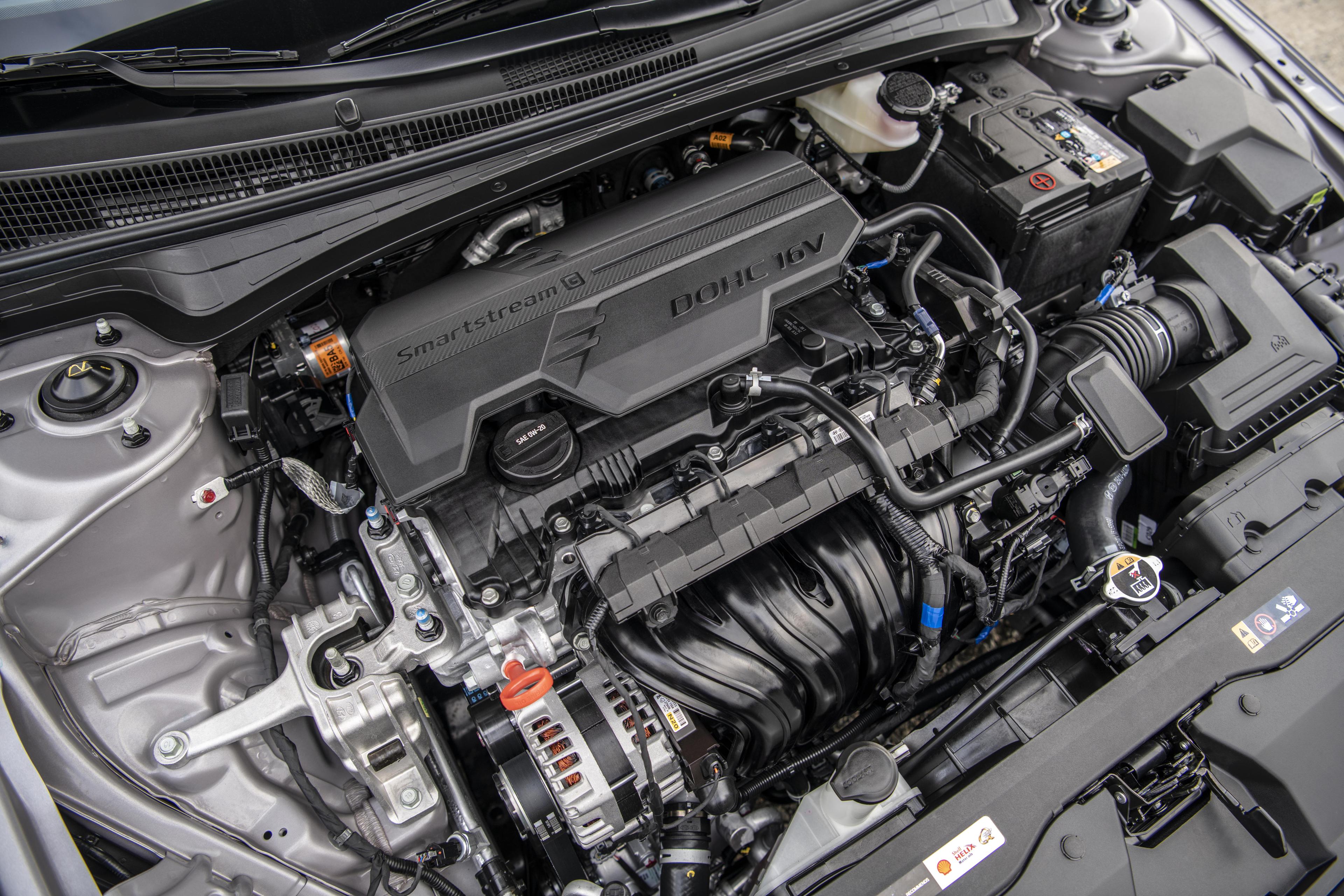
Nothing of the sort in the majority of Hyundai Elantras, which are instead delivered with a 2.0-litre Atkinson-cycle combustion engine—to promote fuel economy—and a continuously variable transmission. Unchanged since 2017, this combination delivers 147hp and 132lb-ft of torque, both slightly below the class average. As with all Elantras, power is directed exclusively to the front wheels.
When it comes to fuel consumption, Hyundai’s solution certainly hits the mark. Natural Resources Canada’s combined city-highway rating ranks among the lowest in the segment at 6.8L/100km. We measured 7.3L/100km on a mix of highway and city driving, while an all-highway trip yielded 6.4L/100km.
Driving impressions
Hyundai claims that the new platform and lowered driving position have made the Elantra more dynamic and connected than ever.
This is quite evident in the N version, of which we tested a performance blue model with a manual gearbox last year. Thanks to its very direct steering, adaptive suspension, structural reinforcements and limited-slip differential, the car bites into asphalt and shoots out of corners with a tenacity uncommon to Hyundai.
It features neither the fine balance of a Honda Civic Type R nor the traction of a Subaru WRX and its all-wheel drive. The driveability and suppleness of Volkswagen’s small sports cars on bumpy roads are also out of its reach. On top of this, the significant turbo lag means that gear changes have to be carefully planned to maintain the ideal power range on winding roads.
Nevertheless, this energized Elantra proves very pleasant to drive, especially with the manual transmission—not as precise as in a Civic Type R, but still a genuine pleasure to operate.
What remains of these feats in the “people’s” Elantra? Without a doubt, well-balanced steering, less assisted than that of a Toyota Corolla, for example. Then there’s the very decent stability at cruising speed, making the experience all the more serene in that Hyundai has finally increased soundproofing under the car.
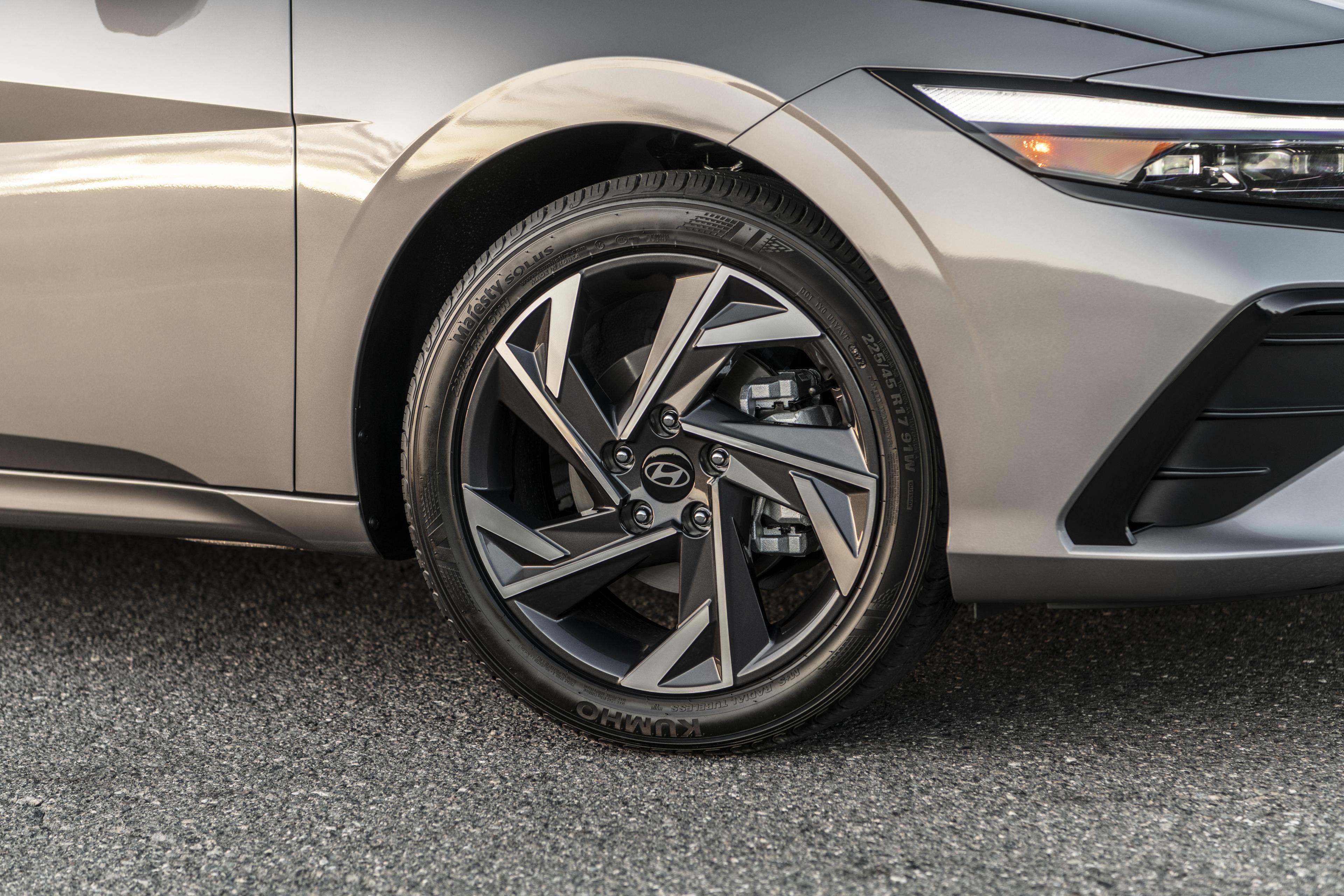
In turns, the very ordinary original-equipment tires show their limits well before those of the chassis. Incidentally, we were pleased to note that the rear axle no longer has a tendency to buckle on an expansion joint midway through a bend, a characteristic that has long afflicted small Hyundai cars fitted with a torsion beam. However, the automaker still needs to work on making the suspension more supple, as some bumps reverberate too forcefully in the cabin.
They could also refine the transmission a little more at lower speeds. Take-off is generally linear, but a sudden surge of power—for instance, to get out of an intersection quickly—is enough to make it feel hesitant or jerky.
Yet, once the car is underway, the gearbox harnesses the power very well and reacts promptly to the driver’s decisions, bringing an unexpected liveliness to the driving experience. The gear changes it simulates avoid long bursts of engine speed, which is a good thing, because these can be noisy.
However, the same could be said of most of the Elantra’s rivals, with the exception of the Mazda 3 and Volkswagen Jetta, which are still fitted with traditional automatic gearboxes.
Other highlights
Braking: the well-balanced pedal provides enough bite in the early stages. Moderately powerful emergency braking, but stable and straight, without excessive intervention of the antilock system.
Driving assistance: adaptive cruise control only on Luxury and N Line Ultimate versions; in other Hyundai models we tested, it was generally slow to reaccelerate. Lane departure alert too sensitive.
Features and specs
| Price range (including shipping and preparation) | ||
| Minimum price |
$24,373
| |
|---|---|---|
| Maximum price |
$43,623
| |
| Price as tested | $28,423 | |
| Trim levels | Essential Preferred Luxury N Line Ultimate N | |
Honda Civic
Kia Forte
Mazda 3
Nissan Sentra
Subaru Impreza
Toyota Corolla
Volkswagen Jetta
| Wheelbase |
272cm
| ||
|---|---|---|---|
| 471cm |
471cm
| ||
| Width |
182.5cm
| ||
| Height |
141.5cm
142cm (Luxury Hybrid)
| ||
| Curb weight |
From 1236 to 1520kg
| ||
| Towing |
false
| ||
| According to Natural Resources Canada | ||
| City |
7.6L/100km (2.0L engine)
| |
|---|---|---|
| Highway |
5.9L/100km (2.0L engine)
| |
| Result | ||
| Temperature |
3200kg/20,000km
| |
| Temperature |
From 4°C to 19°C
| |
| CO2 emissions |
3200kg/20,000km
| |
| Fuel tank |
42 litres (Luxury Hybrid)
47 litres
| |
| Recommended fuel |
Regular-grade gasoline
Premium-grade gasoline (N)
| |